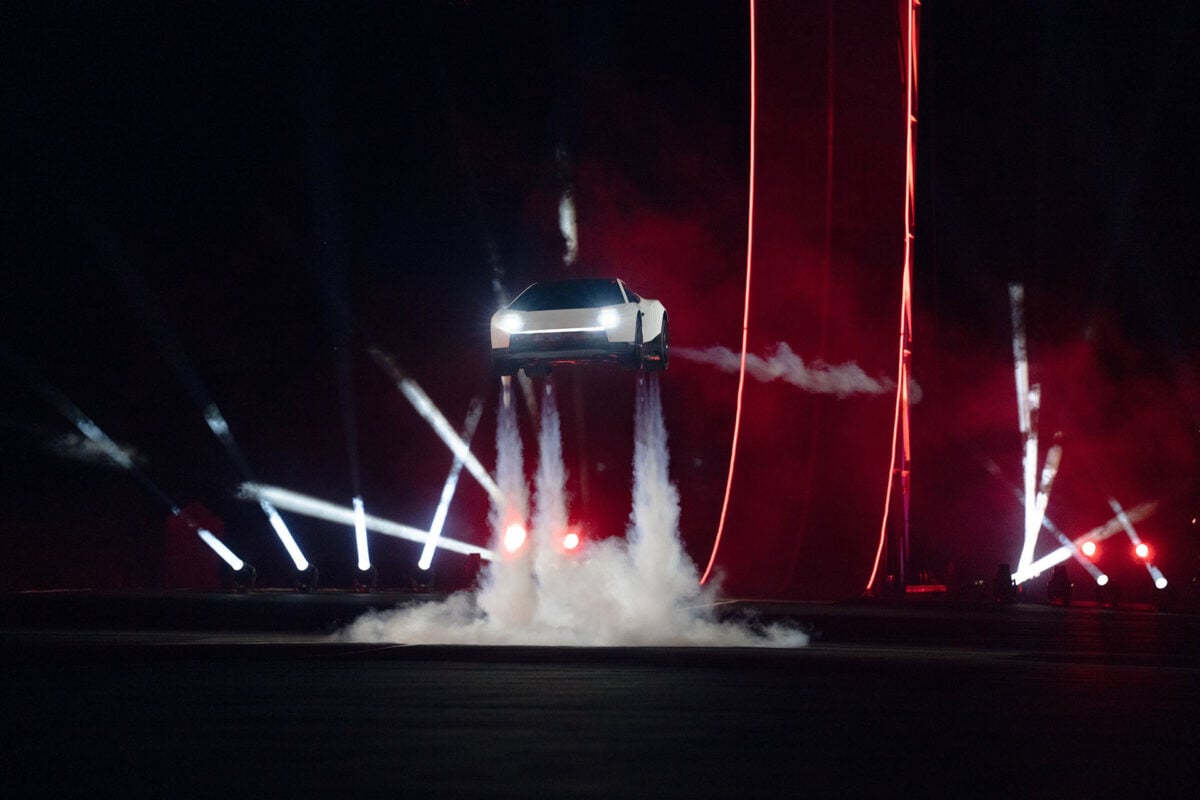
At Unplugged Performance, our first question after seeing the unveiling of the first demo was, “What did we just watch?!” Followed by, “How does this system work as part of the vehicle?! Well thankfully, Top Gear and Hagerty have supporting video interviews with Lars Moravy and Franz Von Halzhausen to provide a useful starting point, including where Tesla’s engineering ends and the collaboration with SpaceX begins.
Pressurized nitrogen provides the thrust
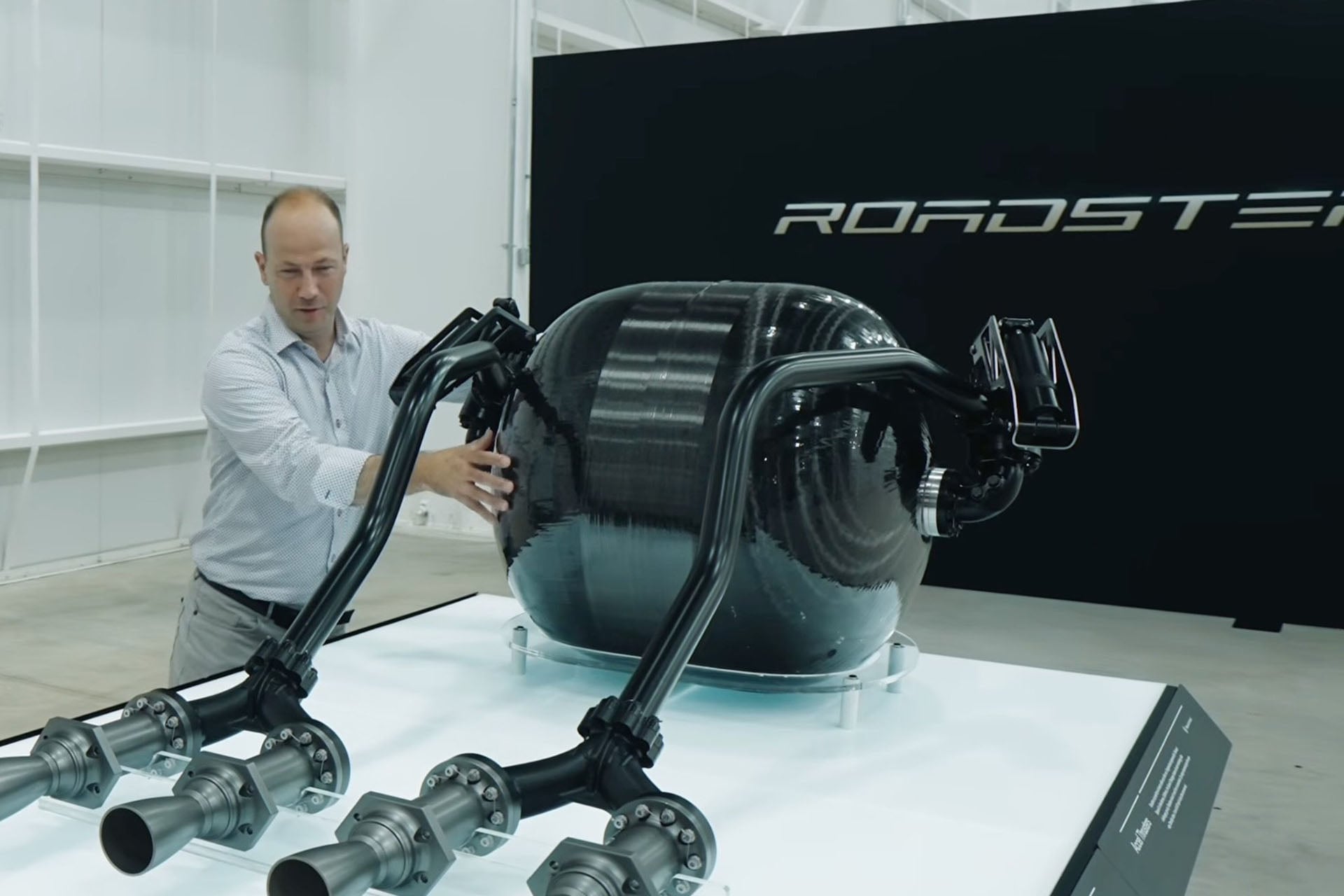
Cold gas thrusters generate force by releasing pressurized gas through nozzles. The Roadster’s proposed system uses nitrogen, the gas that makes up most of Earth’s atmosphere, without burning fuel. While references to rockets and jet engines might bring flames and combustion to mind, this system produces thrust by releasing stored pressure.
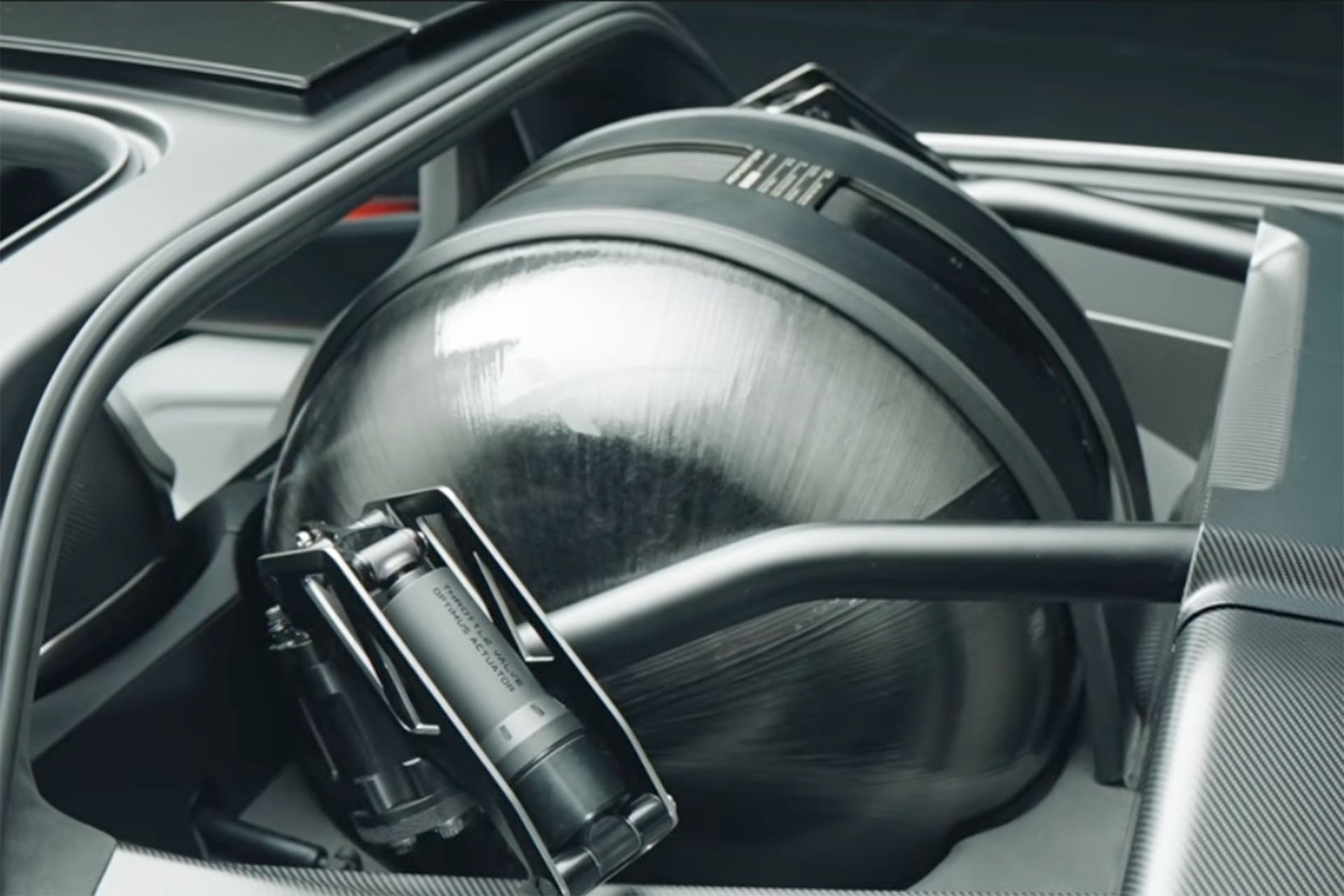
Integrating that technology into a car presents a considerable packaging challenge. The tanks, plumbing, and nozzles need room to function while preserving the vehicle’s proportions and usable space. That’s where Lars Moravy’s engineering team and Franz von Holzhausen’s design team had to work together, finding a way to accommodate the hardware beneath a clean exterior while allowing it to reveal itself when needed.
A large tank changes the packaging
The Thrust configuration is described with a 200-liter composite overwrapped pressure vessel, or COPV, capable of holding nitrogen at approximately 10,000 psi. In the second walkthrough, the team explains that this hardware occupies the space otherwise available for luggage.
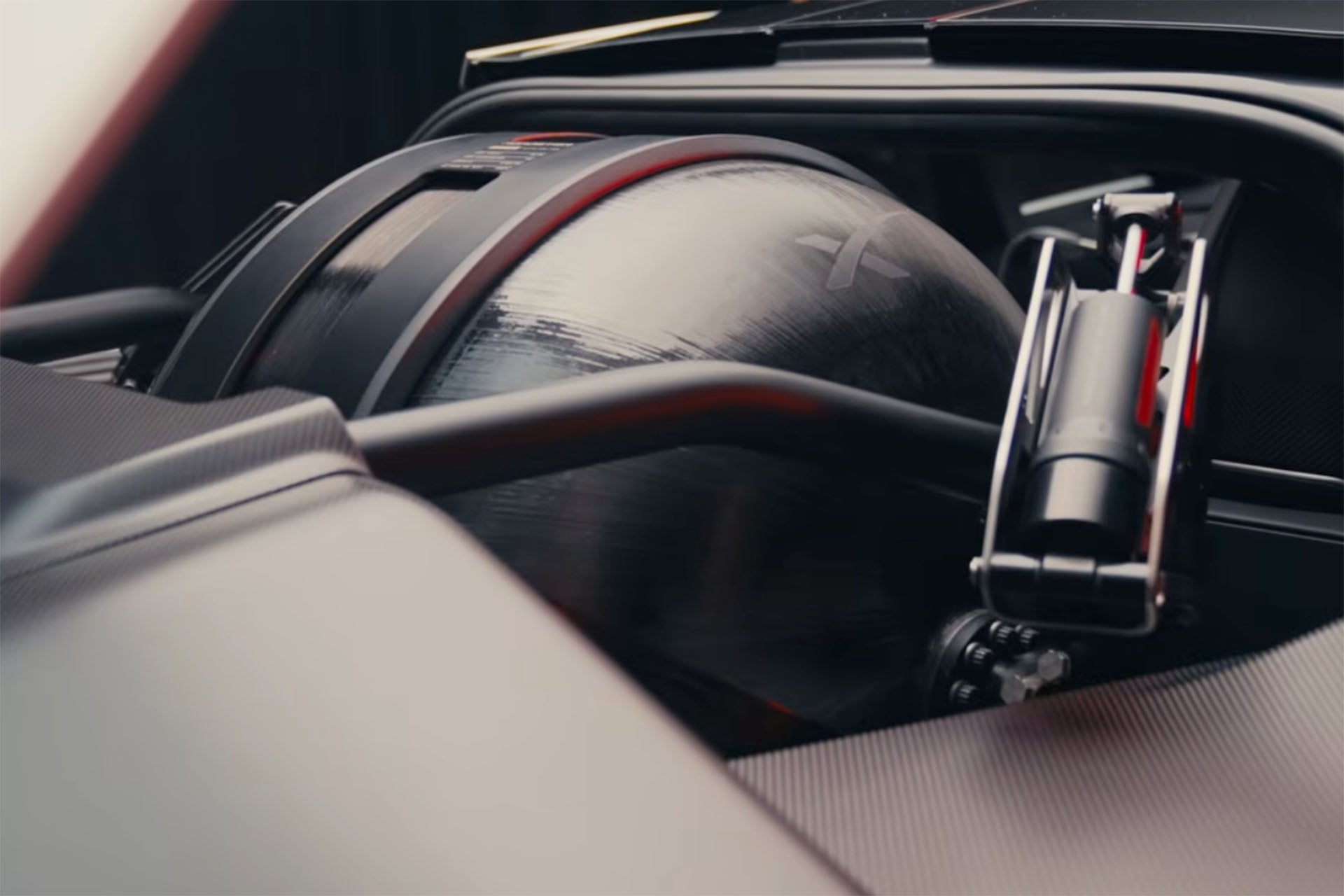
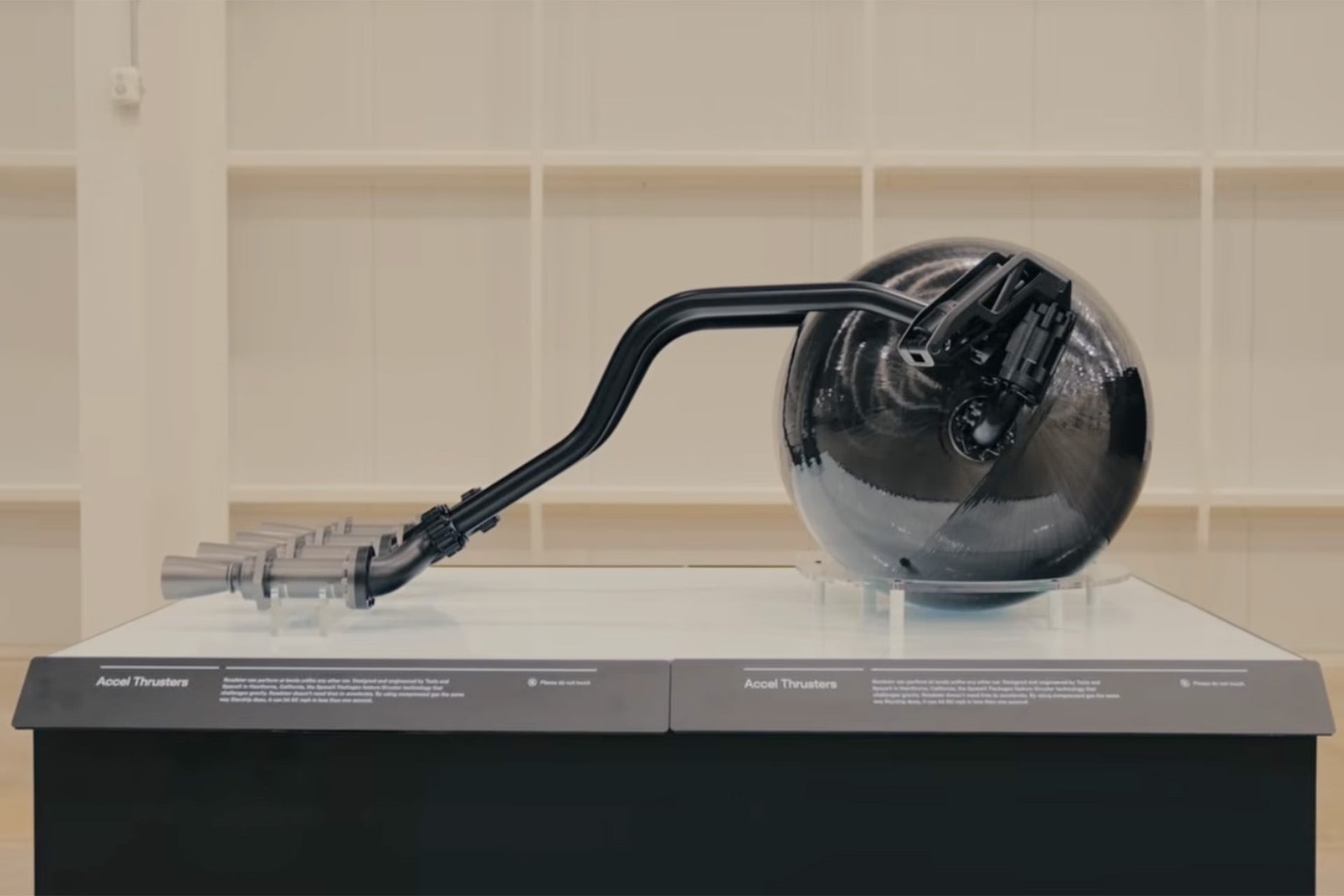
That helps explain the Roadster’s long rear section.
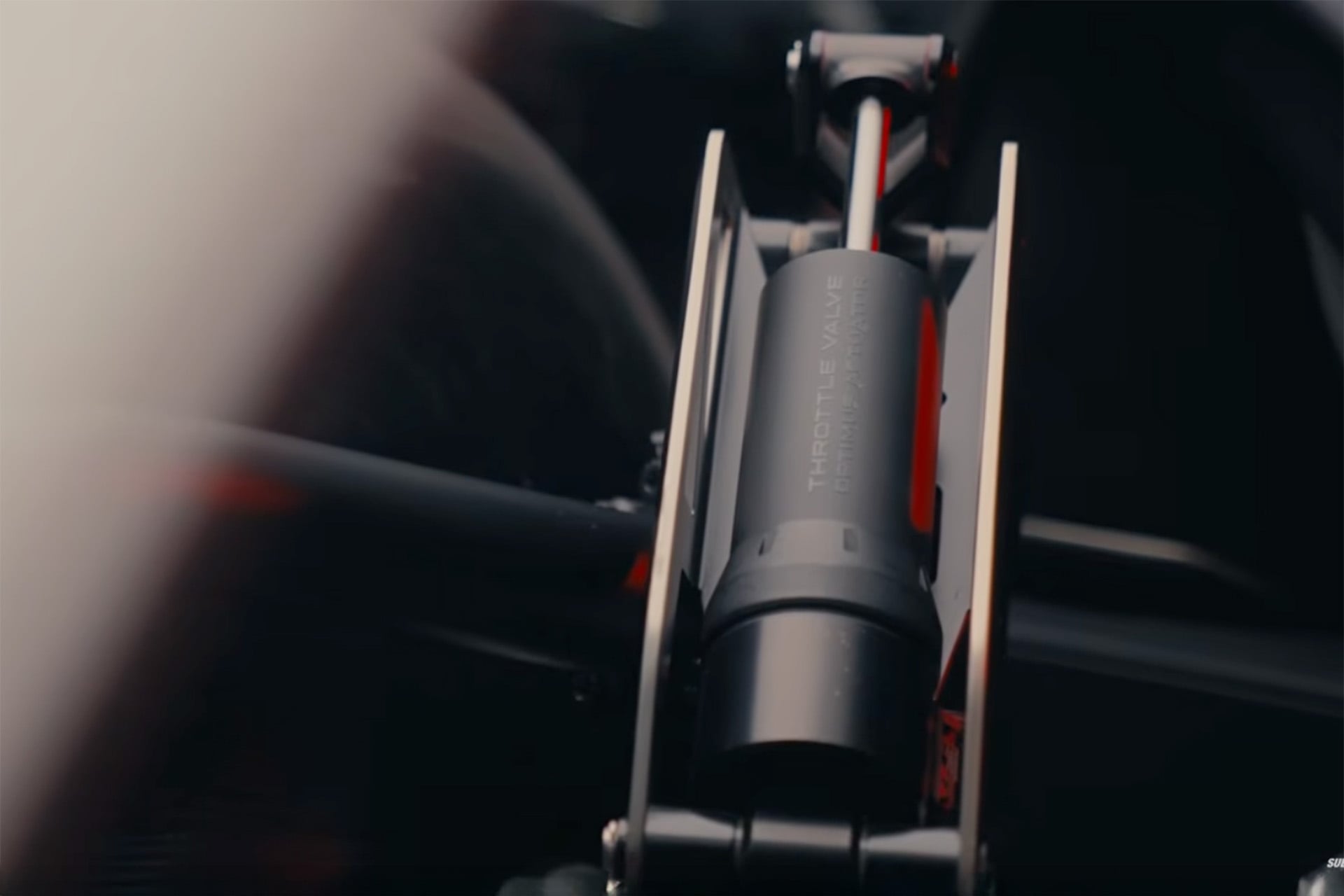
Lars was very clear about the division of work. Tesla develops the car, including the battery, chassis, electric powertrain, and suction system. SpaceX collaboration centers on the cold gas technology associated with the Thrust and Rocket configurations. Valve design is identified as one area of SpaceX contribution. Tesla also draws on its own Optimus actuator technology to operate hardware within the system(shared above).
Recharging and refilling are different tasks
The described 200-liter system provides one full deployment lasting roughly five seconds. Refilling requires a dedicated high-pressure nitrogen supply. The interviews discuss current refill times measured in hours and a development goal of reducing that period to around half an hour; neither is a guarantee for customer hardware.
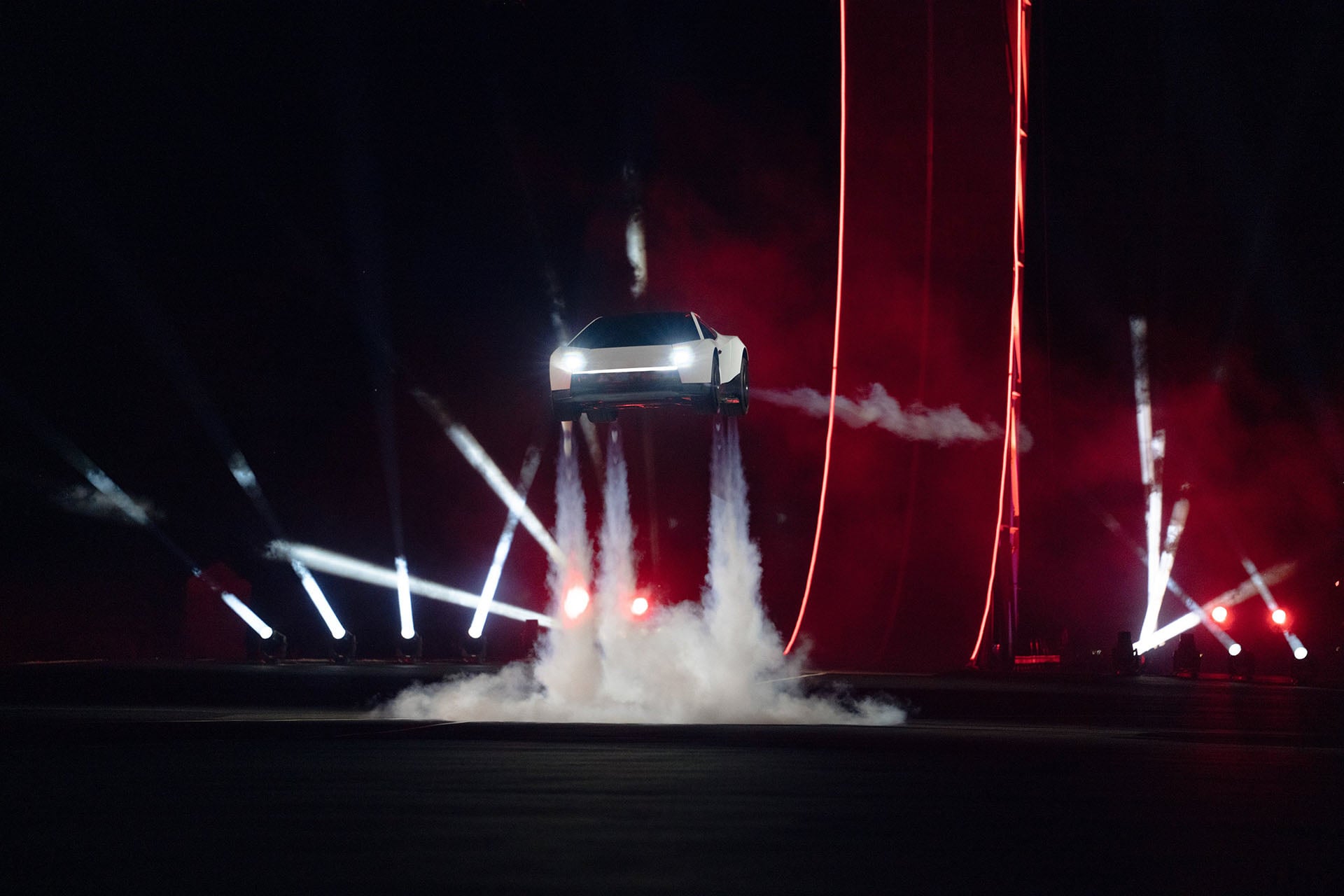
Those limitations define how the technology would be used. It is a short-duration performance capability, with a separate replenishment process from battery charging. We are excited by the engineering, and we want to understand its repeatability and integration in controlled testing.
Editorial sources: A, 15:23–22:20; B, 20:01–24:31


