Q: If I lower an EV, what alignment settings matter most to prevent inner tire wear?
Proper alignment settings are critical for preventing inner tire wear when you lower an EV, because lowering changes suspension geometry and increases negative camber beyond factory specs. Factory alignment targets are designed around stock ride height. Once you lower the vehicle, camber typically becomes more negative, which loads the inner shoulder of the tire and can accelerate wear.
The alignment settings that matter most are camber and toe.
CAMBER (primary cause of inner wear)
Lowering often increases negative camber. For many Teslas, a moderate drop (around 0.75 inches) can shift front camber from roughly -0.8 degrees closer to about -1.5 to -2.5 degrees depending on the setup. Too much negative camber concentrates load on the inner tread and can wear out the inside edge quickly.
Recommended camber targets:
- Street and daily driving: front camber around -1.0 to -1.3 degrees to balance tire life and handling
- Track focused driving: front camber around -1.5 to -2.0 degrees for more grip, with faster tire wear as the trade-off
Rear camber matters too. Rear geometry changes can create uneven wear as well, even if it is often less dramatic than the front.
TOE (often the real tire killer when it is off)
Toe has a major effect on tire wear. Even small amounts of toe out can scrub the inner tread quickly, especially on heavy EVs with high torque.
General toe guidance for tire life:
- Aim for near-zero toe for daily driving, or a very small amount of toe in for stability
- Avoid noticeable toe out on a street car unless you are intentionally setting up a track alignment
HARDWARE: why adjustable arms matter
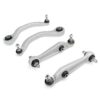
If your camber is too negative after lowering, the most effective fix is adjustable camber arms, because they let you bring camber back into a tire-friendly range. A proper alignment after installing them is essential.
Should I choose lowering springs, coilovers, or air suspension lowering on my Tesla?
What ride height drop should I expect from your lowering springs?
Are the DUAL RATE LINEAR LOWERING SPRINGS linear or progressive?
What happens to alignment when a car is lowered?
Will lowering my car reduce my ground clearance and what happens if I scrape my car?
What happens when my car has passengers in the rear, or a full trunk? Is rear height negatively impacted?
Will the longevity of my shocks be impacted by lowering the car?
How does caster impact your vehicle dynamics?
What is Caster?
What is camber?
What is Toe?
What is an alignment and why does that matter to me?

INSTALLATION guide

WARRANTY QUESTIONS
WHAT OUR CUSTOMERS SAY


With real reviews from real customers, shop UP products for your Tesla Model S, 3, X, Y and Cybertruck with confidence. Leave reviews and earn up to 2000 UP Rewards points each, redeemable towards exclusive UP Products.






- Tesla Model S / Model S Plaid (2021 - 2025)
- 2021 - 2025 Tesla Model S / Plaid Wheels
- 2021 - 2026+ Model S / Plaid Performance Brakes
- 2021 - 2026+ Model S Plaid Performance Suspension
- 2021 - 2025 Model S / Model S Plaid Interior Upgrades
- 2021 - 2026+ Model S Plaid Racing Safety
- 2021 - 2025 Tesla Model S / Plaid Big Brake Kits (BBK)
- 2021 - 2025 Tesla Model S Plaid / Model S Drag Racing Upgrades
- 2021 - 2025 Tesla Model S Plaid Coilovers


THE UNPLUGGED PERFORMANCE® MARK AND LOGO ARE TRADEMARKS OF UNPLUGGED PERFORMANCE INC. ALL RIGHTS RESERVED. PLEASE REVIEW THE TERMS & CONDITIONS AND PRIVACY POLICY BEFORE USING OUR WEBSITE.