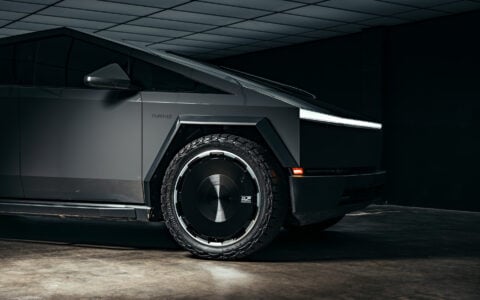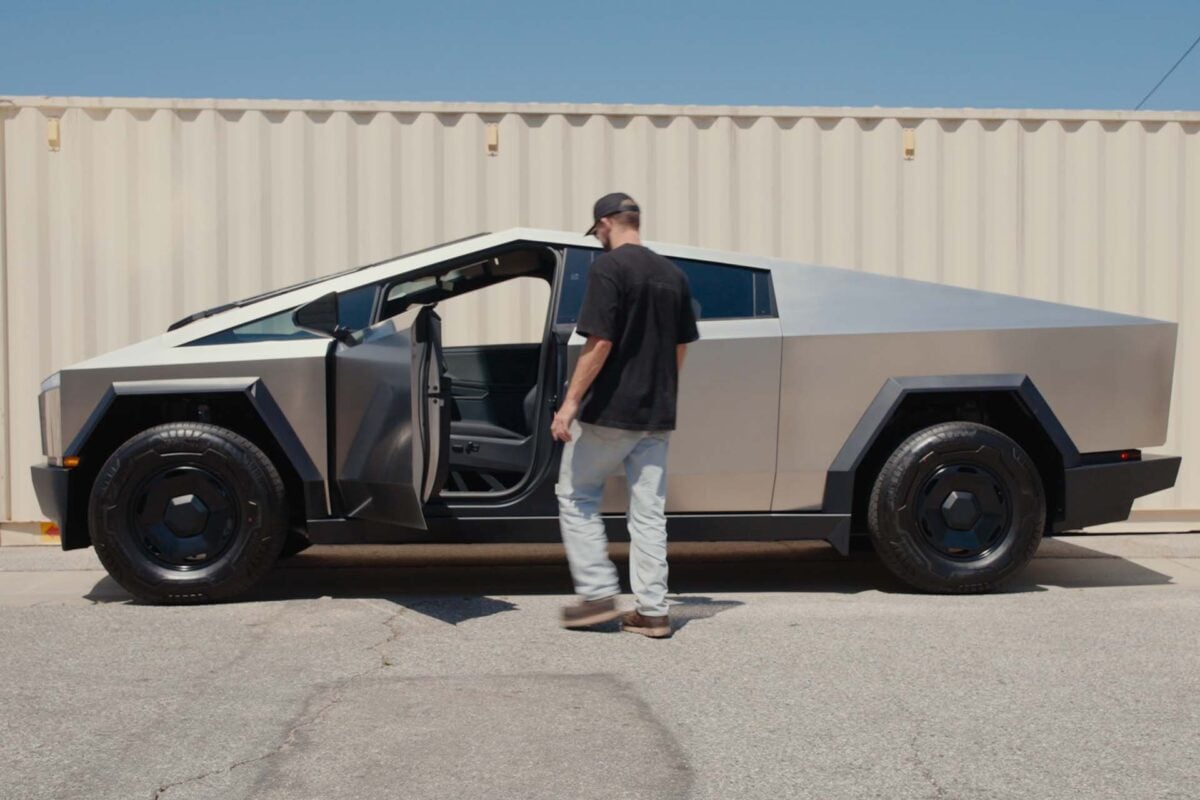
Tesla’s lower-priced Cybertruck has officially arrived at Unplugged Performance, and we wasted very little time getting underneath it.
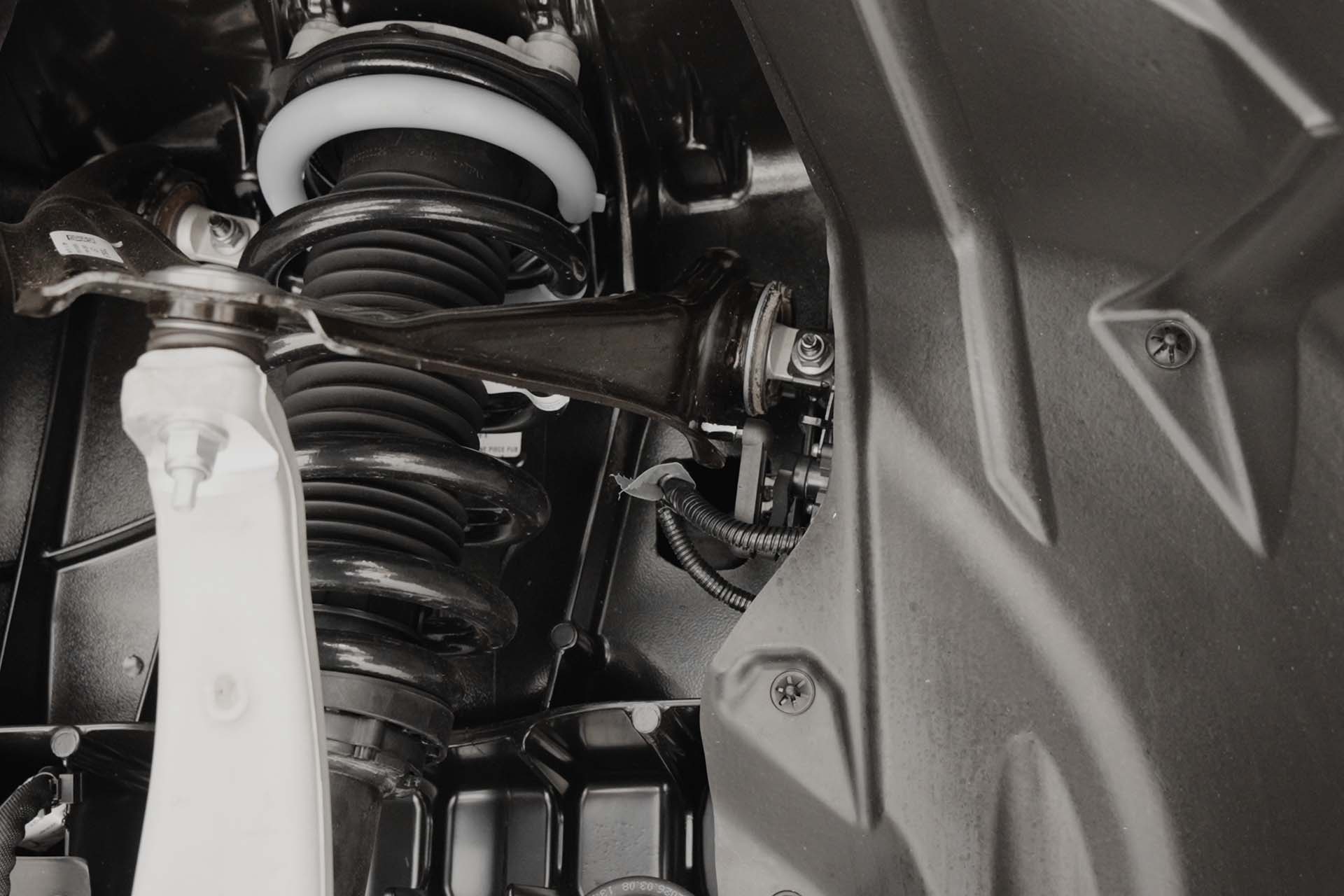
This is our first of several all-wheel-drive Tesla Cybertrucks, the roughly $59K configuration that trades the more expensive truck’s air suspension for a conventional coil-sprung setup. On paper, that might sound like a simple cost-saving measure. After putting the truck on a lift and digging into the details, however, it is clear there is more going on here than simply removing a few premium features.
For us, that is what makes this version particularly interesting.
We spend a lot of time developing parts for the Cybertruck, driving them on-road and off-road, pulling them apart and figuring out where there is room to improve. Getting a coil-sprung AWD Cybertruck into the shop gives us an entirely new platform to learn from, and we have already found plenty of differences.
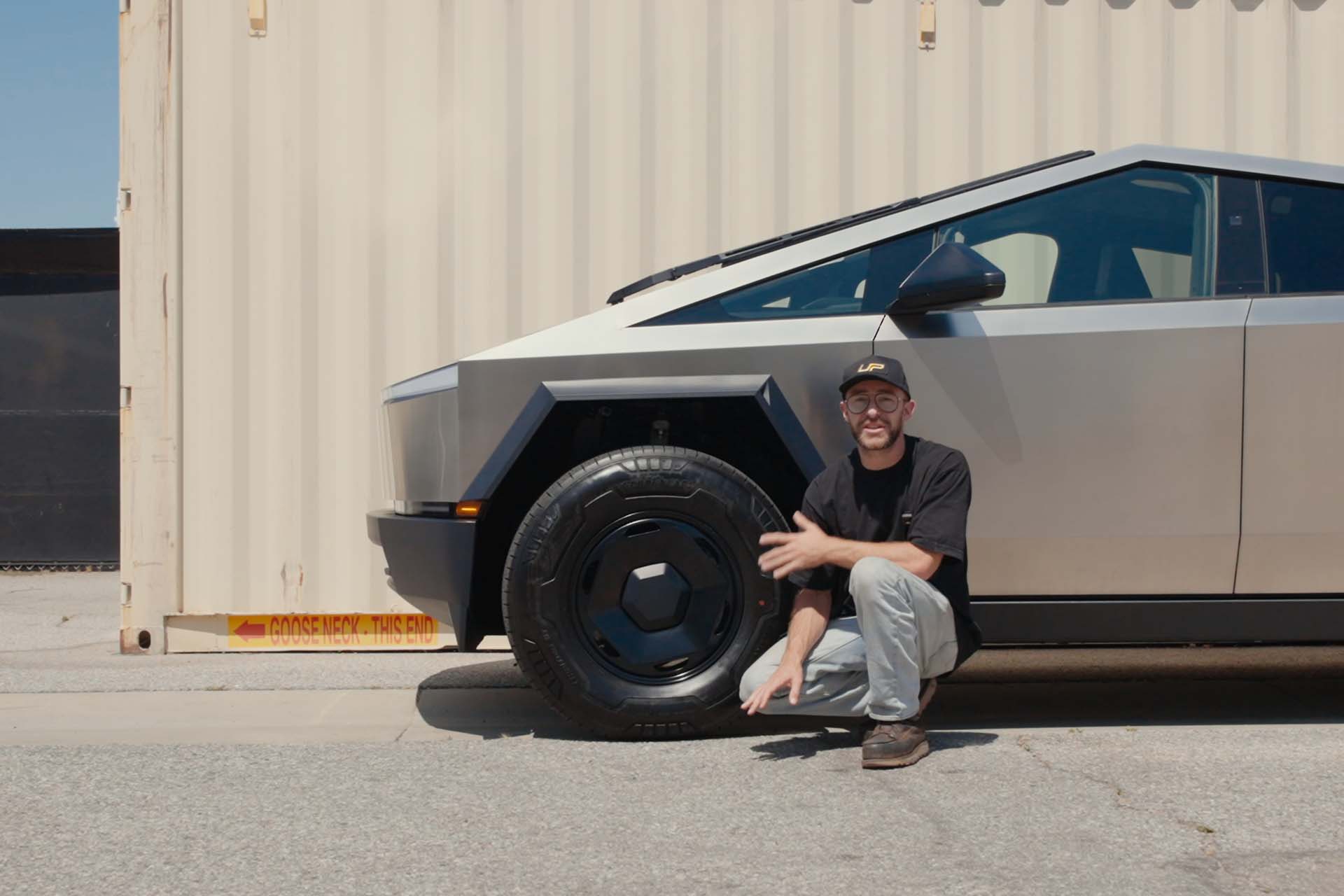
The Steel Wheels Are Hard to Miss
One of the most obvious changes is sitting at each corner.
Instead of the 20-inch cast aluminum wheels found on the premium AWD Cybertruck, the standard model uses an 18-inch steel wheel Tesla calls the Molten wheel.
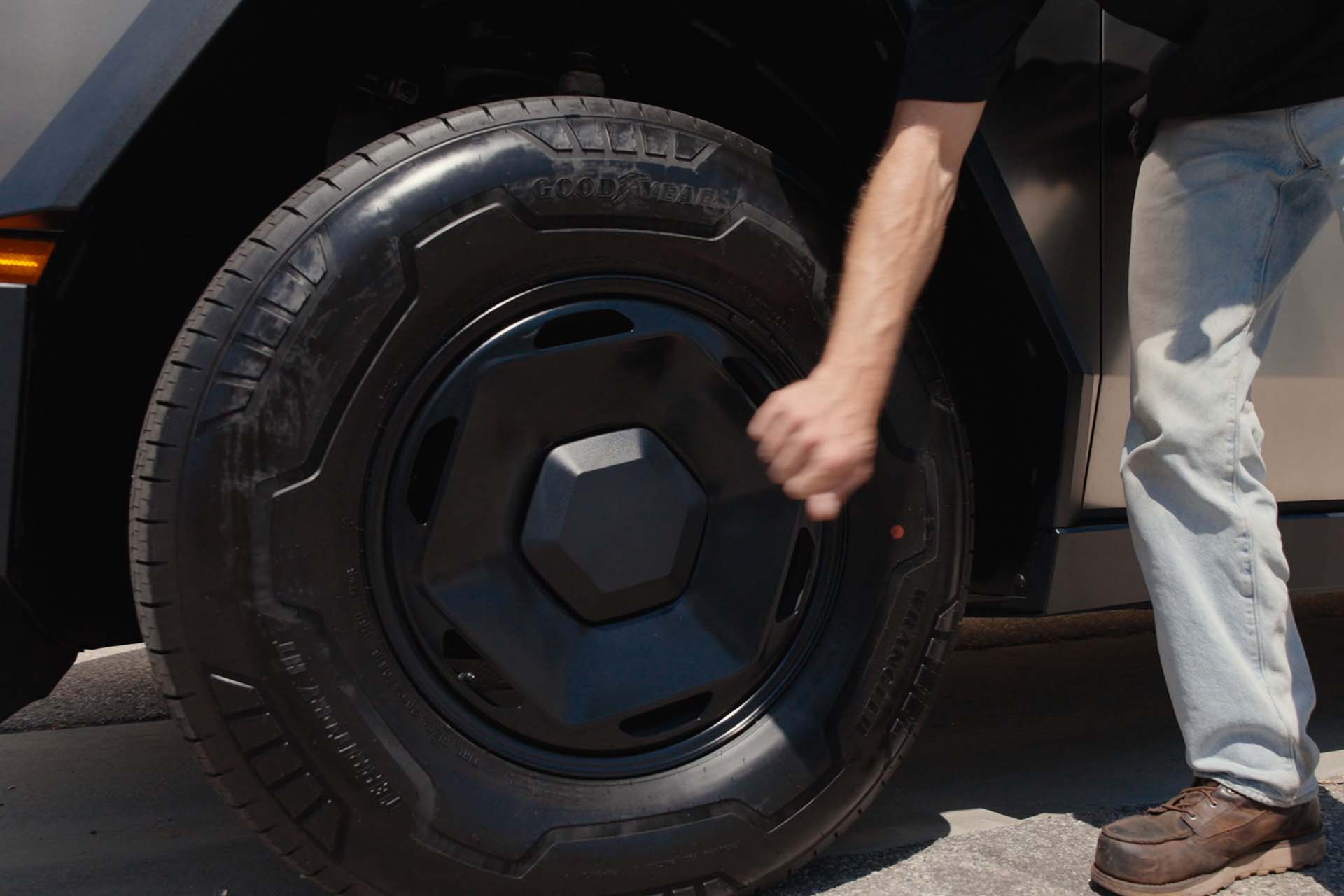
Going down in wheel diameter creates room for considerably more tire sidewall, which should help improve ride comfort when paired with the truck’s coil suspension. It also gives this Cybertruck a completely different personality. The steel wheels have a utilitarian look that feels appropriate for a truck positioned as the more accessible, work-focused member of the Cybertruck family.
Of course, wheels are unlikely to remain stock on this particular truck for long.
Air Suspension Is Gone, But Adaptive Dampers Remain
The biggest mechanical change is underneath.
Premium Cybertruck variants use adjustable air suspension, allowing the vehicle to raise or lower itself depending on the selected mode. The standard AWD model instead uses coil springs with adaptive dampers.
That means there is no Entry Mode to lower the truck when getting in and out, and the vehicle cannot adjust its ride height for different terrain.
Interestingly, Tesla did not strip away all of the suspension electronics.
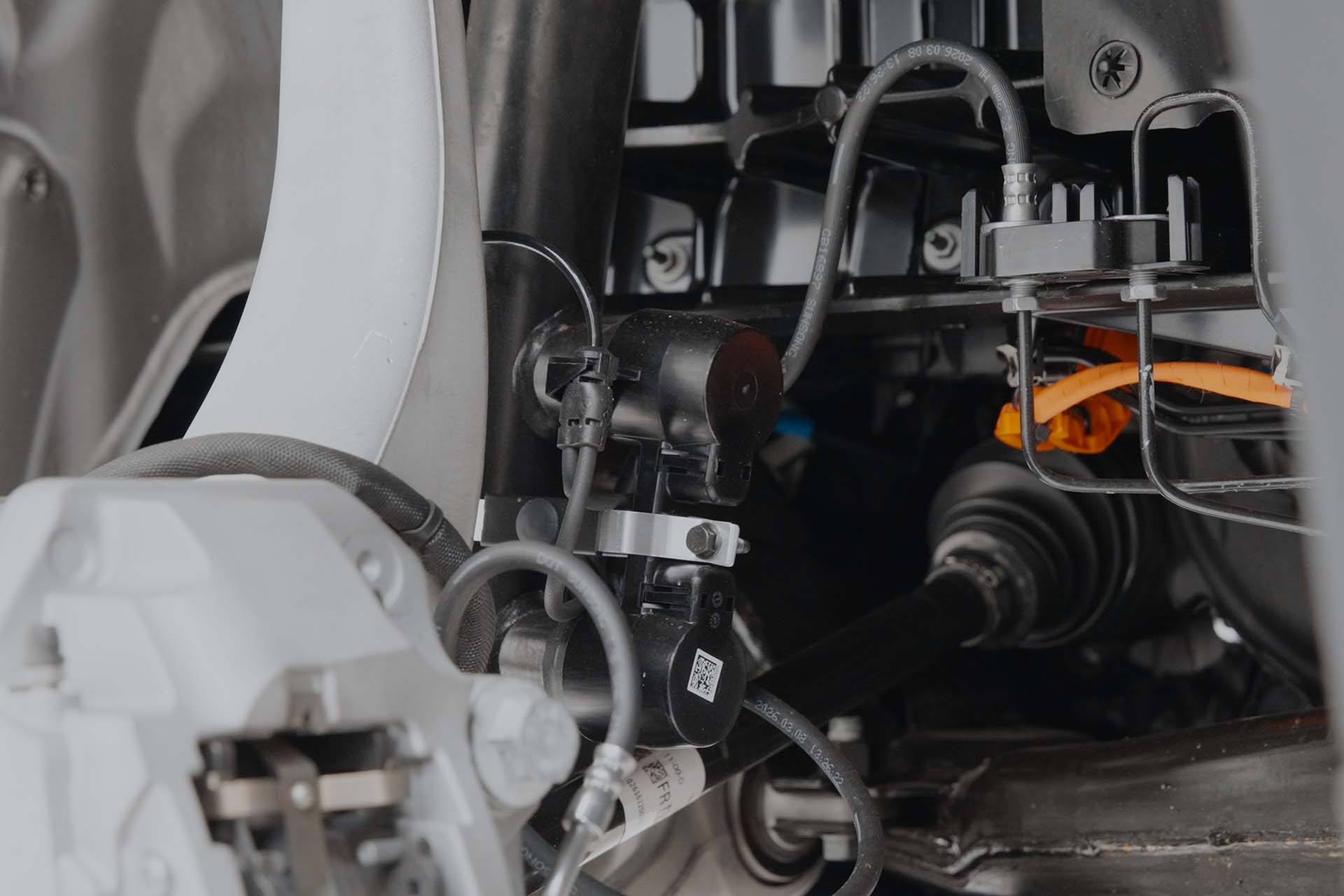
Once we removed the wheel, we found wiring running into the damper assembly and solenoids that allow the truck to retain adaptive suspension behavior and multiple dynamic driving modes.
The sensors mounted around the suspension are also still present, although their job has changed. Without an air suspension system to control, they can instead be used for functions such as automatic headlight leveling.
It is a simpler suspension architecture, but not necessarily a primitive one.
And from our perspective, a coil-sprung AWD Cybertruck opens up some very interesting possibilities.
There Are Plenty of Smaller Changes Too
Move inside and the cost-saving measures become easier to spot.
The standard AWD Cybertruck does not receive ventilated seats. Tesla has instead changed the center sections of the seats from the familiar vegan leather material to cloth, which should help keep the seating surface more comfortable when the vehicle has been sitting in the sun.
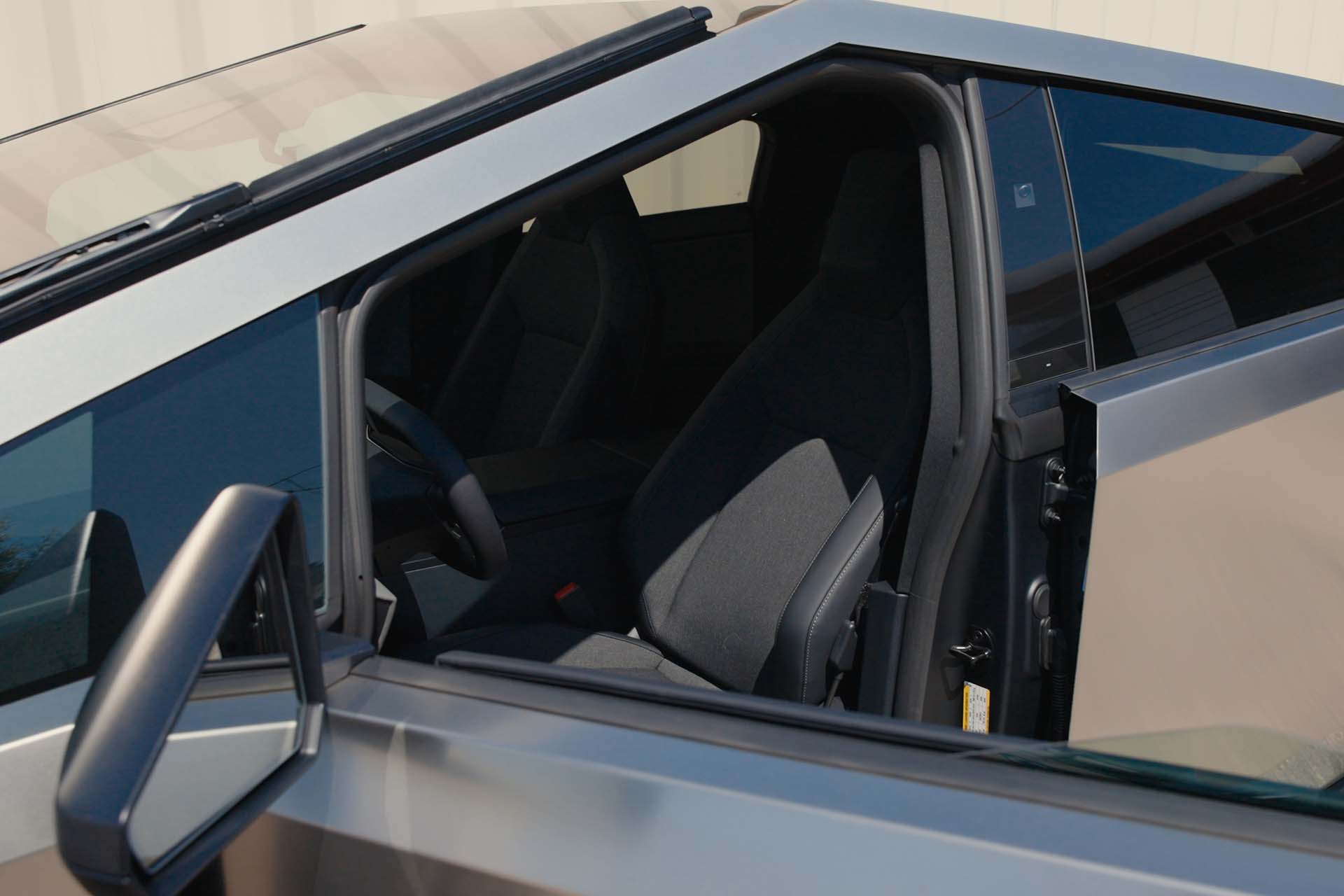
That change applies throughout the cabin, while the dashboard and door panels retain the vegan leather finish found in the more expensive trucks.
There is also no 120-volt outlet inside the cabin.
Thankfully, Tesla did not compromise the utility outlets in the bed. The three factory outlets remain, along with the powered tonneau cover.
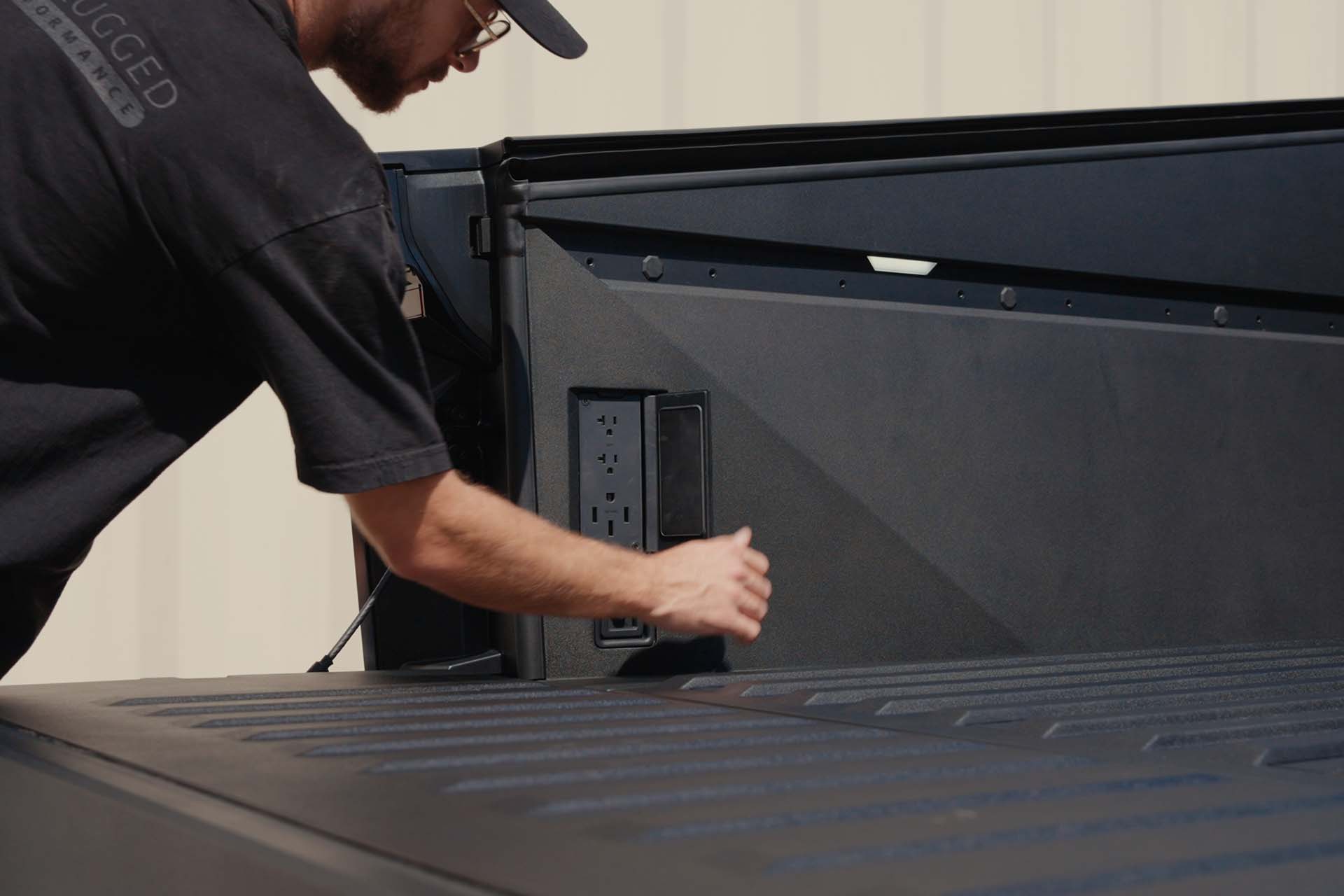
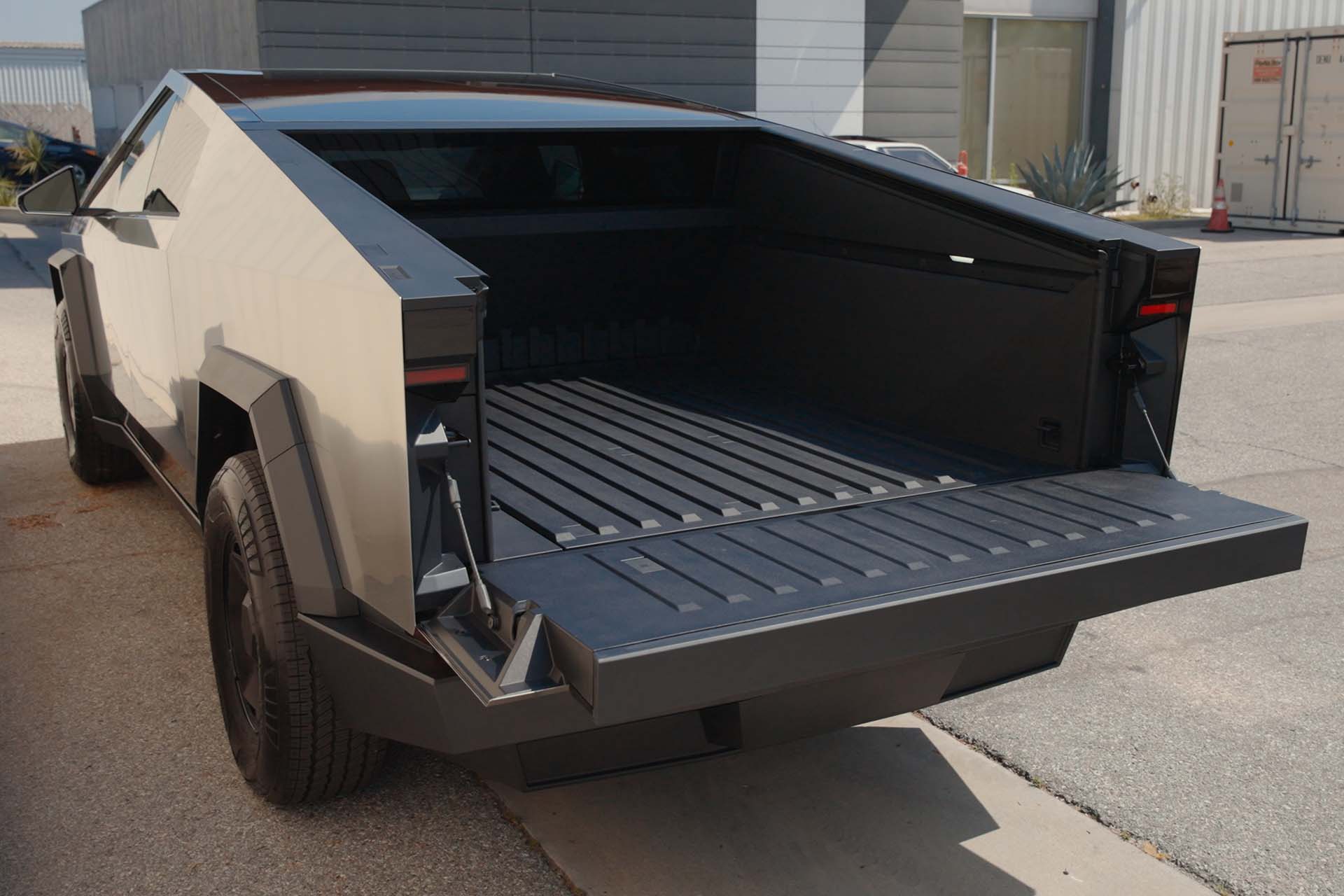
The bed itself does lose a few premium features.
There is no rear Smuggler’s Bay storage compartment, and Tesla has deleted the L-track cargo mounting system.
The full-length ambient bed lighting has also been replaced by a smaller light pod.
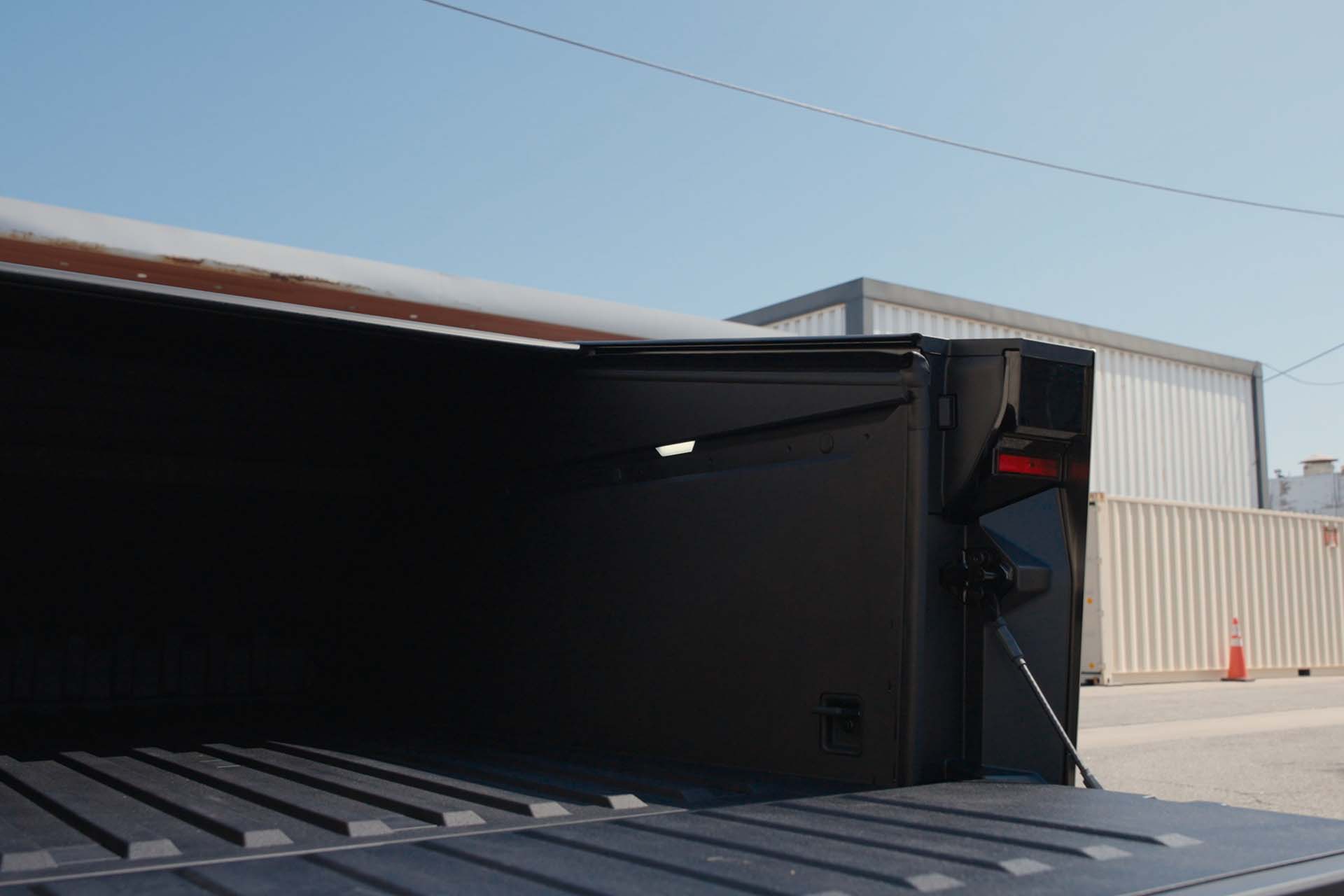
None of these changes fundamentally alter what the Cybertruck can do, but together they illustrate where Tesla found opportunities to bring the price down.
Baja Mode Becomes Rally Mode
The software offered another surprise.
On air-suspension Cybertrucks, the off-road menus include Overland and Baja modes. On our coil-sprung truck, Baja has been replaced by Rally Mode.
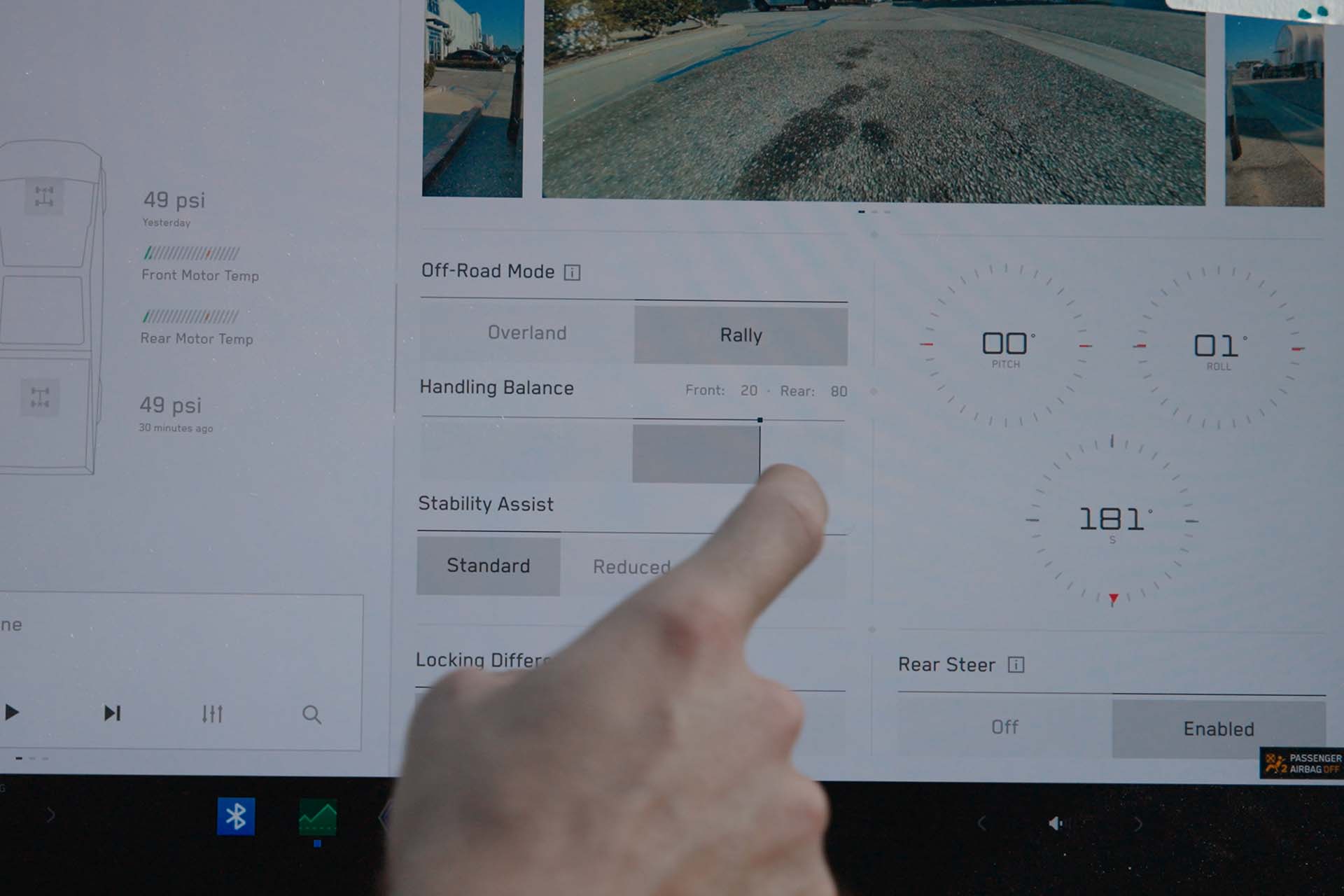
The interface is familiar. Drivers can still adjust the front-to-rear power bias and choose between different levels of stability assistance. The rear locking differential can also be activated.
Overland Mode retains its four surface selections: All Purpose, Rock, Gravel, Deep Snow and Sand.
What we did not find was Wade Mode.
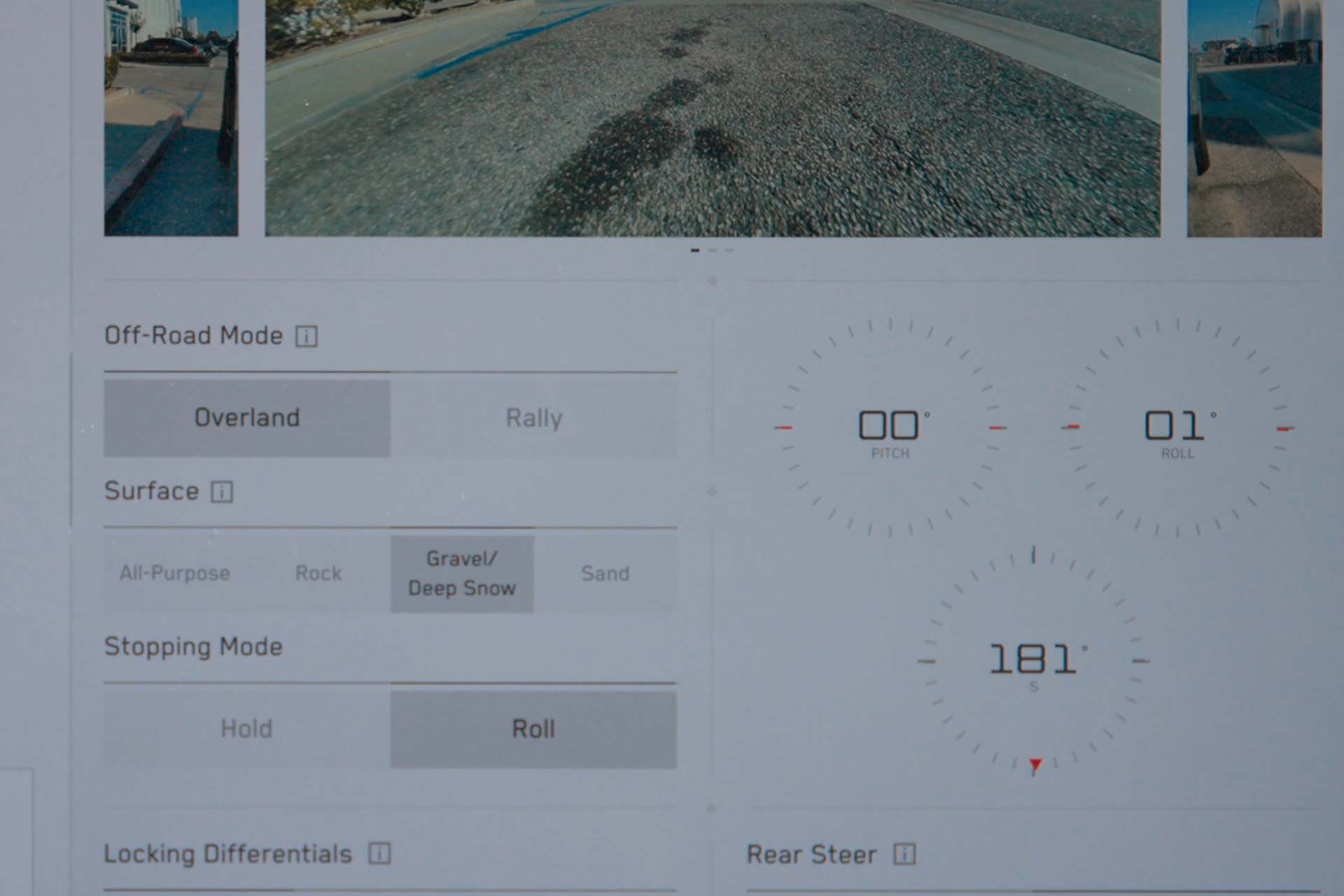
That makes sense mechanically. On air-suspension Cybertrucks, the onboard air system plays a role in pressurizing the battery pack for water crossings. With no air compressor supporting the suspension on this truck, that capability appears to have disappeared as well.
The Rally Mode name change may also suggest Tesla has recalibrated how the coil-sprung truck behaves when driven aggressively on loose surfaces. There is only one proper way to figure that out.
We need to get it dirty.
This Truck Isn’t Staying Stock
For Unplugged Performance, getting this Cybertruck is about much more than comparing option sheets.
This is a new version of a platform we already know extremely well, and we want to understand what the coil suspension changes, where its limits are and what can be improved.
We already have a UP INVINCIBLE® heavy-duty rock slider and side-step system planned for this truck, which should also make getting in and out easier without the air-suspension truck’s Entry Mode.
That is only the beginning.
Our team in Hawthorne, California will be testing, measuring, driving and developing around this new coil-sprung Cybertruck AWD as we learn what makes it different from the versions that came before it.
As car enthusiasts, this is the part we enjoy most. A new configuration arrives, we put it on the lift, start taking things apart and figure out what is possible.
The $59K Cybertruck may be the cheaper Cybertruck, but from where we are standing, it might also become one of the most interesting ones to modify.