A Performance badge doesn’t mean every owner wants the same wheel and tire setup. Some prioritize sharp responses on a favorite back road. Others spend most of their miles on the freeway, where ride comfort, tire maintenance, and the occasional pothole become a bigger part of the conversation.

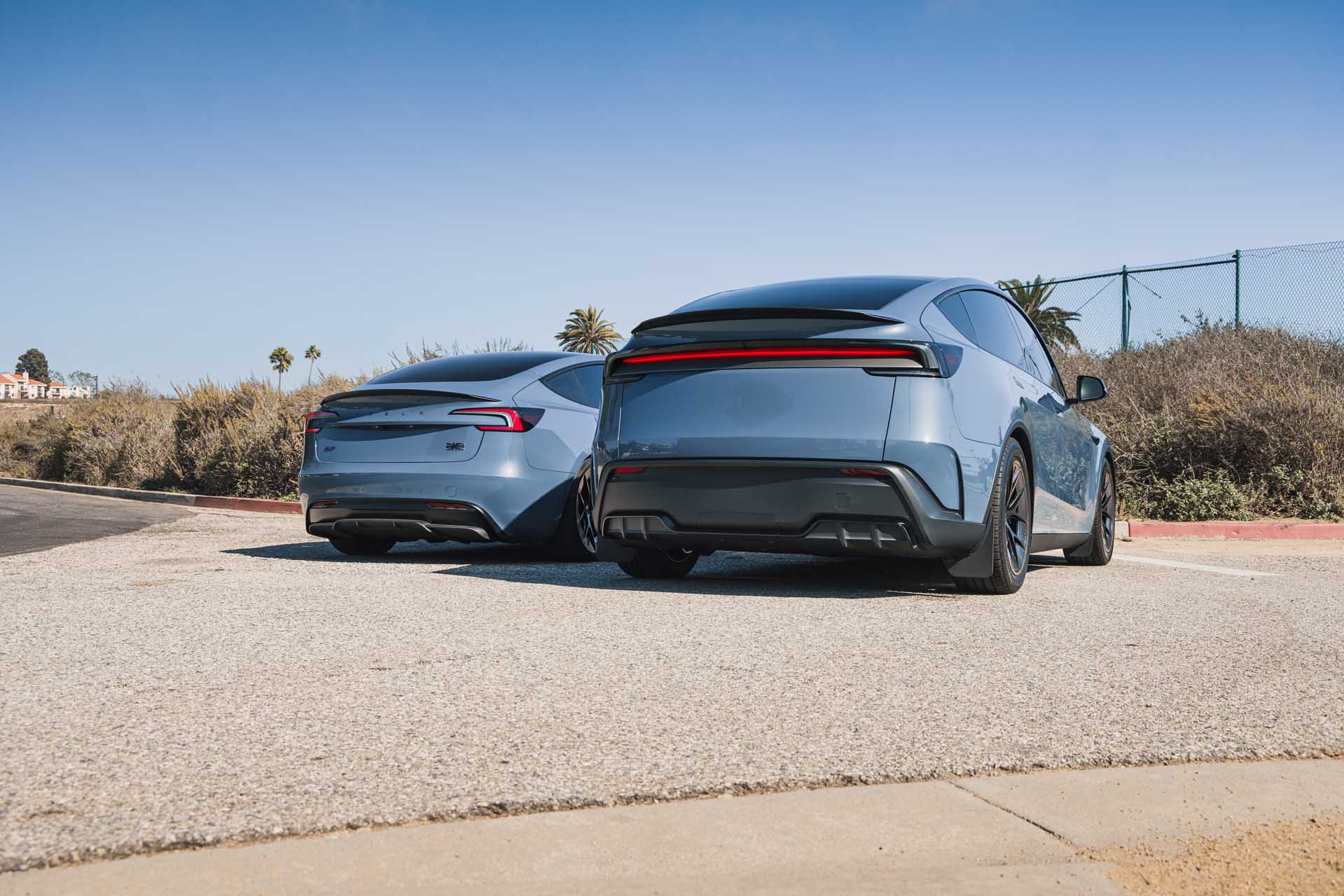
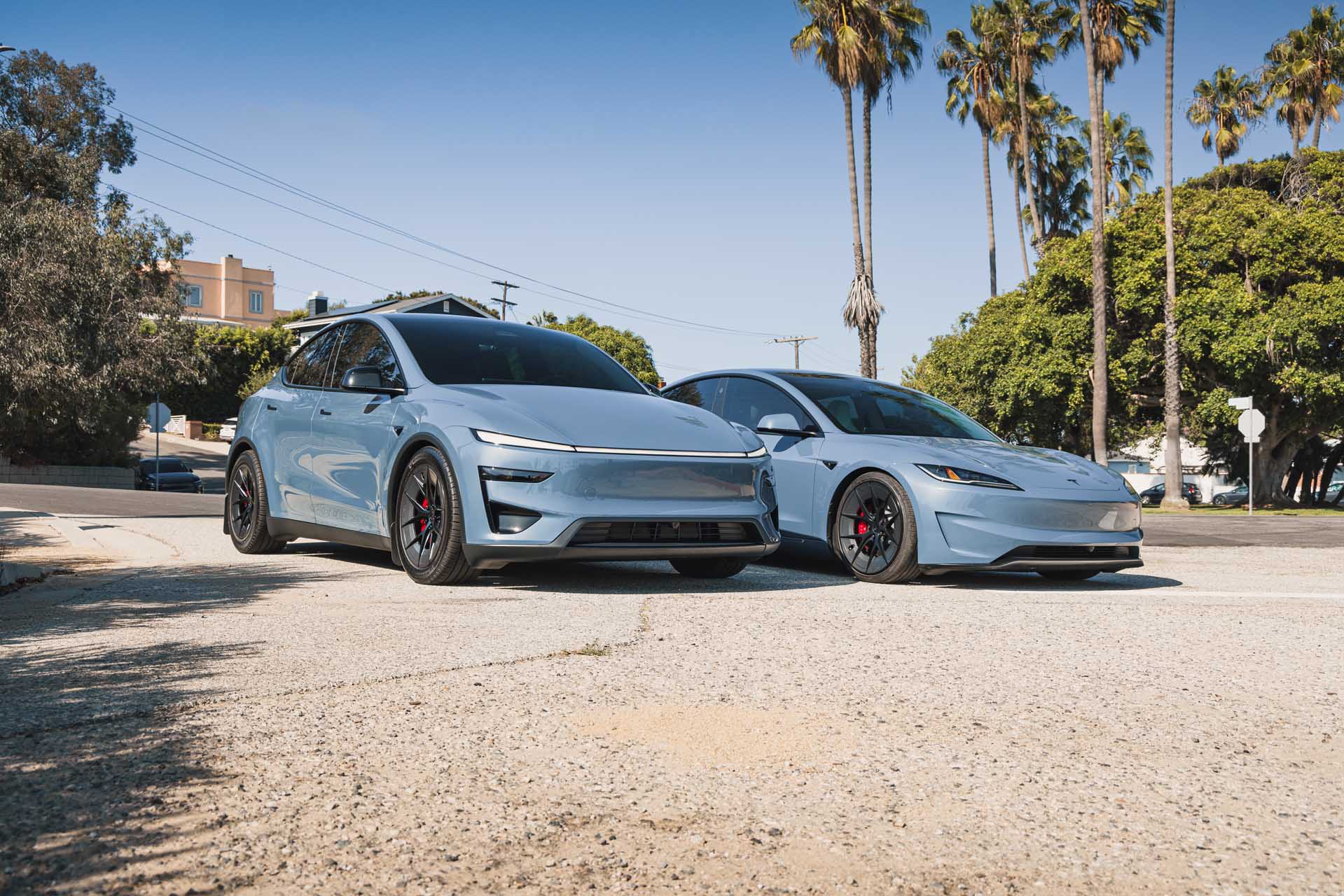
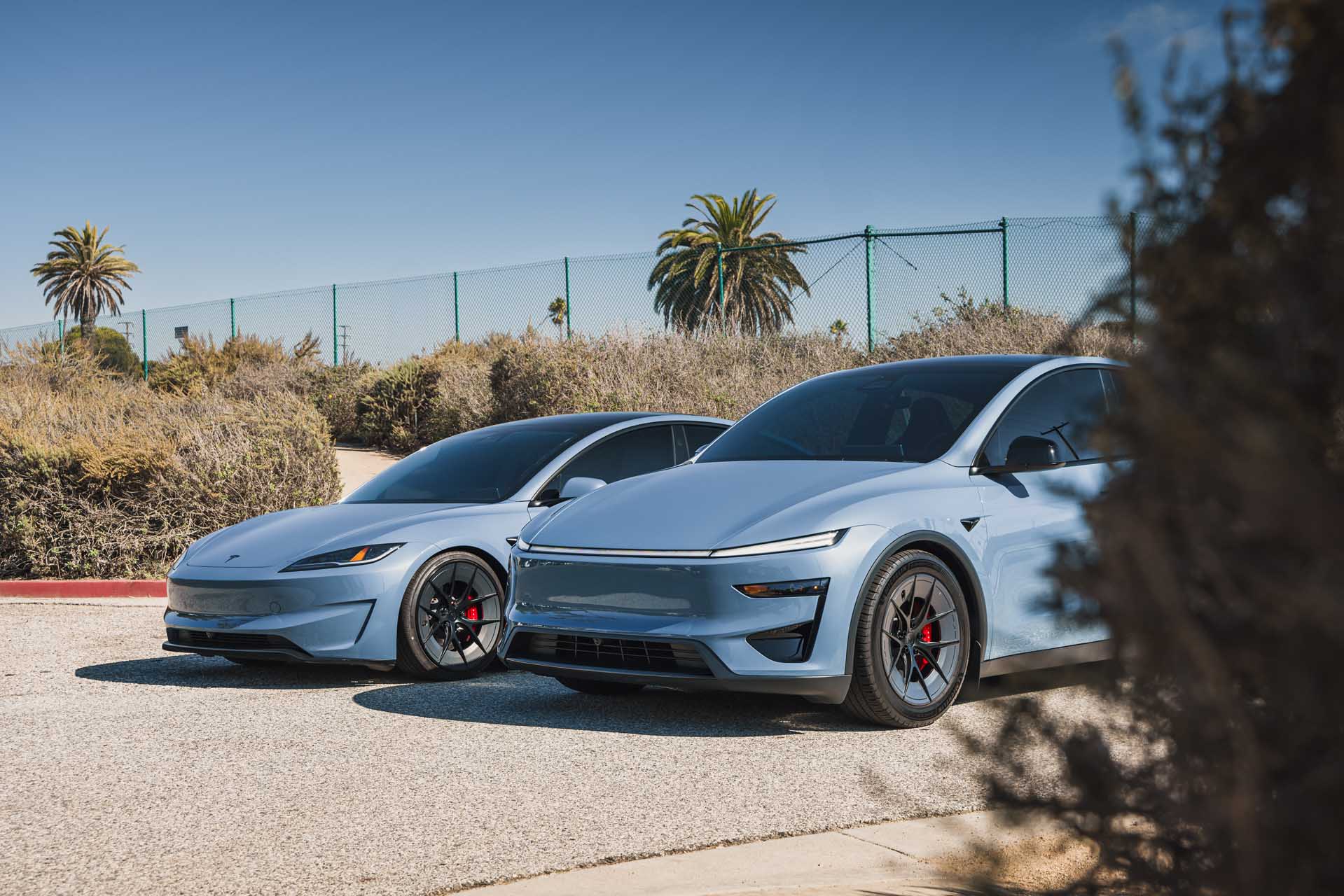
These two Frost Blue Metallic Teslas show how we approach that choice at Unplugged Performance.
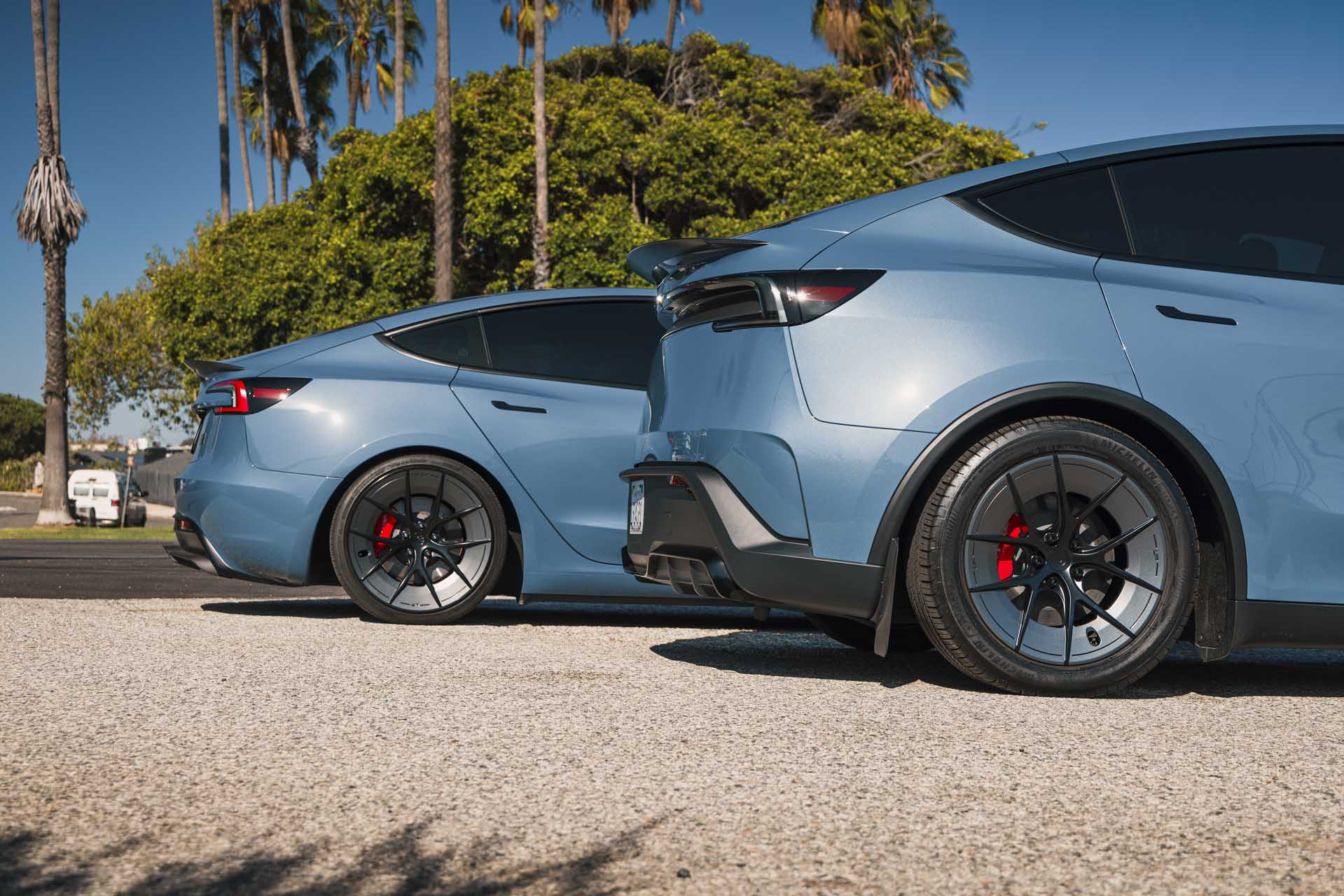
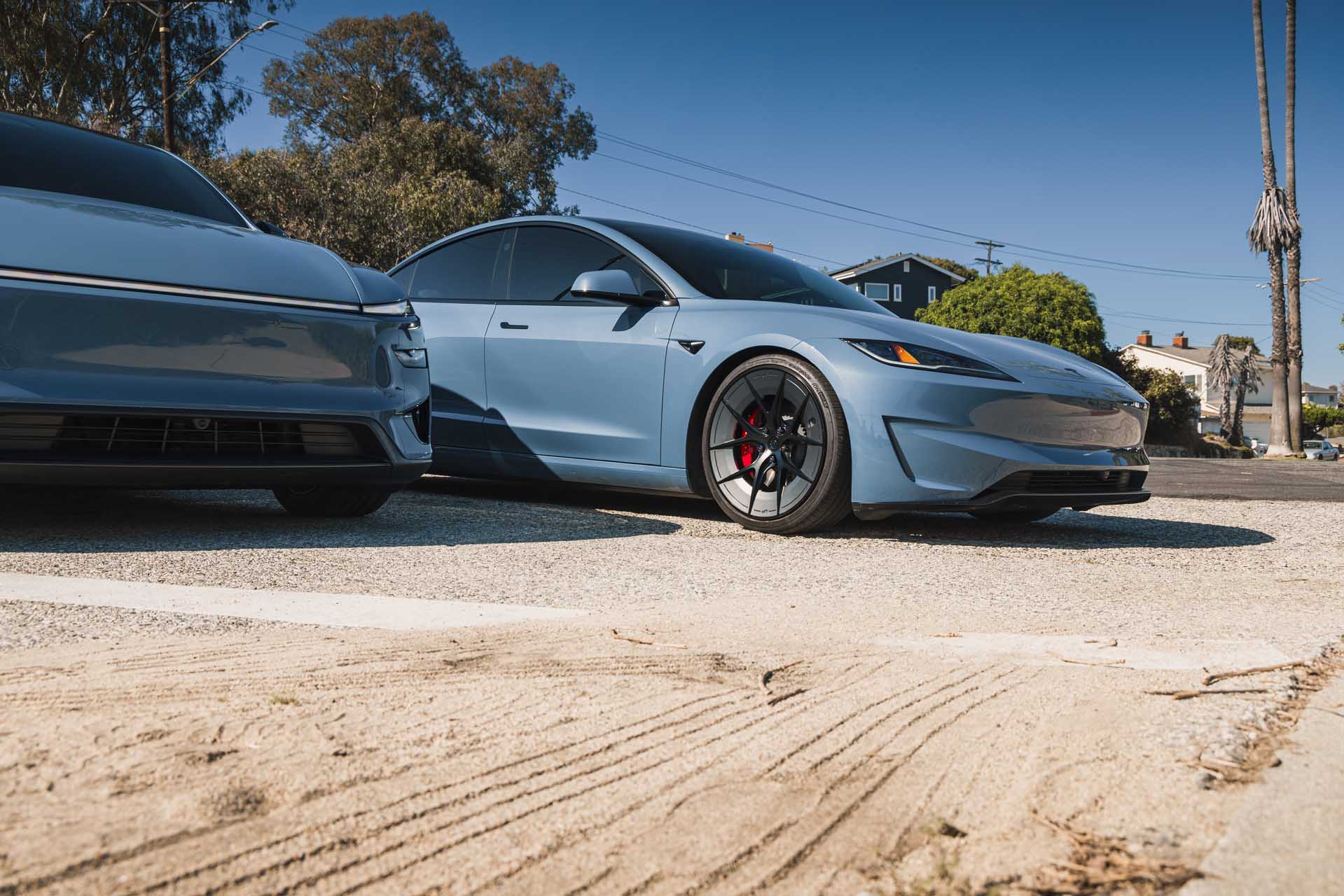
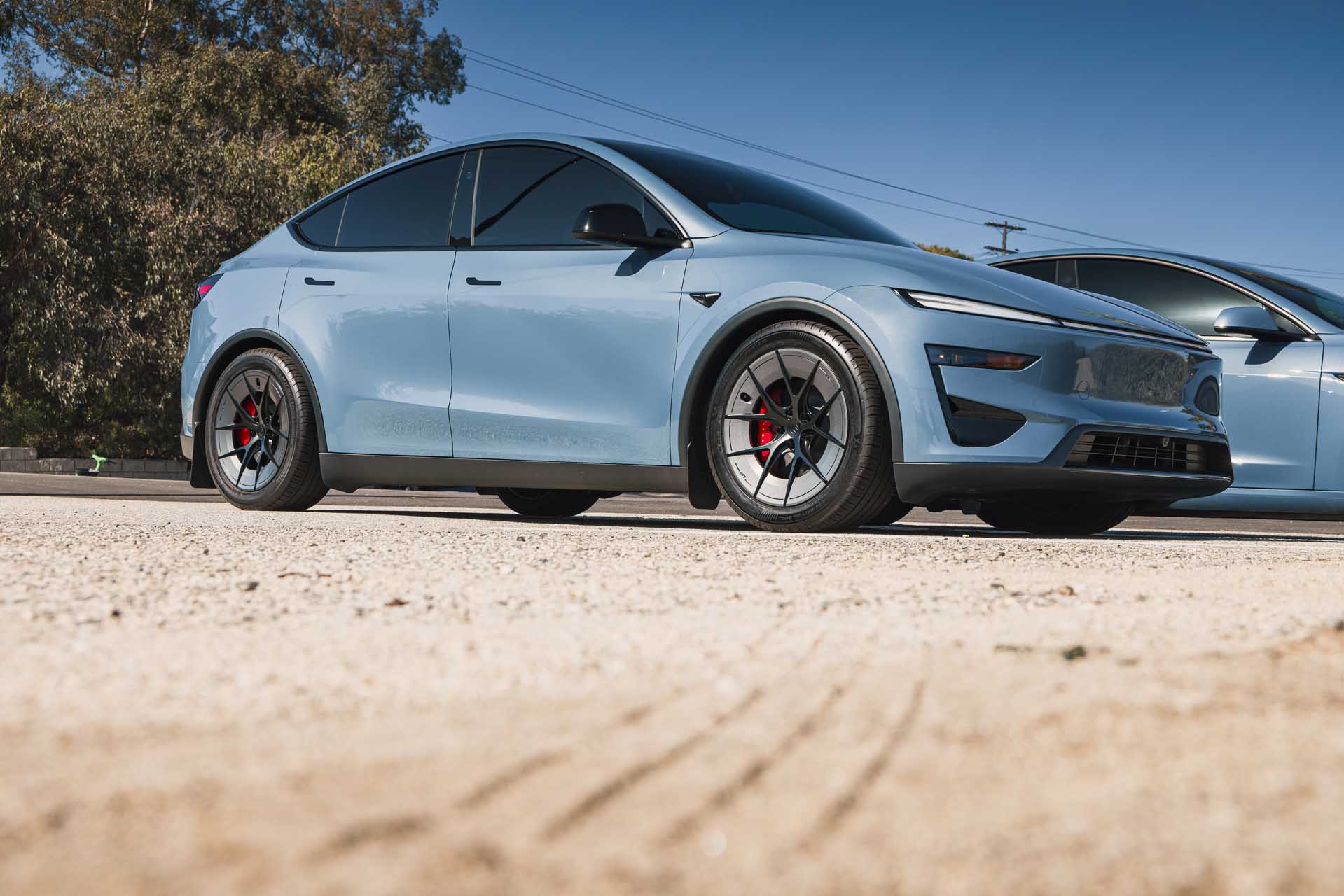
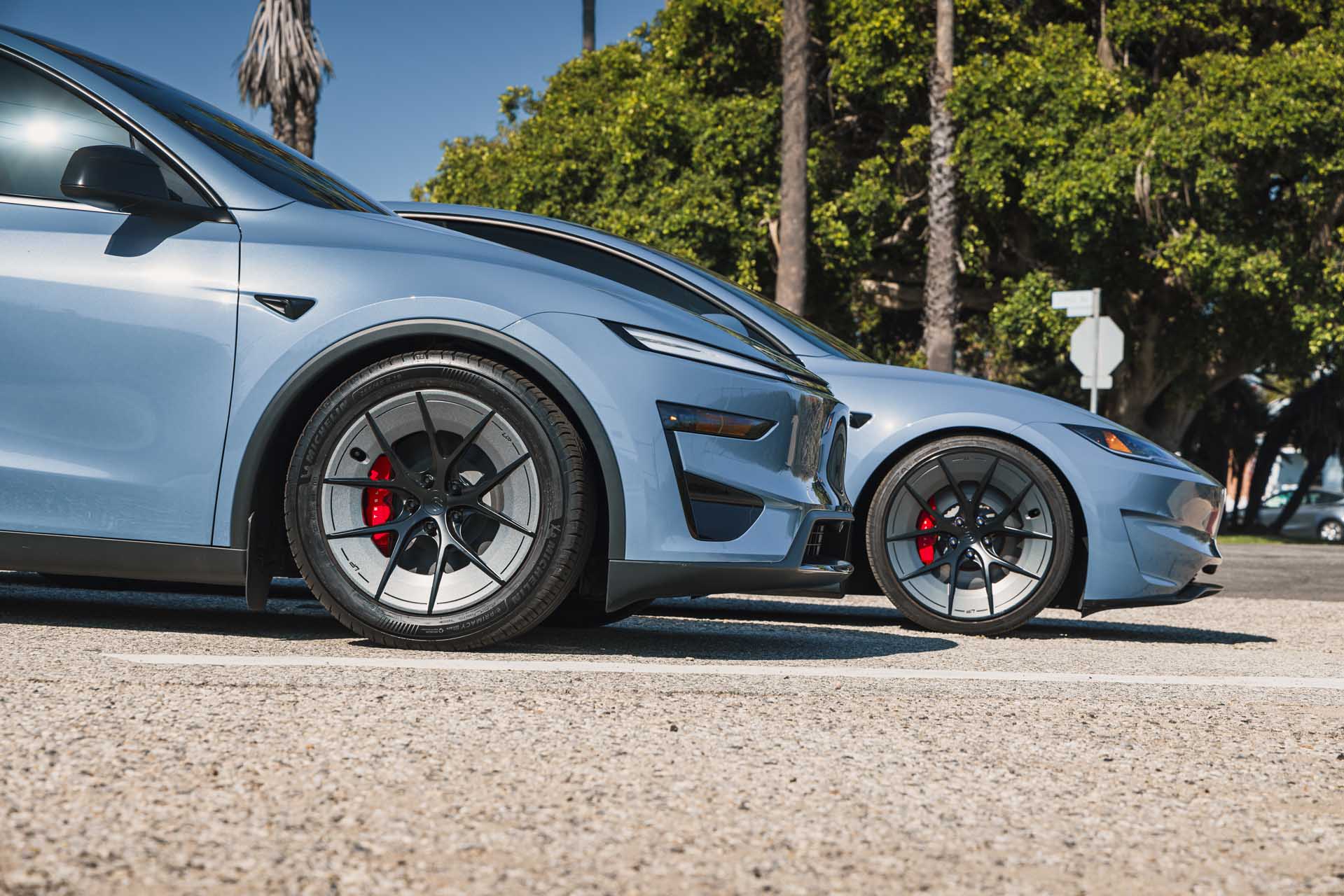
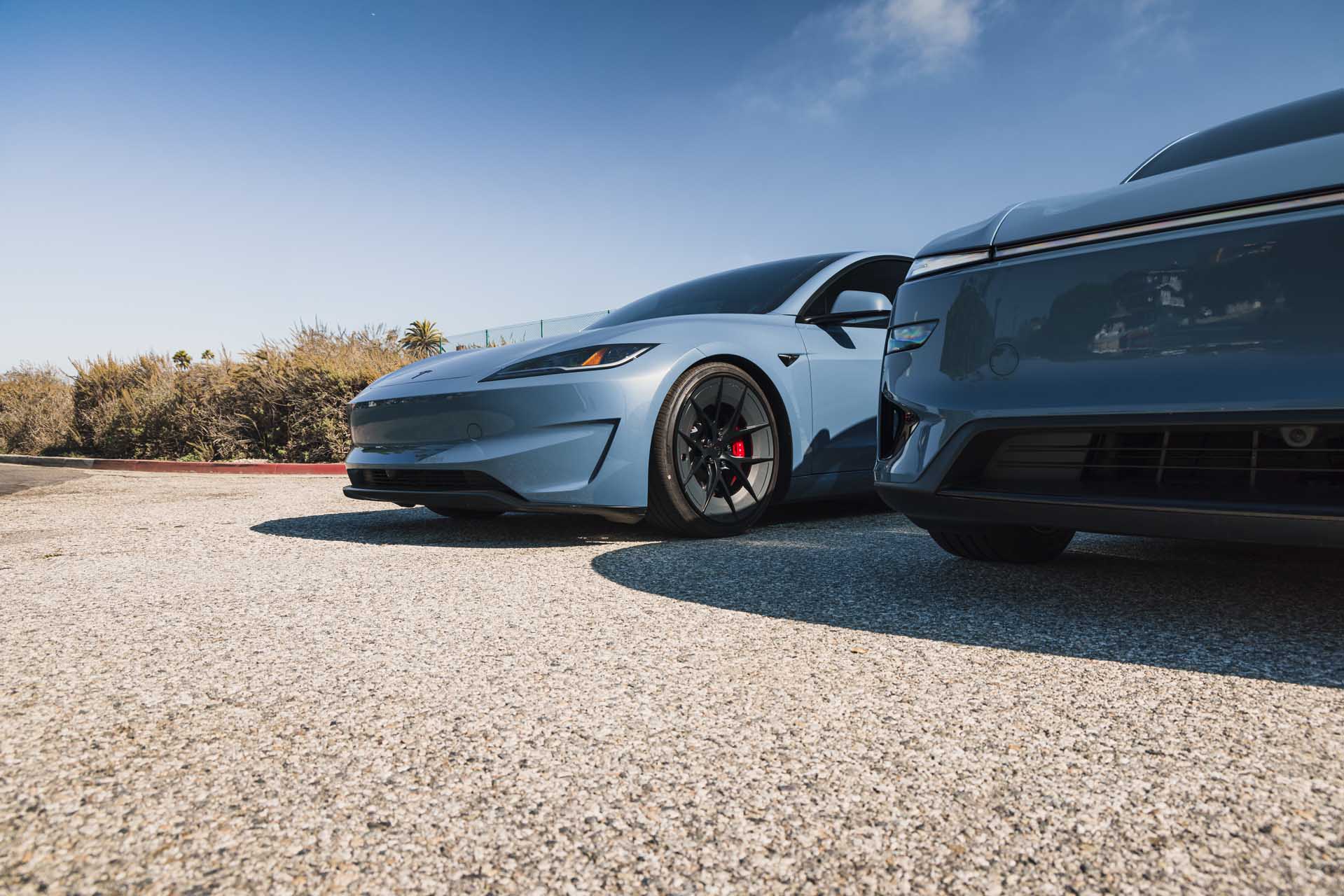
Both the Model Y Performance and Model 3 Performance received UP-RW Forged wheels in Satin Black with Gunmetal curb guard rings, paired with UP Moderate Lowering Springs. They share a design direction, but their wheel and tire specifications serve slightly different priorities.
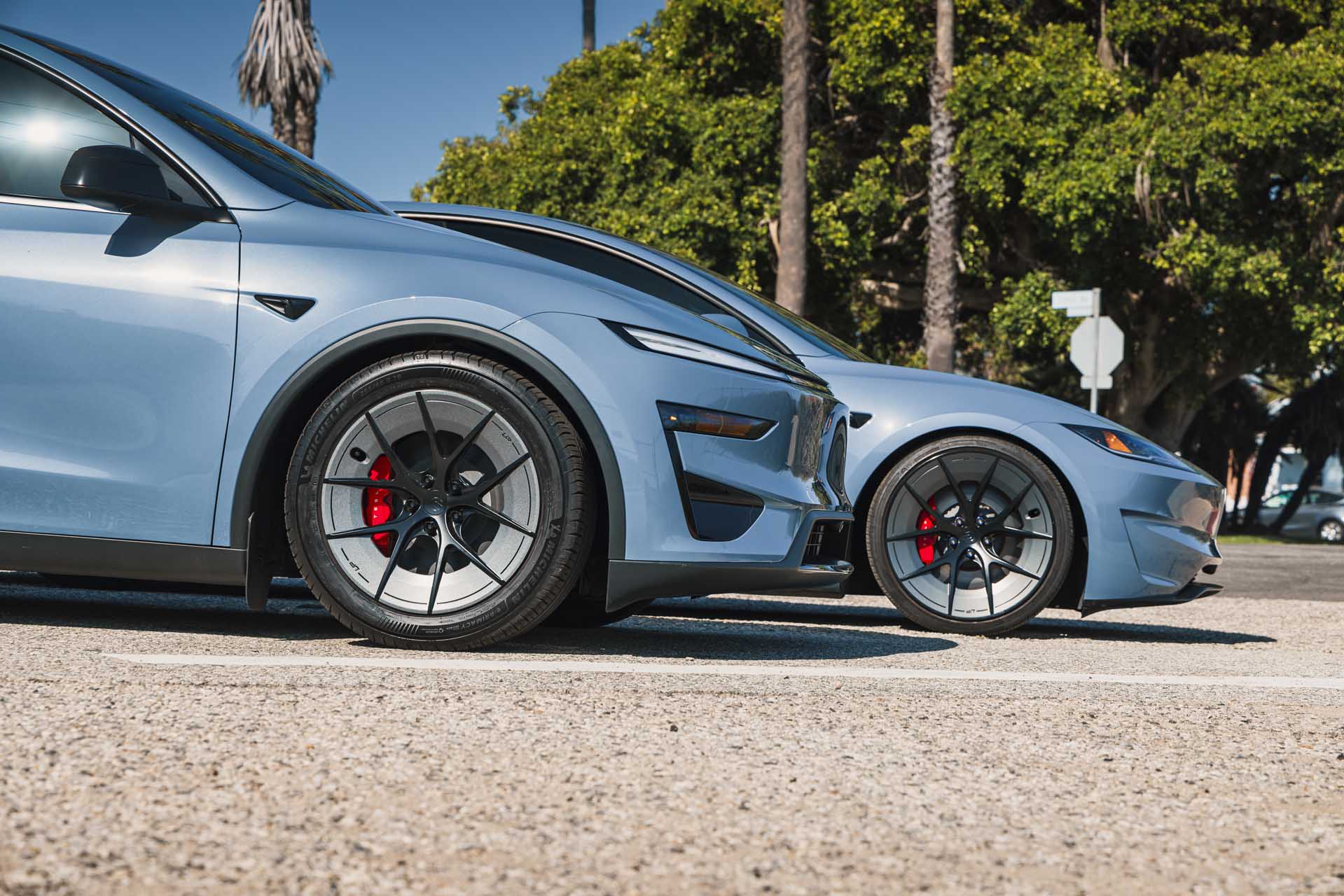
The Model Y runs a 19-inch setup with more tire sidewall. The Model 3 wears 20-inch wheels with a lower-profile tire. And both use a square fitment, with matching wheel and tire sizes front and rear.
It’s a useful reminder that you can tailor a Performance Tesla to your daily driving without being locked into its original wheel configuration.
Two Builds, Every Specification
| Component | Model Y Performance | Model 3 Performance |
| Wheels | UP-RW Forged | UP-RW Forged |
| Front wheel size | 19×8.5 ET +32 | 20×8.5 ET +32 |
| Rear wheel size | 19×8.5 ET +32 | 20×8.5 ET +32 |
| Finish | Satin Black with Gunmetal Ring | Satin Black with Gunmetal Ring |
| Tires | Michelin e.Primacy All Season | Hankook iON EVO AS |
| Front tire size | 255/45R19 | 245/35R20 |
| Rear tire size | 255/45R19 | 245/35R20 |
| Springs | UP Moderate Lowering Springs | UP Moderate Lowering Springs |
Can a Performance Tesla Run a Square Wheel Setup?
Yes. A properly selected square setup is a viable option for a Model 3 Performance or Model Y Performance.
“Square” simply means the same wheel and tire dimensions are used at all four corners. A staggered setup uses different front and rear dimensions, commonly with wider wheels and tires at the rear.
The Performance badge itself doesn’t require staggered wheels. What matters is selecting a combination with suitable wheel geometry, tire dimensions, load capacity, and clearance for the particular vehicle.
A square setup also makes front-to-rear tire rotation possible when the tire design and manufacturer’s guidance permit it. That gives owners another way to manage wear across the set.
Does square fitment mean handling becomes a problem? No. But changing tire width, construction, or compound can change steering feel, traction, and the car’s balance. A well-matched street setup can deliver confident everyday handling, while a track-focused driver may choose a different combination for maximum grip.
For these builds, the objective is a cohesive road setup that makes sense beyond the spec sheet.
Performance Brake Clearance Comes Down to Wheel Design
One of the first questions owners ask about changing wheels is whether they will clear the Performance brakes. It’s a good question, especially when considering a smaller diameter. However, diameter alone doesn’t determine clearance. The shape of the inner barrel and the space behind the spokes also matter.
UP Forged wheels are engineered around Tesla fitment requirements, including factory Performance brake clearance. The UP-RW configurations featured here allow these cars to retain their factory Performance brakes.
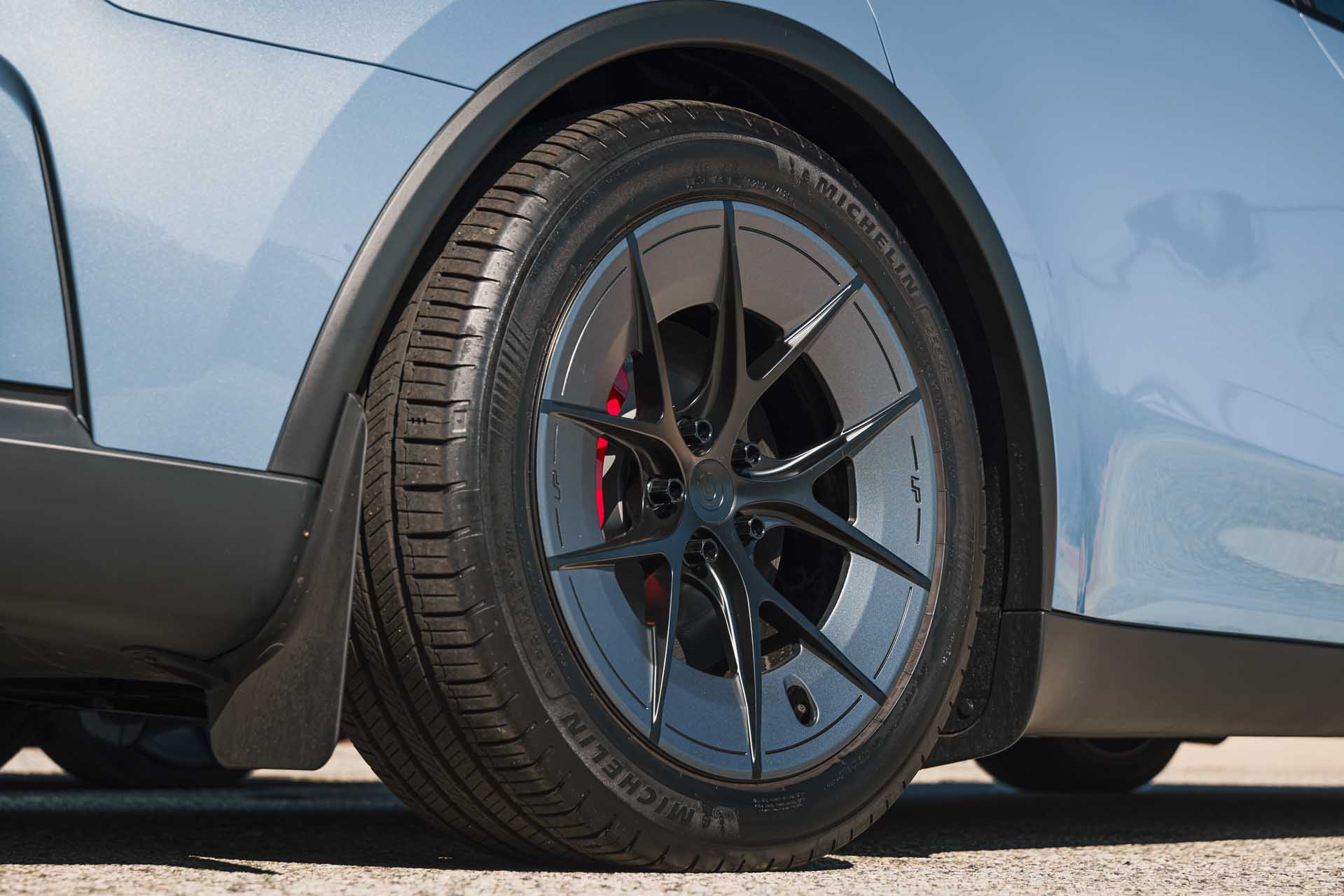
That’s an important distinction when shopping for wheels: two designs with the same advertised diameter and width can have different brake clearance.
Choosing a wheel developed for the application gives you a starting point that accounts for the hardware already on the car. Exact fitment should still be confirmed for the vehicle’s year and configuration, particularly if aftermarket brakes are involved.
The Model Y: Why Downsizing Can Improve Comfort
The Model Y Performance uses 19×8.5-inch UP-RW Forged wheels with 255/45R19 Michelin e.Primacy All Season tires at all four corners.
This is where downsizing becomes especially relevant. When you reduce wheel diameter and select a suitable tire that maintains the intended overall diameter, you gain sidewall height.
That additional sidewall gives the tire more room to flex over sharp pavement edges and road imperfections. It can help soften the impact you feel over expansion joints and broken asphalt, while providing more separation between the wheel and the road.
Tire construction and inflation pressure still influence the result, so a smaller wheel alone doesn’t guarantee a softer ride. The wheel and tire need to be considered together.
Visually, the Model Y demonstrates that a substantial tire sidewall can look right at home on a Performance trim. With the Moderate springs bringing the body closer to the tires, the 19-inch package fills the arches with a purposeful, road-ready appearance.
The Model 3: A Square Setup With 20-Inch Presence
The Model 3 Performance takes a different approach, using 20×8.5-inch UP-RW Forged wheels with 245/35R20 Hankook iON EVO AS tires front and rear.
This build keeps the visual presence of a 20-inch wheel while adopting matching dimensions at all four corners. It illustrates that square fitment and downsizing are separate decisions. You can choose a square configuration without moving to a smaller wheel diameter.
The larger wheel face suits the Model 3’s lower silhouette, and the Satin Black finish gives the Gunmetal ring a subtle contrast.
For an owner who likes the appearance of 20-inch wheels, this is another way to personalize the setup. Owners who place greater emphasis on additional sidewall can explore smaller compatible UP-RW sizes with the appropriate tire package.