EV performance does not need convincing when the results are posted. Jon Bickford just put that reality on display in the most undeniable way, by showing up and winning where it counts.
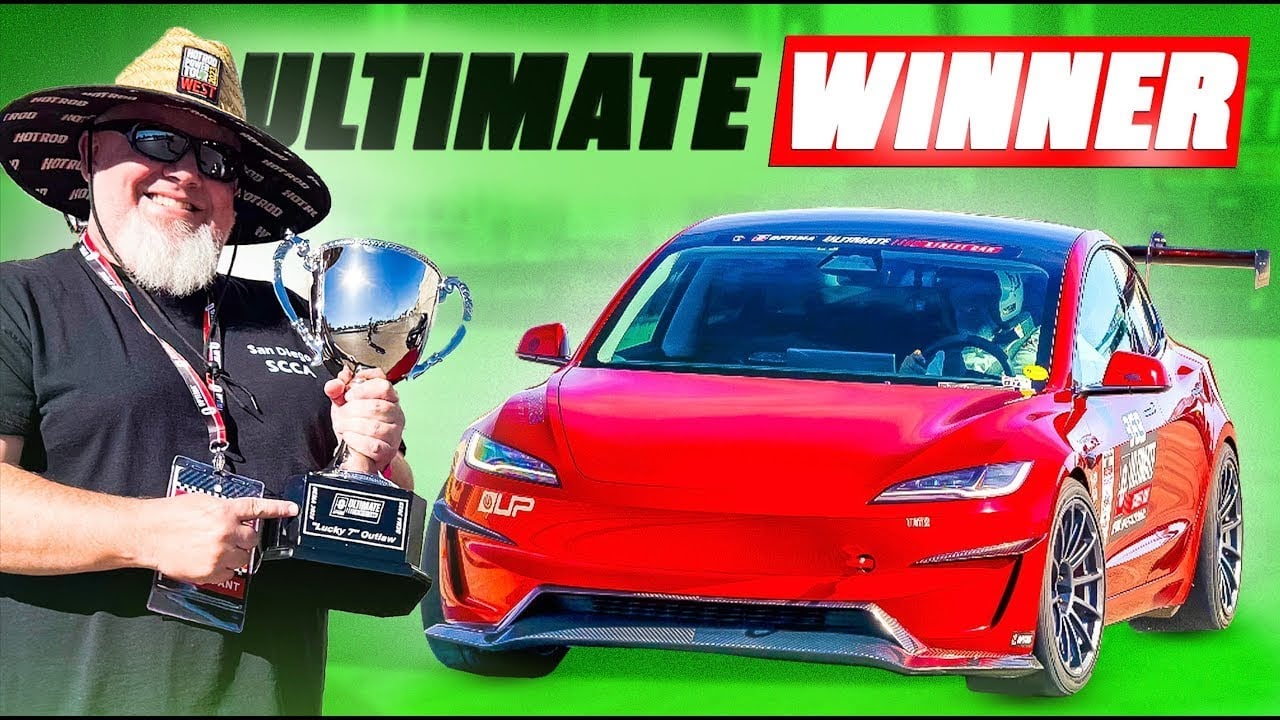
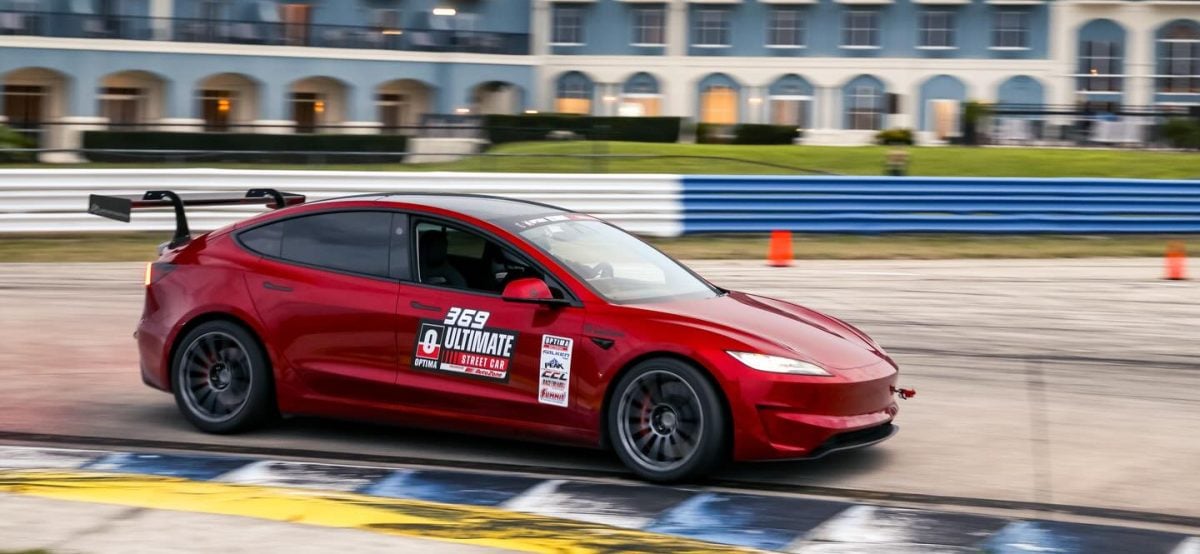
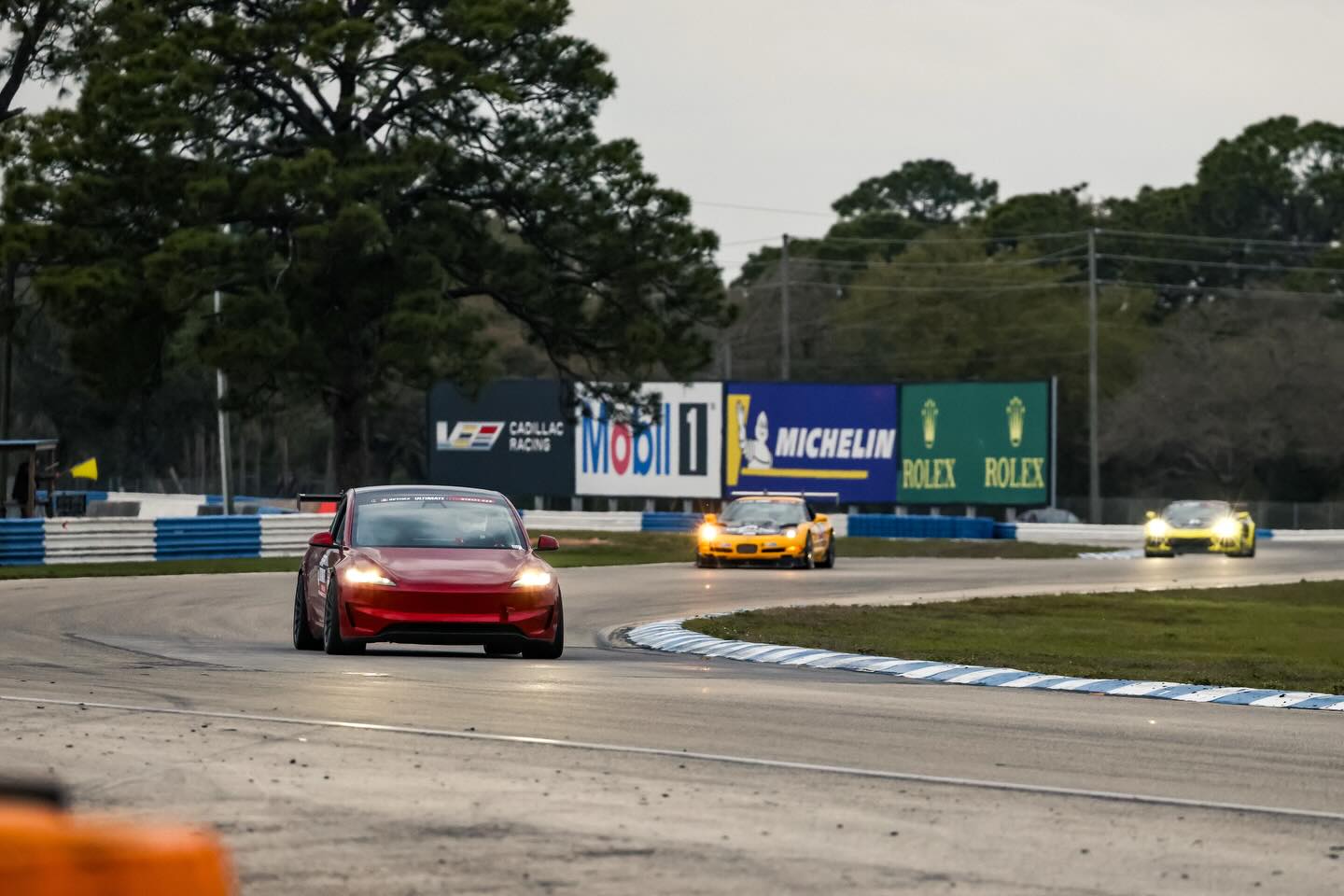
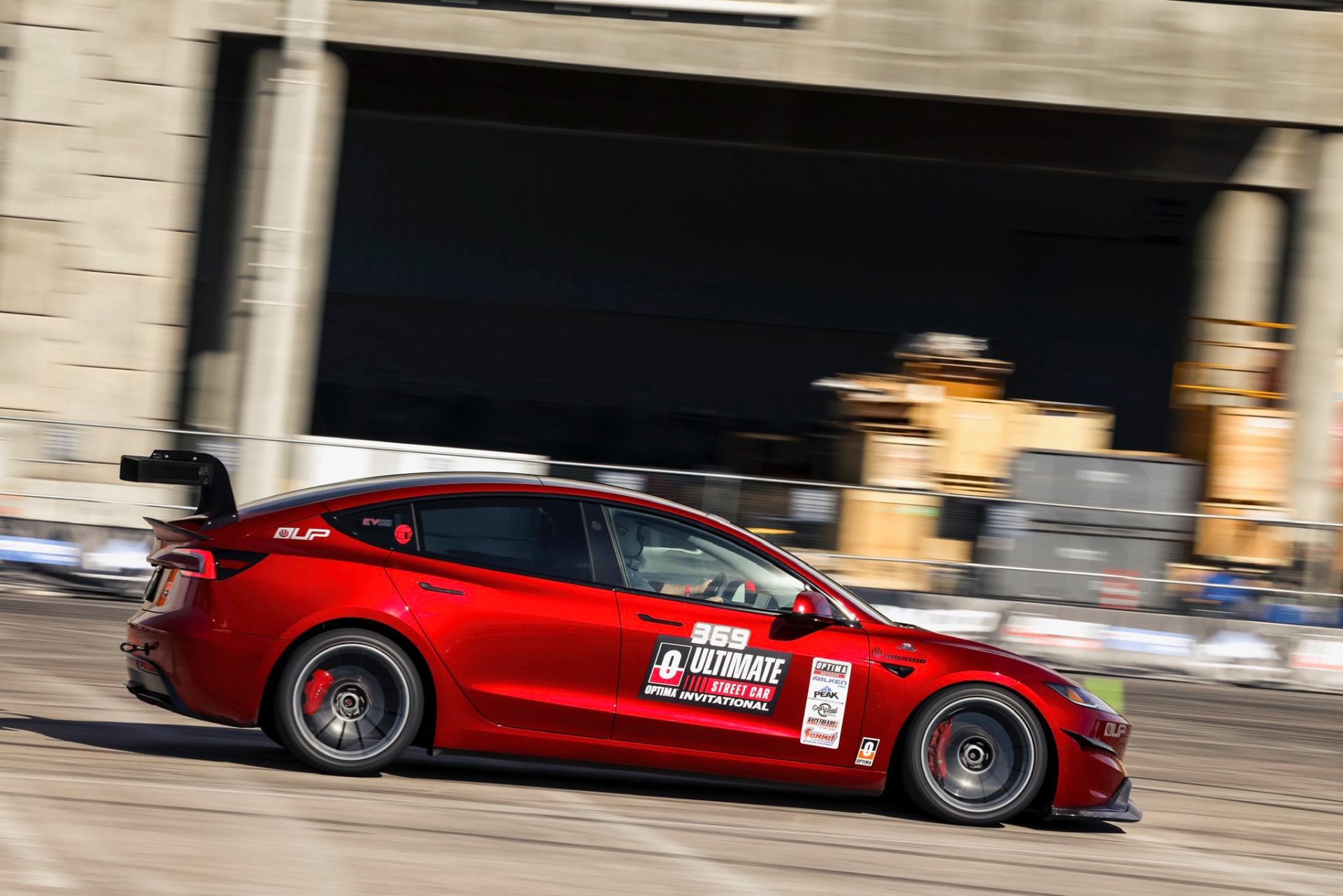
In the latest video, Jon returns with his new Tesla Model 3 Performance (Highland) and proceeds to do what a lot of people still assume cannot happen: he wins in Outlaw at the Optima Series event and finally takes down the Corvette that had won the event four years running. He did this with the same car he drove from San Diego, CA raced hard all week in Nevada, and drove back home.
That is the kind of result that defines what we are here for.
The headline: “Finally took down the Corvette”
Jon describes it plainly and that is what makes it hit even harder. After years of chasing the benchmark car in the class, he “finally matched to win” and took down an 800+ horsepower Corvette with a tube chassis and big aero.
This matters because Outlaw is not a participation class. It is where serious builds show up with serious budgets. Jon’s win is not just a “Tesla did well” moment. It is a statement that a properly set up Model 3 can run at the front in the most competitive environments and do it with repeatability.
The build: a sequel that evolved, not a reset
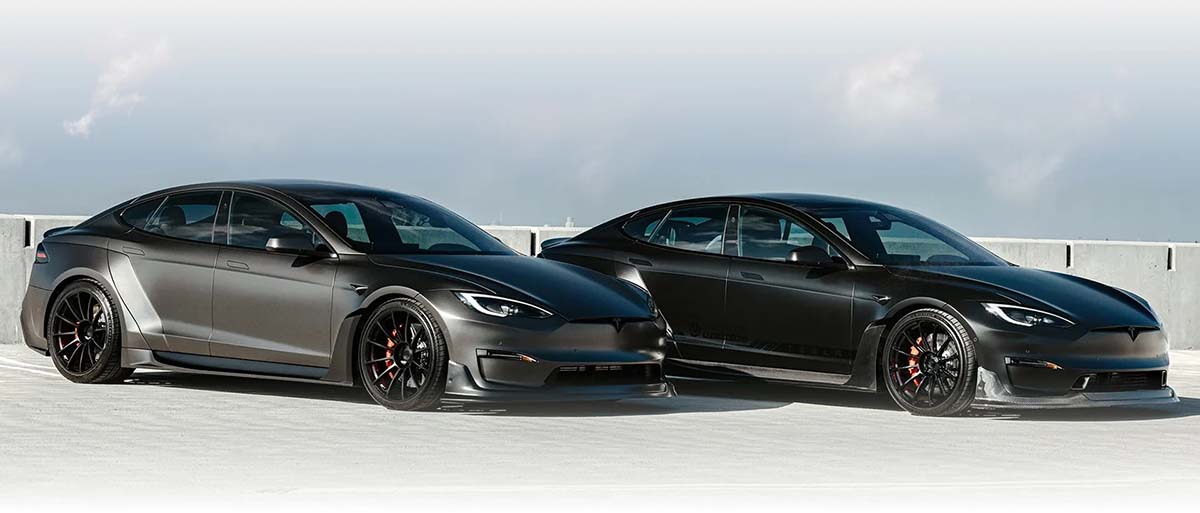
What makes Jon’s Highland program especially interesting is how practical and deliberate the progression is. This car is the sequel to the well-known gray Model 3 that Jon raced for multiple seasons and retired after last year’s event. Instead of starting from scratch, he brought over proven components: much of the suspension package, the front brakes, and key elements of the prior setup. Then he adapted the platform where the Highland is different.
Jon points out a critical detail that most people overlook: the Highland’s balance changed. The added power is primarily in the rear motor, while the front motor remains similar. The result is a more “tail happy” car that requires tuning decisions to match the new distribution of capability. Same concept, new platform behavior.
That is real motorsport development. Carry what works, measure what changed, tune for the new baseline.
Aerodynamics that earn their keep: the Unplugged Performance front diffuser
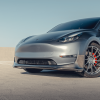
One of the most direct performance callouts in the video is the aero development. Jon notes that he “had to start working on new aero from Unplugged Performance,” specifically a new front diffuser that “gives great front downforce.” He also mentions retaining the rear wing from the previous car.
That matters because in autocross and speed stop formats, front-end authority is everything. Confidence under braking, precision at turn-in, and stability through transitions are where time disappears. A front aero package that is engineered to produce usable downforce without creating an unpredictable platform is not cosmetic. It is a competitive tool.
This is the exact environment we engineer for: high-load moments, repeated runs, and driver feedback that is measured in tenths.
The daily driver reality: race it, cool the seats, drive it home
A detail we loved was how Jon framed the “dual use” reality without romanticizing it.
- The car is lowered roughly 1.5 inches versus stock, and with tire diameter factored in, sits about 1.75 inches closer to the ground.
- The aero package is modular. He describes it as two parts: a carbon fiber front lip, and a splitter/diffuser that slides over it. For street use, he can remove the rear wing and front splitter and return the car to a more daily driver configuration.
- He even calls out the Highland’s seats as a meaningful improvement: more supportive for racing while still comfortable and fully functional for daily driving, including cooling seats during hot event days.
This is the future of modern performance. Not a car that only works in one setting, but a system that transitions between street and competition without needing a full teardown.
Wheels and tires: serious widths, smart decisions
Jon’s current setup is unapologetically aggressive, and it reflects the level of competition:
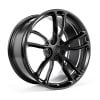
- Unplugged Performance “Pikes Peak spec” wheels (originally for Model S, double-drilled to fit Model 3 as well)
- 19×11 wheels with 305/30R19 Bridgestone tires all around for this event week
- Alternative setups include 18×11 wheels with Yokohamas, depending on conditions
His tire selection logic is exactly what experienced competitors do: he chooses primarily based on weather and temperature, even willing to change his mind the day before an event. He stores tire sets indoors to protect them from UV and maintain performance consistency, which tells you how seriously he treats preparation.
This is not “bolt-ons and hope.” It is a disciplined, data-driven approach to winning.
What’s next: widebody fenders, more front grip, and Porsche-like steering
Jon is not done developing his Model 3 Performance. He calls out the next steps clearly:
- Widebody front fenders to unlock more front tire capacity (he notes the rear can accommodate significantly more tire, but the front is the current constraint)
- More weight reduction from the front end, referencing his prior car’s carbon hood/fenders and lightweight splitter
- A balance shift that he describes as making the car “a little bit more like a Porsche” with sharper steering and crisper turn-in
Why we celebrate this: this is what Unplugged Performance exists to support
We build parts for drivers who measure their performance in outcomes, not opinions. Jon’s win is the clearest example of the ecosystem we want to expand:
- Competitive racing, not just spirited driving
- Real-world durability, not one-time hero runs
- Engineering that supports repeatable performance under load
- A community that proves capability against the toughest benchmarks
When Jon says most competitors show up with trailer rigs that cost more than his house, and he shows up by driving the car to the event, competing, and driving it back, he is highlighting something bigger than a single win. He is showing that modern EV performance can be accessible, reliable, and genuinely dominant when it is set up correctly.
That is the standard we design for.
Watch the video, then keep building
If you are the kind of owner who wants more than a look, more than a spec sheet, and more than a claim, study what Jon is doing. Look at the decisions: modular aero, tire strategy, platform-specific tuning for the Highland’s rear-biased power delivery, and a focus on finishing as much as winning.
And if you are building your own Model 3 for autocross, speed stop, track days, or simply a sharper daily driver that can survive real abuse, we are here for exactly that. We will keep engineering parts that belong in competition, because results like Jon’s are not a fluke. They are the outcome of doing it properly.