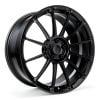
Tesla Model 3 UP-03 Lightweight Forged Wheels (Set of 4)
-
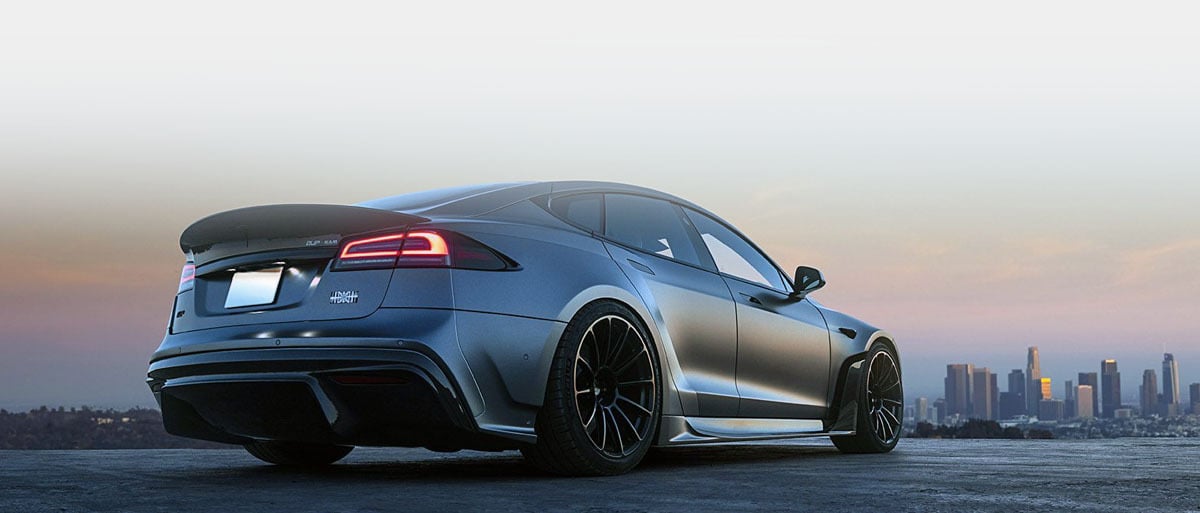
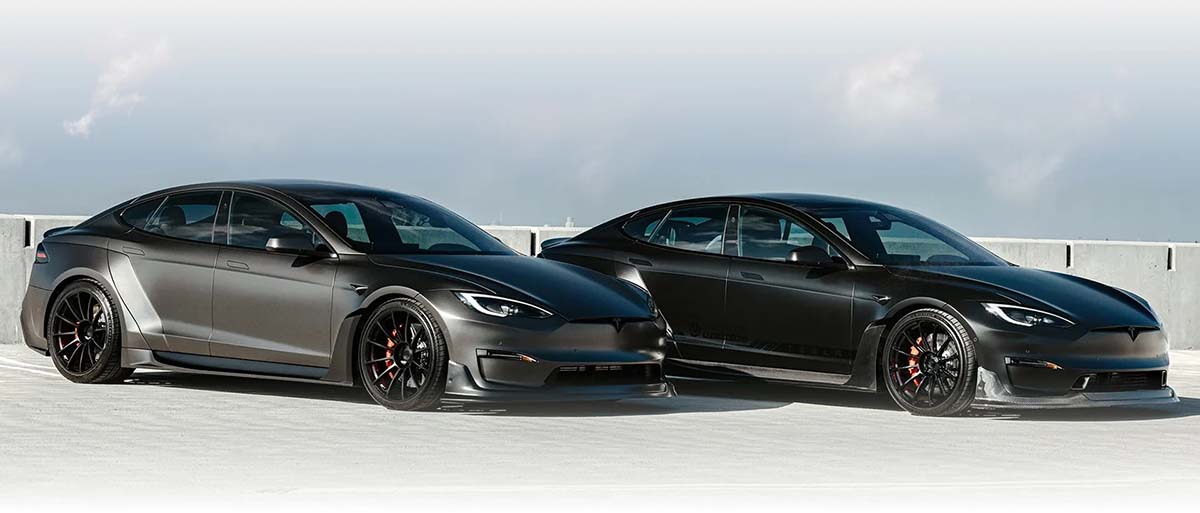
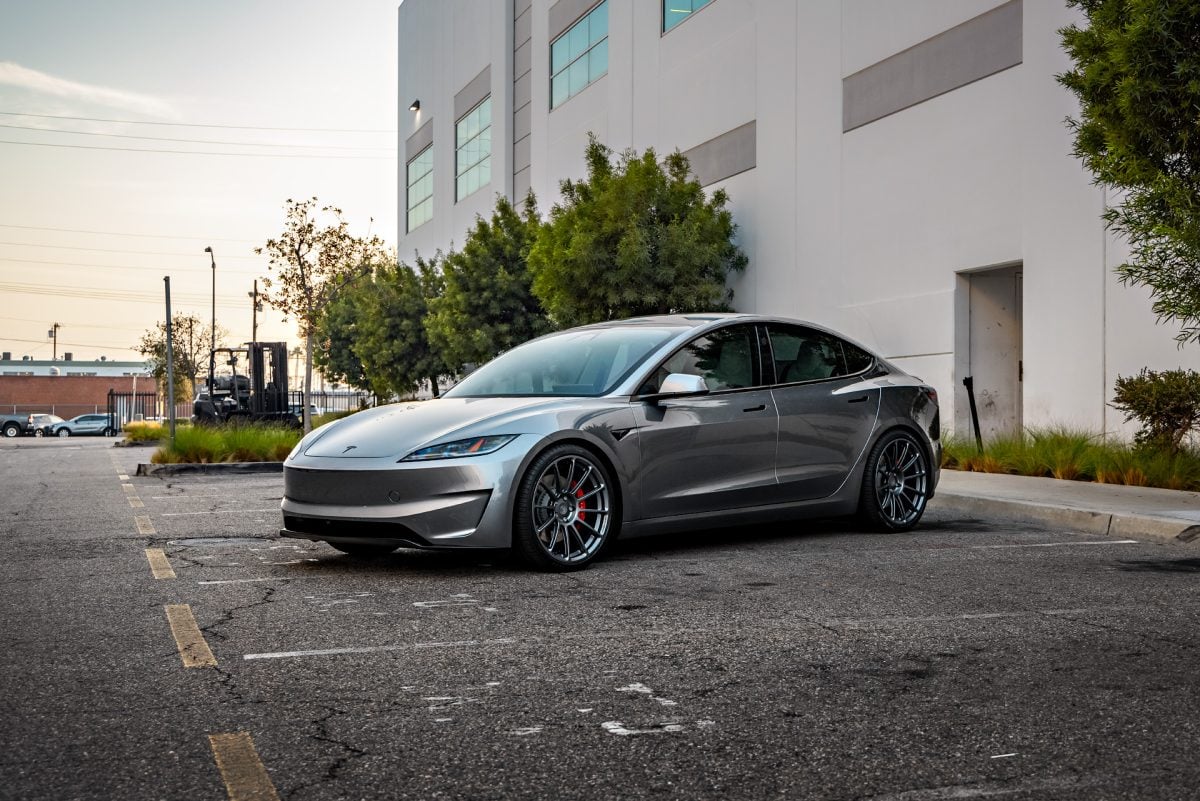
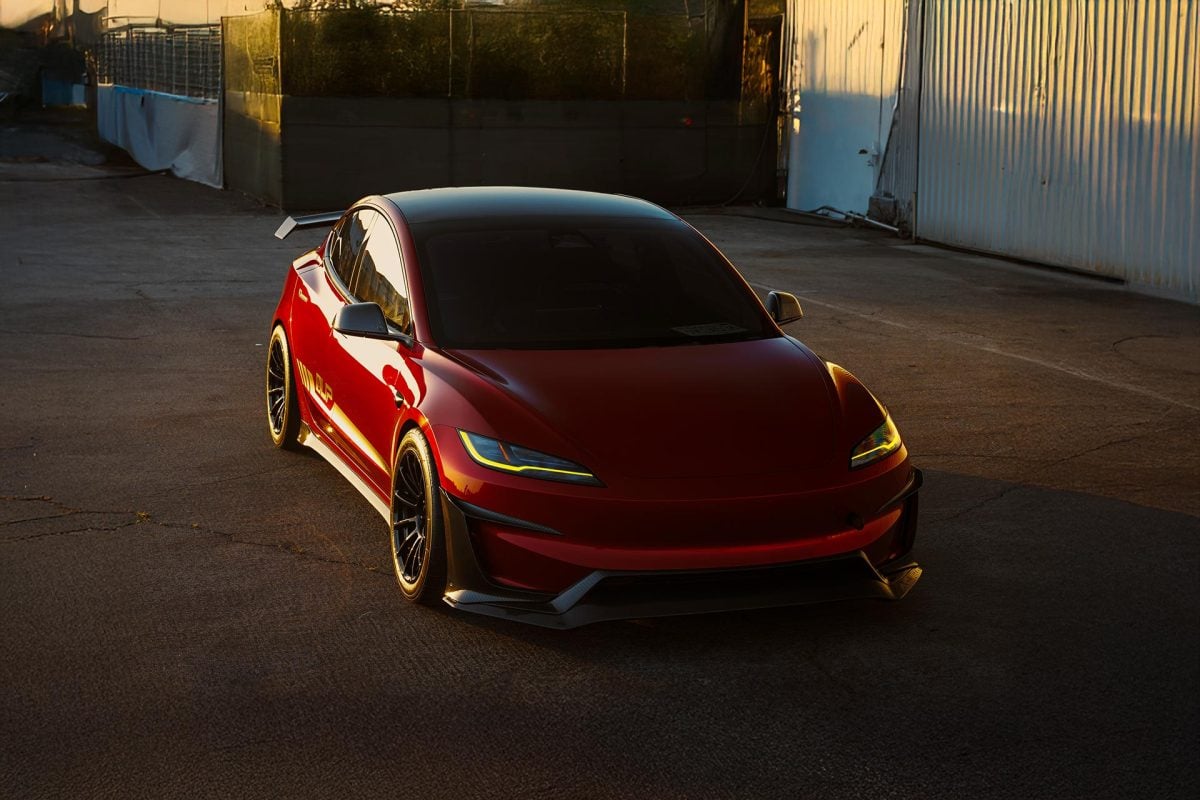
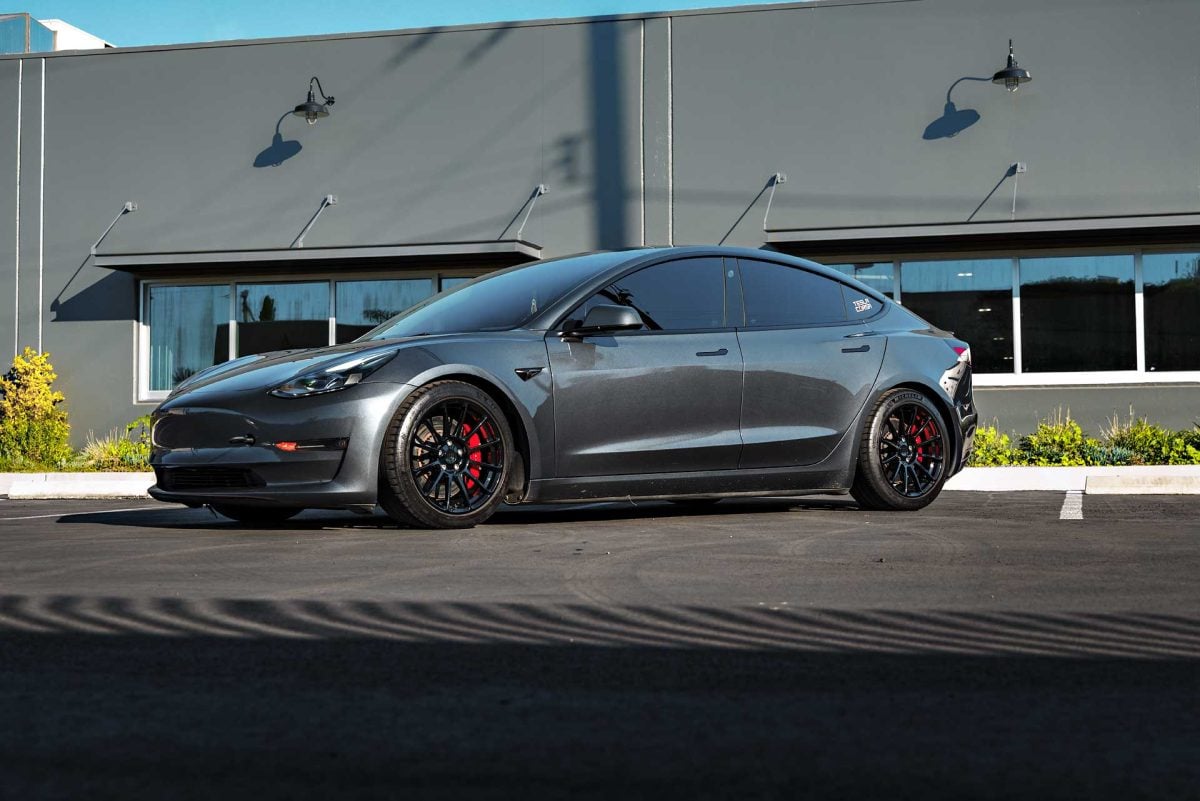
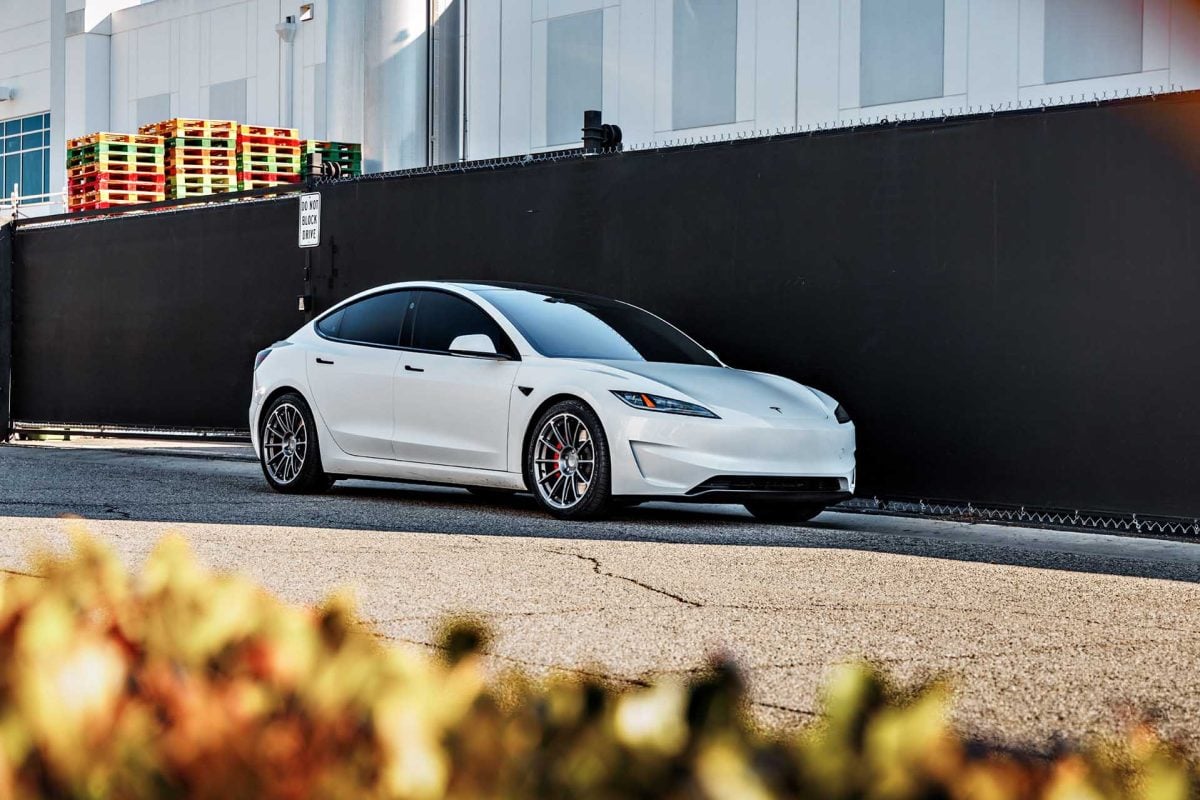
Boost your Tesla Model 3’s performance with Unplugged Performance UP-03 forged wheels. Crafted from Forged aerospace-grade aluminum, these lightweight, track-proven wheels offer unmatched strength, efficiency, and durability. Designed specifically for Tesla, they enhance handling and style. Backed by an unlimited mileage and track-use warranty for ultimate confidence and performance.
- Fits ALL Model 3 Models (AWD, RWD, Performance)
- Wildly overbuilt with high load ratings for extreme strength
- Knurled barrel to reduce the possibility of tire slip during drag racing and aggressive track use
- Engineered specifically for Tesla TPMS adapter, factory lug nuts, and tires.
Buy this product and earn 3595 UP Points.


Product Details
Tesla Model 3 – UP-03 Lightweight Forged Wheels
From Laguna Seca, to Pikes Peak, to Tsukuba Circut, to Death Valley, to the Australian Outback, to the Nordic Arctic Circle, the UP-03 has taken on the world’s harshest environments and delivered incredible performance, durability, and reliability across the Tesla range of models. We are unique in the wheel world that’s beset by generic designs and copy-cat wheel companies, content to produce the same basic wheels for any car on earth. We design and engineer our wheels specifically for the unique demands of Tesla vehicles including the immense weight and wild torque and acceleration, down to small details like TPMS sizing and brake clearance. Drive on Unplugged Performance wheels to enjoy the ultimate solution to the problem of making a very heavy Tesla accelerate and decelerate at maximum velocity while expending minimum energy. Could we make these superlight wheels even lighter? Yes but only by sacrificing durability and at the end of the day we want these wheels to far to outlive the lifetime of the vehicle.
Off-Road Spec:
If you ‘re looking to take your Tesla Model 3 off-roading, we recommend a 18×9 +20 FRONT / 18×9 +20 REAR wheel fitment.
Need help?
Find an installer
Wheel Fitment Info
| Wheel Fitment | Offset | Weight | Load Rating | Application | OEM Tire Acceptable | Recommended Tire Size |
|---|---|---|---|---|---|---|
|
18×9 |
+20 |
19.1 lbs (8.66 kg) |
1984 lb (900 kg) |
Sport |
No |
245/45 18 |
|
18×9 |
+33 |
18.8 lbs (8.52 kg) |
1984 lb (900 kg) |
OEM+ |
Fits OEM Tires |
245/45 18 |
|
18×9.5 |
+35 |
19.82 lbs (8.99 kg) |
1984 lb (900 kg) |
Sport |
No |
265/40 18 *Requires 15mm Front Spacer for 2024+ Model 3 |
|
18×10.9 |
+37 |
21.10 lbs (9.57 kg) |
1984 lb (900 kg) |
Race Spec |
No |
295/35 18 *Requires 15mm Front Spacer and Front Wide Fenders |
|
18×10.5 |
+40 |
TBD |
1984 lb (900 kg) |
Street & Track |
No |
285/35 18 *Requires 15mm Front Spacer |
|
19×9/10 |
+25/+30 |
TBD |
1984 lb (900 kg) |
Performance OEM+ |
Fits OEM Tires |
245/40 19 / 275/35 19 |
|
19×9 |
+33 |
20.00 lbs (9.07 kg) |
1984 lb (900 kg) |
OEM+ |
Fits OEM Tires |
245/40 19 |
|
19×9.5 |
+35 |
20.56 lbs (9.32 kg) |
1984 lb (900 kg) |
Sport |
No |
265/35 19 |
|
19×10 |
+30 |
TBD |
1984 lb (900 kg) |
Street & Track |
No |
275/35 19 |
|
20×9/10 |
+25/+30 |
TBD |
1984 lb (900 kg) |
Performance OEM+ |
Fits OEM Tires |
235/35 20 / 275/30 20 |
|
20×9 |
+33 |
21.38 lbs (9.69 kg) |
1984 lb (900 kg) |
OEM+ |
Fits OEM Tires |
245/35 20 |
|
20×9.5 |
+35 |
21.46 lbs (9.73 kg) |
1984 lb (900 kg) |
Sport |
No |
265/30 20 |
|
20×10 |
+30 |
TBD |
1984 lb (900 kg) |
Street & Track |
No |
275/30 20 |


Can I run a wider tire on UP aftermarket wheels for better grip?
Yes, and it is one of the most impactful upgrades you can make for performance driving. Several UP wheels are available in widths that exceed the stock Tesla fitment, allowing a wider tire with a larger contact patch, more cornering grip, and better traction under acceleration. This is especially popular on the Model S Plaid and Model 3 Performance for track days and spirited driving, where the extra grip makes a noticeable difference.
That said, wider is not always better, and the right choice really depends on how you use the car. A wider tire is excellent on a Saturday at the track. On Monday through Friday it adds rolling resistance, which translates directly to reduced range. The heavier the tire and the wider the footprint, the more energy it takes to move the car. For most daily drivers the range impact is real enough to consider.
If your priority is OEM+ aesthetics, a smooth daily ride, or maximizing range, a narrower tire at or near the stock width is the smarter call. Several UP wheel configurations are specifically designed for this, running the same section width as the factory tire while upgrading the wheel itself for reduced weight and improved looks.
The sweet spot for most owners is somewhere in between. A modest width increase over stock, properly matched to the wheel, gives meaningfully better grip without the range and comfort penalties of going very wide. The UP Wheel and Tire Guide at unpluggedperformance.com/tesla-wheel-and-tire-guide covers recommended tire widths for every wheel configuration, and the UP team can help you find the right balance for your specific model and driving style.
Where can I find the correct tire size for my UP aftermarket wheels?
Unplugged Performance publishes detailed wheel and tire guides for every Tesla model, covering stock sizes, UP aftermarket wheel fitments, offset, bolt pattern, and recommended tire sizes for each configuration. The guides cover Tesla Model S, Model 3, Model X, Model Y, and Cybertruck across all years and trims. You can find the full guide at unpluggedperformance.com/tesla-wheel-and-tire-guide or navigate directly to your model from the UP website. If you have questions about a specific wheel and tire combination, contact UP at info@unpluggedperformance.com or call +1 (213) 493-6323.
Do I need different tire sizes if I install Unplugged Performance aftermarket wheels?
It depends on the wheel you choose, and the answer is more straightforward than most people expect.
Some UP wheels are designed as direct OEM replacements at the same diameter and width as the factory wheel. In those cases, your existing tire size carries over without any changes. For example, a UP wheel in 19-inch for the Model Y at the same width as the factory Gemini runs the same 255/45R19 tire your car already uses.
Where tire sizes do change is when you move to a different wheel diameter or width. If you go from a 19-inch to a 20-inch wheel, the tire needs a lower profile sidewall to keep the overall diameter close to stock. This matters for two reasons: speedometer accuracy and clearance. A tire that is too tall on a larger wheel will read slower than your actual speed and can cause rubbing issues. A tire that is too short will throw off the speedometer the other way and affect how the suspension sits.
Width changes follow the same logic. A wider wheel needs a correspondingly wider tire to seat correctly and perform as intended. Going narrower than recommended leaves the tire unsupported at the bead and is never advised.
Every UP wheel listing in the catalog includes the recommended tire size for that specific configuration, and the full breakdown by model, diameter, and width is at unpluggedperformance.com/tesla-wheel-and-tire-guide. If you are unsure, the UP team can confirm the right tire for your exact setup before you order.
What size tires does the Tesla Model S use?
The Tesla Model S has used staggered fitments across most of its production life, with wider tires at the rear than the front to match the car’s rear-biased performance character.
On the 2012 to 2020 Model S, the standard 19-inch wheel runs a squared 245/45R19 on all four corners. Moving to the optional 21-inch Turbine or Arachnid wheels, the fitment goes staggered with 245/35R21 up front and 265/35R21 in the rear.
The 2021 and newer Model S widened the body and expanded the OEM wheel widths to 9.5 inches front and 10.5 inches rear. The standard 19-inch Cardenio runs a staggered 255/45R19 front and 285/40R19 rear. The optional 21-inch Arachnid runs 265/35R21 front and 295/30R21 rear on Michelin Pilot Sport 4S tires. For track-focused owners, the 2023 and newer Zero G package runs an even wider staggered setup with 285/35R20 front and 305/30R20 rear.
If your Model S came staggered, going with a squared fitment through UP is a legitimate and popular choice. Running the same size on all four corners, for example 285/30R21 on the wider 10.5-inch UP wheels, gives you the ability to rotate your tires front to back and significantly extends tire life without any meaningful loss in daily driving performance. UP’s squared fitments are available across 19, 20, and 21-inch configurations and can run tire widths up to 315 in the rear for owners who want maximum contact patch and stance.
Unplugged Performance carries Michelin Pilot Sport and Pirelli P Zero tires sized for all Model S configurations across both generations.
What size tires does the Tesla Model 3 use?
The Tesla Model 3 uses 235/45R18 on the standard 18-inch Aero wheel and 235/40R19 on the optional 19-inch Sport wheel. For the 2024 Highland Model 3 Performance, Tesla introduced its first-ever staggered fitment on the 20-inch Warp wheel, running 235/35R20 up front and 275/30R20 in the rear. Earlier Performance Model 3 variants used a squared 235/35R20 setup on all four corners.
If you own a Performance Model 3 with a staggered setup, going squared is a perfectly valid choice and one many UP customers prefer. A matched front and rear tire size gives up nothing in everyday driving performance while unlocking the ability to rotate your tires front to back, which extends tire life considerably over time.
Unplugged Performance offers Model 3 wheels across 18, 19, and 20-inch diameters, and every fitment in the UP catalog works across all Model 3 trims and years. Choosing your diameter is really a matter of what you want from the car. An 18-inch wheel runs a taller sidewall tire, which gives a softer ride, more cushion over rough roads, and a more planted feel. Moving to a 20-inch gives a lower profile tire with a sharper, more performance-oriented look and feel. The right choice depends on how you drive.
Wheel widths in the UP lineup range from 8.5 inches on the UP-RW Road Warrior, which is an excellent daily driving option, all the way up to nearly 11 inches on the wider UP-03 configurations for owners who want maximum contact patch and a more aggressive stance.
What off-road tires are available for the Tesla Model Y?
Unplugged Performance carries a curated selection of off-road and all-terrain tires fitment-verified for the Tesla Model Y, including BFGoodrich All-Terrain T/A KO3, Yokohama Geolandar, and Falken Wildpeak. Each tire is selected for its ability to handle trail conditions while remaining livable on daily roads, which matters on an EV where ride comfort and range efficiency are always part of the equation.
All off-road tire options are paired with UP’s 18-inch off-road wheel packages, including the UP-03 Beadlock, running a 255/55R18 square fitment for added sidewall height and trail capability. For owners who want to push further, UP’s optional leveling lift kit creates additional clearance for larger tires without compromising the Model Y’s on-road manners.
Every off-road fitment in the UP catalog is clearance-tested at both stock and lifted ride heights so there are no surprises after installation. Professional mounting, balancing, and alignment is available at UP’s service locations in Hawthorne and Fremont.
For the full off-road fitment guide by year and trim, visit unpluggedperformance.com/model-y/wheel-and-tire-guide.
What size tires does the Tesla Model Y use?
The Tesla Model Y uses 255/45R19 on the standard 19-inch Gemini wheel and 255/40R20 on the 20-inch Induction wheel. The 2026 Juniper Model Y carries the same tire sizes, fitted with Continental ProContact RX on the 19-inch and Hankook Ion Evo AS on the 20-inch. The Performance Model Y runs a staggered factory setup, with 255/35R21 up front and 275/35R21 in the rear on the 21-inch Uberturbine.
If your Model Y came staggered, you have a smart option worth considering. Unplugged Performance offers squared fitments at the same diameters, meaning all four corners run the same size tire. You give up nothing in daily driving performance and gain the ability to rotate your tires front to back, which significantly extends tire life and reduces long-term costs. Squared fitments are available across 18, 19, 20, and 21-inch UP wheel options.
For off-road and overlanding builds, the UP-03 Beadlock in 18-inch runs a 255/55R18, adding meaningful sidewall for trail use. Wide square fitments in the UP catalog support rear tire widths up to 315mm for owners who want maximum contact patch.
For the full fitment breakdown by wheel model and year, visit unpluggedperformance.com/model-y/wheel-and-tire-guide.
What size tires does the Tesla Cybertruck use?
The Tesla Cybertruck runs 285/65R20 from the factory on a 20×9 OEM wheel, fitted with either the Goodyear Wrangler Territory RT or Pirelli Scorpion ATR depending on production date.
Unplugged Performance offers Cybertruck wheel fitments across 18, 20, 22, and 24-inch sizes, each with recommended tire sizes to match.
For 18-inch off-road builds, the UP-03 Beadlock pairs with 285/70R18 tires, while the UP.FIT Forged PD in 18-inch runs 285/75R18 for added sidewall and trail capability.
The 20-inch UP-RW Cyber Road Warrior and CYBRHEX both run 285/65R20, maintaining the factory tire diameter while improving wheel aesthetics and weight. The UP-03 Beadlock in 20-inch runs a 285/60R20.
Moving up to 22 inches, the CYBRHEX supports 285/55R22 or the aggressive 35×12.50R22 fitment for owners who want a wider, more commanding stance.
For 24-inch builds, the CYBRSPOKE and CYBRNOVA both support 295/45R24 for range optimization, 315/45R24 as the standard size, or 35×12.50R24 for a more aggressive look. All Cybertruck wheels share the same 6×139.7 bolt pattern and 84mm center bore.
For the full fitment breakdown by wheel model, visit unpluggedperformance.com/tesla-cybertruck/wheel-and-tire-guide.
Does Unplugged Performance install tires?
Yes. Unplugged Performance offers professional tire mounting, balancing, and wheel alignment at two California service locations built exclusively for Tesla vehicles.
The Hawthorne location sits at 3523 Jack Northrop Ave, adjacent to Tesla’s Design Studio. The Fremont location is at 46701 Fremont Blvd, near the Tesla Factory. Both facilities are staffed by Tesla-specialized technicians, ensuring every tire and wheel installation is handled with the precision and care your vehicle deserves. Wheels and tires purchased through UP can be mounted, balanced, and aligned on-site before you leave.
Both locations operate by appointment only. Book at unpluggedperformance.com/tesla-services or call +1 (213) 493-6323.
How do I know which tires fit my Tesla?
Use the model and year filter on this page to browse Tesla-specific tires confirmed for your exact trim and wheel size. Tesla tire fitment is not one-size-fits-all. Fitment varies by model, year, trim level, and whether you are running stock or aftermarket UP wheels. Choosing the wrong tire size can affect ride quality, range efficiency, speedometer accuracy, and clearance.
For a complete reference, the UP Wheel and Tire Guide at unpluggedperformance.com/tesla-wheel-and-tire-guide covers full fitment specs for every Tesla model including Model S, Model 3, Model X, Model Y, and Cybertruck, with bolt pattern, offset, center bore, and recommended tire sizes listed by year and trim.
Still unsure? Email info@unpluggedperformance.com or call +1 (213) 493-6323. The UP team will recommend the right tire for your specific vehicle, driving style, wheel setup, and performance goals.
Can you put off-road or all-terrain tires on a Tesla?
Yes, and the Tesla Model Y and Cybertruck are the most capable platforms for doing it right. Unplugged Performance offers BFGoodrich All-Terrain T/A KO3, Falken Wildpeak, Kenda Klever, and Yokohama Geolandar tires in sizes specifically validated for Tesla fitment, paired with compatible wheel packages including the UP-03 Beadlock for Cybertruck and Model Y.
Every off-road build starts with proper fitment. UP’s service locations in Hawthorne and Fremont professionally mount, balance, and align all off-road configurations so the finished product performs as intended from day one.
What tire brands does Unplugged Performance carry for Tesla?
UP carries a curated selection of performance and EV-optimized tires from Michelin, Continental, Yokohama, Pirelli, and BFGoodrich. Every tire in the UP catalog is hand-selected for EV-specific requirements, including load rating compatibility with Tesla’s substantial curb weight, range efficiency, and the unique wear demands created by instant torque delivery and regenerative braking.
All fitments are verified by Tesla model, year, and trim, covering Model S, 3, X, Y, and Cybertruck, so what you see listed for your vehicle is confirmed to fit and perform as intended.
For full fitment specs by model, visit the UP Wheel and Tire Guide at unpluggedperformance.com/tesla-wheel-and-tire-guide.
Why does my Tesla show a TPMS fault when parked near other wheels?
If your Tesla displays a Tire Pressure Monitoring System (TPMS) fault or error it may be because you are parked nearby or passing by a second set of wheels (such as winter tires or track wheels stored in your garage), it is likely caused by signal interference. Your car’s receiver is detecting the sensor signals from the stored wheels and “confusing” them with the sensors currently installed on the vehicle.
This “crosstalk” prevents the system from locking onto the active tires. The issue typically resolves itself once the vehicle drives away from the stored wheels.
Why It Happens
- Signal Overlap (Bluetooth/RF Interference): Newer Teslas (Model 3, Model Y, Cybertruck, and refreshed S/X) use Bluetooth Low Energy (BLE) sensors, while older models use 433 MHz radio frequencies. When stored wheels are within range, the car receives data from up to eight sensors simultaneously. The system struggles to distinguish which sensors are actually on the car.
- Sensor ID Confusion: Every TPMS sensor has a unique ID. If your Tesla previously “learned” the sensors on your stored wheels, it may attempt to connect to them instead of the currently installed set, triggering a “System Fault” alert.
- Interrupted “Relearn” Process: Tesla TPMS systems auto-relearn while driving. If you recently swapped wheels and parked near the old set before driving long enough, the car may fail to finalize the new sensor IDs.
How to Fix It
- Move the Extra Wheels: The most effective fix is to increase the distance between your Tesla and the stored wheels. Moving them to a different corner of the garage, a shed, or a basement usually breaks the signal interference.
- Drive the Vehicle: Drive your Tesla for at least 10–15 minutes above 15 mph (25 km/h). This forces the system to poll the sensors. The car will recognize the moving sensors attached to the wheels and ignore the stationary sensors left in the garage.
- Force a Reset: If driving doesn’t clear the error, follow the model-specific guides below to force the system to reset.
Model-Specific TPMS Reset Guides
Tesla Model 3 & Model Y
These models do not have a dedicated “Reset” button; they use an auto-learn system. If the system is stuck, you can force a reboot of the TPMS ECU by changing the wheel configuration.
- Drive: Drive for 10 minutes at over 15 mph (25 km/h).
- Force Reset (if driving fails):
- Park the vehicle.
- Go to Controls > Service > Wheel & Tire Configuration.
- Change the wheel size to a different size (e.g., from 19″ to 20″) and confirm.
- Wait for the system to reboot (screen may flash).
- Change the size back to your correct wheel size.
- Drive again to allow the system to relearn the correct sensors.
Tesla Model S & Model X (Refresh 2021+)
The “Refresh” models (Plaid/Long Range) use the same Bluetooth (BLE) system as the Model 3/Y.
- Drive: Drive for 10 minutes at over 15 mph (25 km/h).
- Force Reset:
- Go to Controls > Service > Wheel & Tire Configuration.
- Update the configuration to a different wheel set, wait for the reset, and then switch it back to the correct set.
- The car will now listen for new sensors during your next drive.
Tesla Model S & Model X (Legacy 2012–2020)
Older models use 433 MHz RF sensors and often have a manual reset option in the menu.
- Menu Reset:
- Go to Controls > Service > Reset TPMS Sensors.
- Select the correct wheel size if prompted.
- Tap Reset.
- Drive: Immediately drive the vehicle above 25 mph for at least 10 minutes to complete the calibration.
Tesla Cybertruck
The Cybertruck uses high-bandwidth Bluetooth sensors and a newer interface.
- Auto-Learn: The Cybertruck is designed to auto-detect wheel changes quickly. Drive for roughly 5–10 minutes on a clear road.
- Manual Check:
- Go to Controls > Service > Wheel & Tire.
- Ensure the correct wheel type (e.g., 20″ Core vs. 35″ All-Terrain) is selected.
- If the error persists, toggle the wheel selection to a different option and then back to the correct one to force the system to restart its search protocol.
What are the advantages of titanium lug nuts for my Tesla?
Significant Weight Reduction
- Unplugged Performance’s titanium lug nuts save about 46% in weight compared to OEM steel nuts, thanks to their 64‑grade titanium construction.
- Lowering unsprung and rotational weight enhances steering feel, acceleration, braking, and overall suspension responsiveness.
Exceptional Corrosion Resistance & Longevity
- Titanium naturally forms a protective oxide layer, making it virtually impervious to rust—even in salty or coastal environments where steel would degrade.
- Users consistently praise titanium for retaining both form and function over time, especially compared to more oxidizing metals.
Superior Strength & Durability
- Aerospace-grade titanium such as Grade 5 (6‑4) offers a remarkably high strength-to-weight ratio, making the lug nuts both light and formidable.
- Titanium retains its mechanical properties under high heat, important for lug nuts that are close to hot brakes and subject to thermal stress.
Sleek Aesthetics & Custom Finishes
- Eye-catching finishes like burnt titanium (blue-purple-gold hues) or sleek black DLC coating, providing both style and surface protection
- In general, titanium lug nuts elevate the visual appeal of wheels with a high-end, sophisticated look
Long-Term Value and Peace of Mind
- While pricier upfront, titanium lug nuts offer long-term cost benefits due to their durability, less replacement needed, and better resale value if maintained
- They’re reliable, low-maintenance, and inspire confidence, especially if you’re performance-driven or want lasting quality
What does the Unplugged Performance product warranty cover?
Unplugged Performance offers a comprehensive warranty on all parts and installations performed by our certified technicians. Warranty coverage applies to defects in materials and workmanship on items including lowering springs, coilovers, big brake kits, brake pads, stainless steel brake lines, shocks, and more. Should any covered part fail under normal use or display premature wear, we will repair or replace it at no additional cost—assuming the component was installed by us or at one of our authorized partners.
This warranty is valid for 2 years or 24,000 miles, whichever comes first, excluding consumable products like brake pads, rotors, and tires, starting from the installation date. Coverage extends to labor for warranty repairs when performed by Unplugged Performance or an authorized installer. It does not cover damage resulting from misuse, accidents, off‑road use, improper installation not done by us, or modifications that aren’t factory-approved.
To file a warranty claim, simply contact our service team. We’ll guide you through inspection, shipping (if needed), and repair or replacement logistics. transparencia and top-tier support are what you can expect from Unplugged.
Will Tesla void my warranty if I install aftermarket parts?
A vehicle’s comprehensive warranty as a whole may not be voided due to use of aftermarket parts per the Magnusson-Moss Warranty Act (www.sema.org/sema-enews/2011/01/ftc-validates-right-to-install-aftermarket-parts). However, a manufacturer may require a customer to pay for parts and labor for a repair if there is direct causation between a customer’s alteration and the product or service repair being requested. It is in both manufacturer and customer’s interest to follow logic and reason so that the system of good faith is not abused. If this topic interests you please read the law as well as your warranty documentation. Ultimately we are Tesla owners and enthusiasts, we are not lawyers and cannot provide legal advice.
What are wheel spacers? Do I need them?
Wheel spacers are metal rings that are installed between a vehicle’s wheel and the wheel hub (or the mounting surface of the wheel). Their primary function is to increase the distance (or offset) between the wheel and the vehicle’s suspension or fender. Wheel spacers are typically used to achieve a desired stance, improve wheel clearance, or adjust the offset of the wheel for better fitment.
Key Functions of Wheel Spacers:
- Improve Wheel Fitment:
- Wheel spacers allow a vehicle to run wider or more aggressive wheels that would not otherwise fit without rubbing against the suspension components, fenders, or brakes. By pushing the wheels outward, spacers help achieve the desired stance and prevent interference with the vehicle’s body.
- Enhance Aesthetic Appearance:
- Many car enthusiasts use wheel spacers to create a more visually appealing stance. Spacers can give the vehicle a wider stance, making it look more aggressive or balanced, which is especially common in performance, off-road, or custom vehicles.
- Increase Track Width:
- Wheel spacers increase the track width (the distance between the left and right wheels). A wider track improves vehicle stability, handling, and cornering ability, especially at high speeds or during aggressive driving. This is a common modification for sports cars or vehicles that participate in racing.
- Correct Wheel Offset:
- If a vehicle’s wheels are too tucked in or too far out (due to factory design or aftermarket modifications), wheel spacers can be used to adjust the wheel offset. They help to position the wheels more centrally within the wheel wells or achieve a more desirable offset.
- Prevent Rubbing:
- In some cases, after lowering a car or adding a suspension modification, the tires might rub against the inner fenders or suspension components. Using a wheel spacer can provide extra clearance to prevent this rubbing and protect the tires and suspension parts.
What is a forged wheel? Are they better than OEM Telsa Wheels?
A forged wheel is a type of wheel made from a solid piece of metal (usually aluminum or magnesium) that is shaped using a high-pressure forging process. The process involves applying extreme heat and pressure to the metal, which results in a wheel that is both strong and lightweight. This is different from a cast wheel, which is made by pouring molten metal into a mold and allowing it to solidify.
How Forged Wheels are Made:
- Billet Material: A solid block of metal, often referred to as a billet, is heated to a high temperature.
- Forging Process: The heated billet is then placed into a die and shaped using high-pressure machinery or a hydraulic press. The metal is compressed and shaped into the desired wheel form.
- Heat Treatment & Finishing: After the forging process, the wheel is heat-treated for additional strength, and it is then machined, polished, and finished to its final appearance.
Advantages of Forged Wheels Over Cast Wheels:
Stronger and More Durable:
- Forged wheels are stronger because the forging process aligns the metal’s grain structure, making it more resistant to cracking or breaking under pressure. This results in a wheel that is better equipped to handle stress, impacts, and high-performance conditions.
- Cast wheels, on the other hand, have a less uniform grain structure due to the molding process, making them more prone to cracks and failure under heavy loads or stress.
Lighter Weight:
- Forged wheels are typically lighter than cast wheels of the same size because they can be made with less material while still maintaining strength. The forging process allows for more precise design, and excess material can be removed in areas where it’s not needed, resulting in a lighter wheel.
- Cast wheels are usually heavier, as the mold often requires more material and is less efficient in terms of weight-saving design.
Improved Performance:
- Because of their strength-to-weight ratio, forged wheels offer better handling, acceleration, and braking performance. The lighter weight reduces rotational mass, which means less energy is required to move the wheel, improving overall performance.
- Cast wheels may not offer the same performance benefits, as their extra weight can reduce acceleration and braking efficiency.
Better Impact Resistance:
- Forged wheels are better at withstanding impacts from potholes or rough terrain due to their superior strength. This makes them ideal for high-performance and off-road vehicles where rugged conditions are common.
- Cast wheels are more likely to crack or bend under such impacts, which makes them less suitable for extreme driving conditions.
Longer Lifespan:
- Forged wheels generally have a longer lifespan because they are more durable and resistant to wear, corrosion, and damage from impacts.
- Cast wheels tend to wear down faster and may require more frequent replacements, especially under harsh driving conditions.
Do I need conical or ball seat lug nuts?
OEM Tesla Lug Nuts and UP Titanium and Aluminum Lugs share identical conical designs to maximize contact between lug nuts and wheels. Other aftermarket lug nuts have a generic conical shape and very little surface area contact between nut and wheel which is potentially dangerous.
Can I reuse my OEM TPMS?
Yes, all UP Forged Wheels are designed to fit Tesla OEM TPMS.
What is the difference between staggered and square wheel setups?
Staggered Setup: Involves different wheel sizes on the front and rear axles, typically with a wider wheel in the rear. This is often used for performance or aesthetic purposes.
Square Setup: Uses the same wheel size on all four corners, which allows for tire rotations.
Do UP Forged Wheels come with a warranty?
Yes, all UP Forged Wheels come with a warranty. Please visit our Terms and Conditions page for details.
Do I need to get an alignment after installing aftermarket wheels?
Although it is not necessary, unless suspension modifications are also being installed at the same time, it’s often recommended to get a alignment after installing new wheels, especially if the size, offset, or width of the wheels significantly differs from stock specifications. This helps prevent uneven tire wear and ensures that the vehicle handles properly.
Can UP Forged wheels affect my car’s performance?
Yes, wheels can impact performance in various ways. Lighter wheels can improve acceleration, braking and range, while heavier wheels can have the opposite effect. Additionally, wider wheels can enhance traction but may affect ride quality and handling, depending on the setup especially when stepping up to a larger diameter wheel and a tire with a smaller height sidewall.
How do I know what size wheel will fit my car?
Wheel size is determined by three key measurements: diameter (in inches), width (in inches), and bolt pattern (the number of holes and the distance between them). Additionally, the wheel’s offset and backspacing play a role in fitment. It’s important to check your car’s specifications and use our fitment guide to determine the correct size for your vehicle.
What are the shipping options and times?
Unplugged Performance processes orders quickly, typically within 1–2 business days after placement. For U.S. customers, orders under $50 usually ship via FedEx SmartPost with an estimated delivery time of 2–7 business days. Larger items like body kits or bumpers may ship via freight carriers with curbside delivery; customers will be contacted to schedule a delivery window. International shipping is available to most countries, with shipping costs calculated at checkout. Delivery times abroad vary, generally ranging from 5 to 16 business days depending on destination. Import duties or taxes are the customer’s responsibility. To ensure a smooth shipping experience, provide accurate contact information during checkout. For specific questions or shipping quotes, Unplugged Performance’s support team is available to assist.
Do you offer international shipping?
Yes, Unplugged Performance ships to customers worldwide with no restrictions on destination countries. Whether you live in Canada, Europe, Australia, or elsewhere, we can deliver your order directly to your doorstep. We do not charge any additional fees or convenience charges for international payment processing—what you see at checkout is what you pay. Shipping times vary depending on the destination and customs processing, typically ranging from 2 to 6 weeks. Please note that customers are responsible for any import duties, taxes, or customs fees imposed by their country, which are separate from our charges. Orders are processed in the order received, and while made-to-order items cannot be refunded once production begins, defective or damaged shipments are eligible for exchange. If you have questions or need help with your international order, our support team is available to assist you promptly.