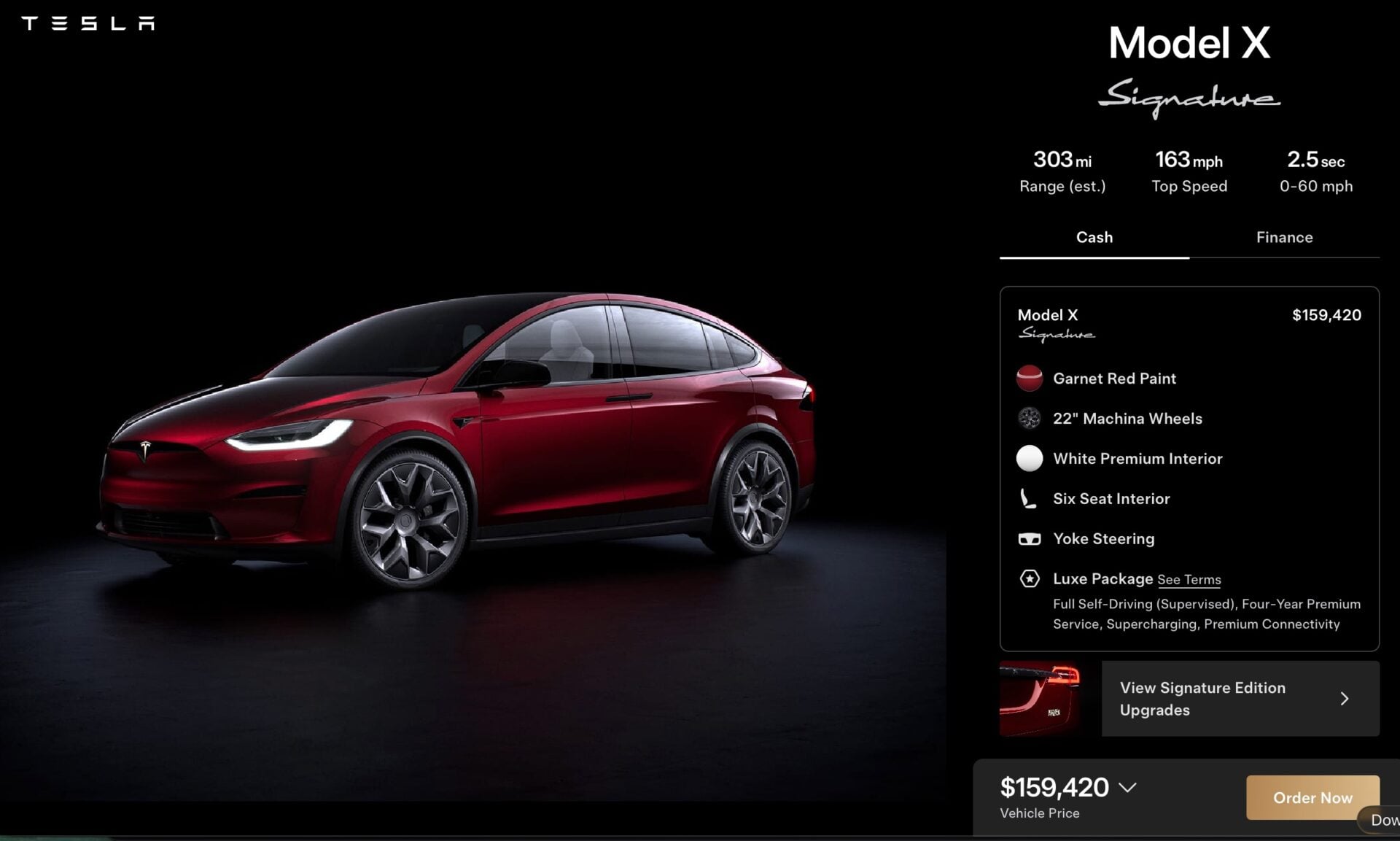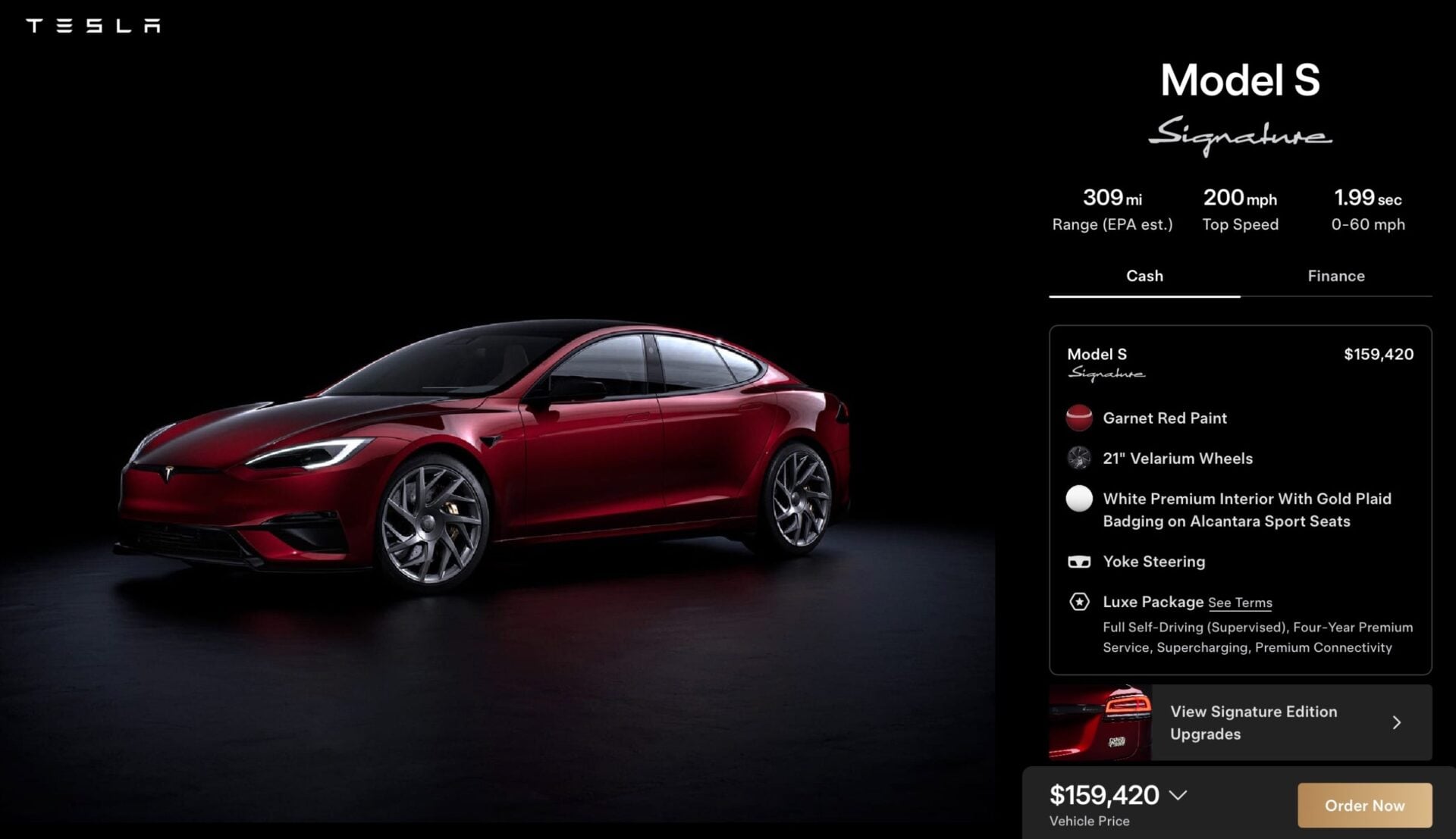
Tesla has officially confirmed the end of the Model S and Model X production lines, and the company is doing it with a level of ceremony that matches the significance of the moment. The Signature Edition, limited to just 350 total units (250 Model S Plaid and 100 Model X Plaid), represents the final chapter for two vehicles that fundamentally reshaped what a performance sedan and SUV could be.
The timing carries weight beyond Tesla’s own product roadmap. Global oil markets remain volatile, caught between OPEC+ production disputes, ongoing instability in key producing regions, and a growing tension between energy security and climate commitments. Crude prices have whipsawed through 2025 and into 2026, with consumers at the pump absorbing the consequences of supply chain fragility that the petroleum economy has never fully resolved. Meanwhile, trade policy uncertainty, tariff escalations, and shifting alliances continue to reshape the economic landscape for automakers on every continent. The cost of doing business globally is climbing, and the automotive industry is not insulated from any of it.
Against that backdrop, the Model S and Model X stand as a reminder of what Tesla set out to prove in the first place: that dependence on oil is not a fixed condition, and that electric drivetrains can deliver performance, luxury, and daily usability without a single drop of fuel. The Model S did not just compete with the BMW 7 Series, the Mercedes S-Class, and the Porsche Panamera. It redefined the expectations for what a full-size performance sedan should feel like to drive. Instant torque delivery, over-the-air updates that improved the car after purchase, and a powertrain with virtually zero maintenance intervals were not incremental improvements over the combustion competition. They were a fundamentally different proposition.
The Model X did the same for the SUV segment, arguably against even steeper odds. A three-row electric SUV with Falcon wing doors, a sub-3-second 0-60 time in Plaid form, and a towing capacity that put it in legitimate contention with conventional body-on-frame trucks was not something the market thought possible when the vehicle debuted. It proved that electrification did not require compromise in the segments where families and businesses actually spend their money.
Both vehicles played a critical role in demonstrating that the economic case against oil dependence is not theoretical. Every Model S and Model X on the road represents thousands of gallons of gasoline never purchased, thousands of dollars never sent through a supply chain that stretches from geopolitically unstable extraction points to refinery bottlenecks to fluctuating retail margins. In a world where energy prices remain one executive order, one pipeline disruption, or one OPEC meeting away from upheaval, the value of that independence only grows clearer with time.
That these two vehicles will no longer be produced is, without question, a loss for the market. The Model S Plaid is still one of the fastest production sedans ever built at 200 mph (322 km/h), and the Model X Plaid remains the highest-performing electric SUV available at any price. Their discontinuation is not a story of obsolescence. It is a strategic reallocation by Tesla toward autonomy and robotics, leaving a gap in the lineup that no other manufacturer has convincingly filled.
What the Signature Edition Includes
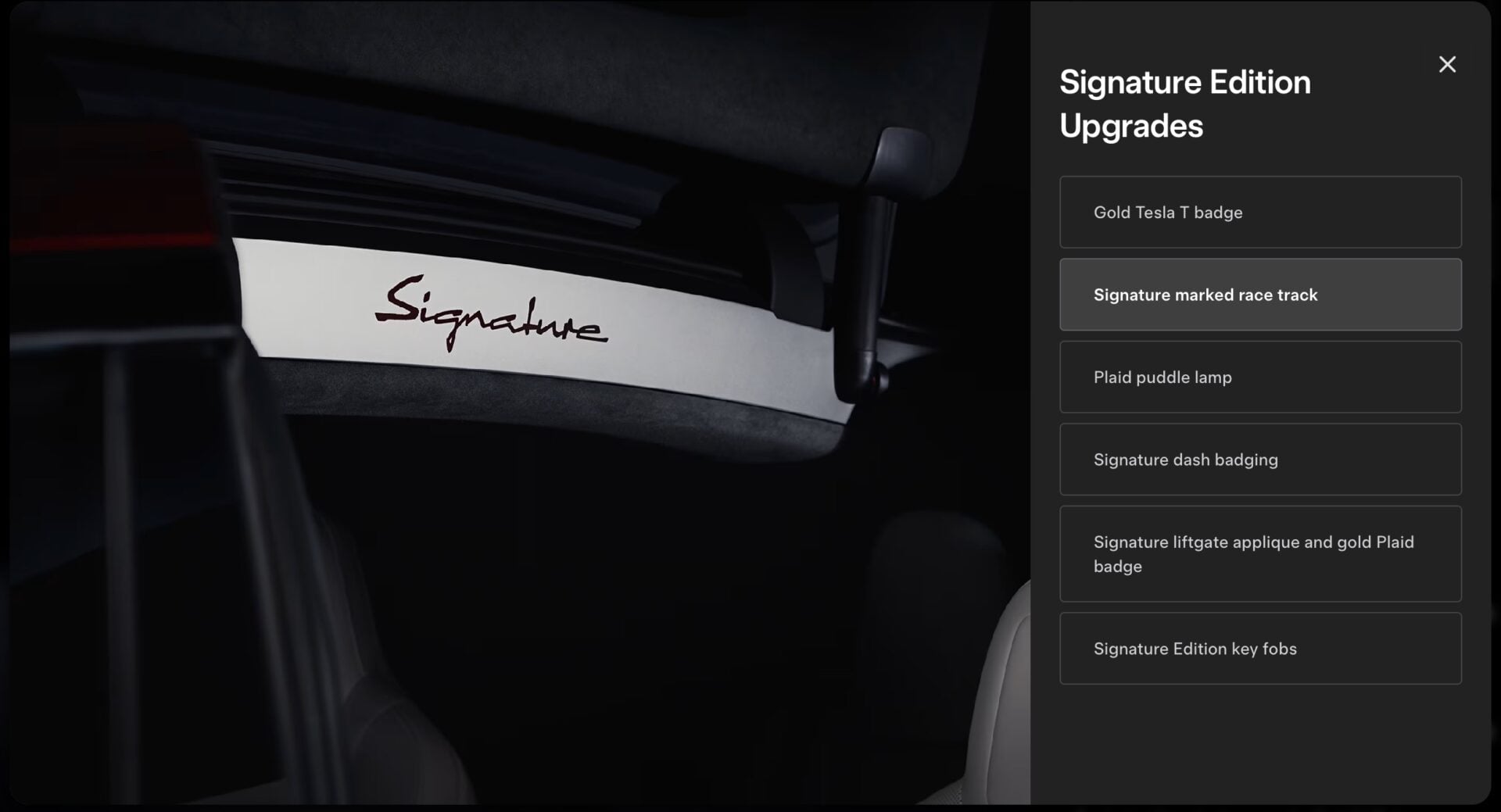
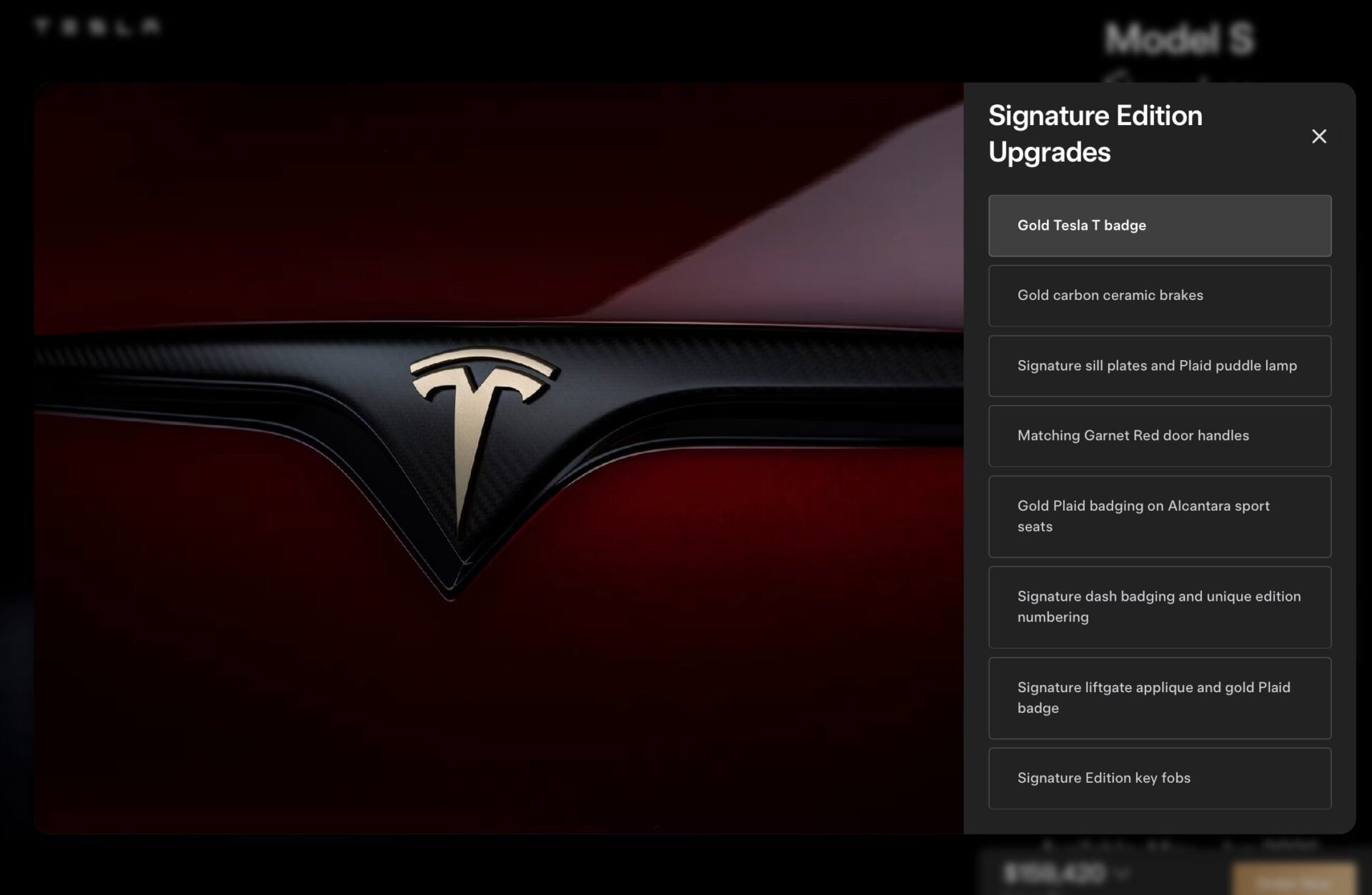
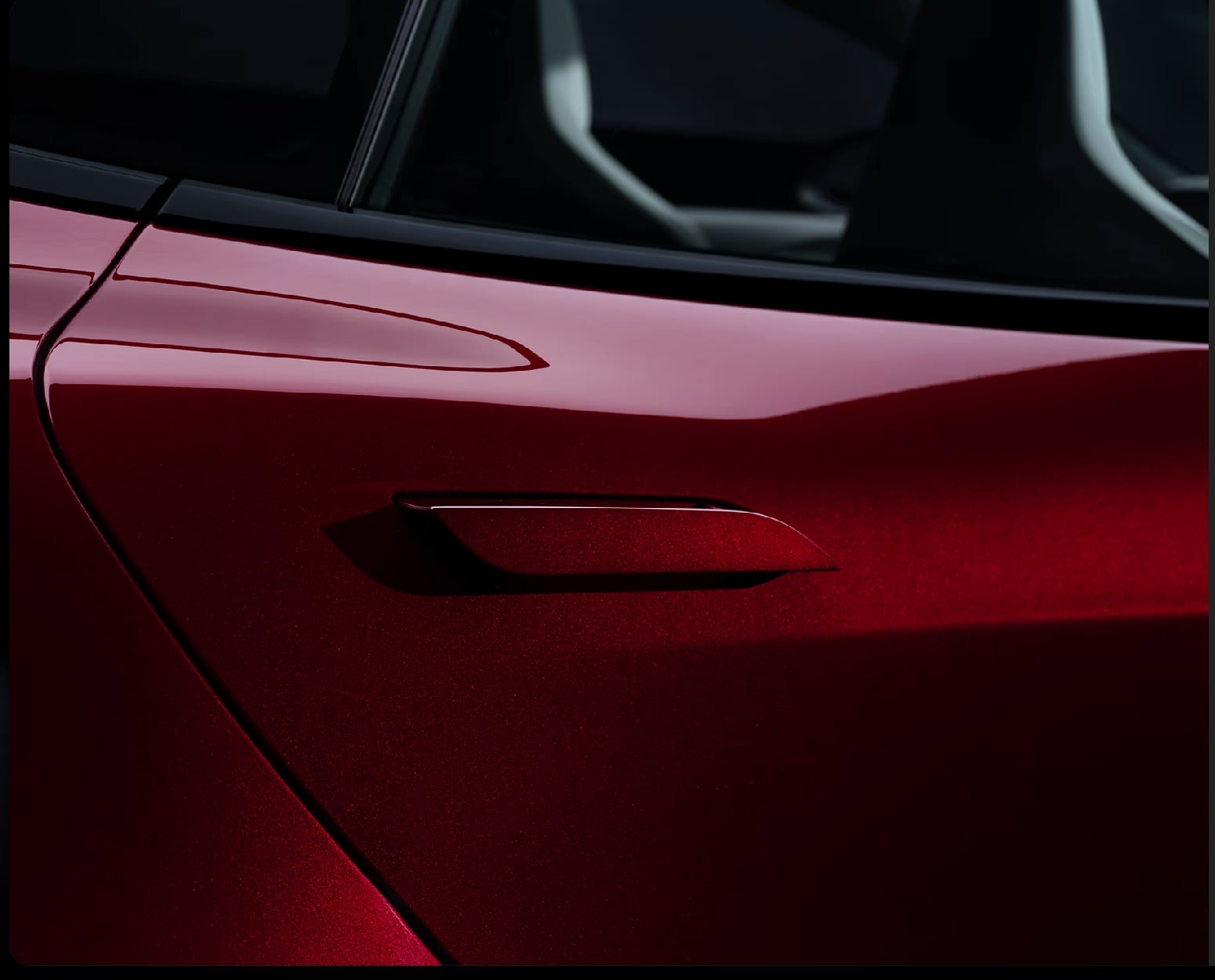
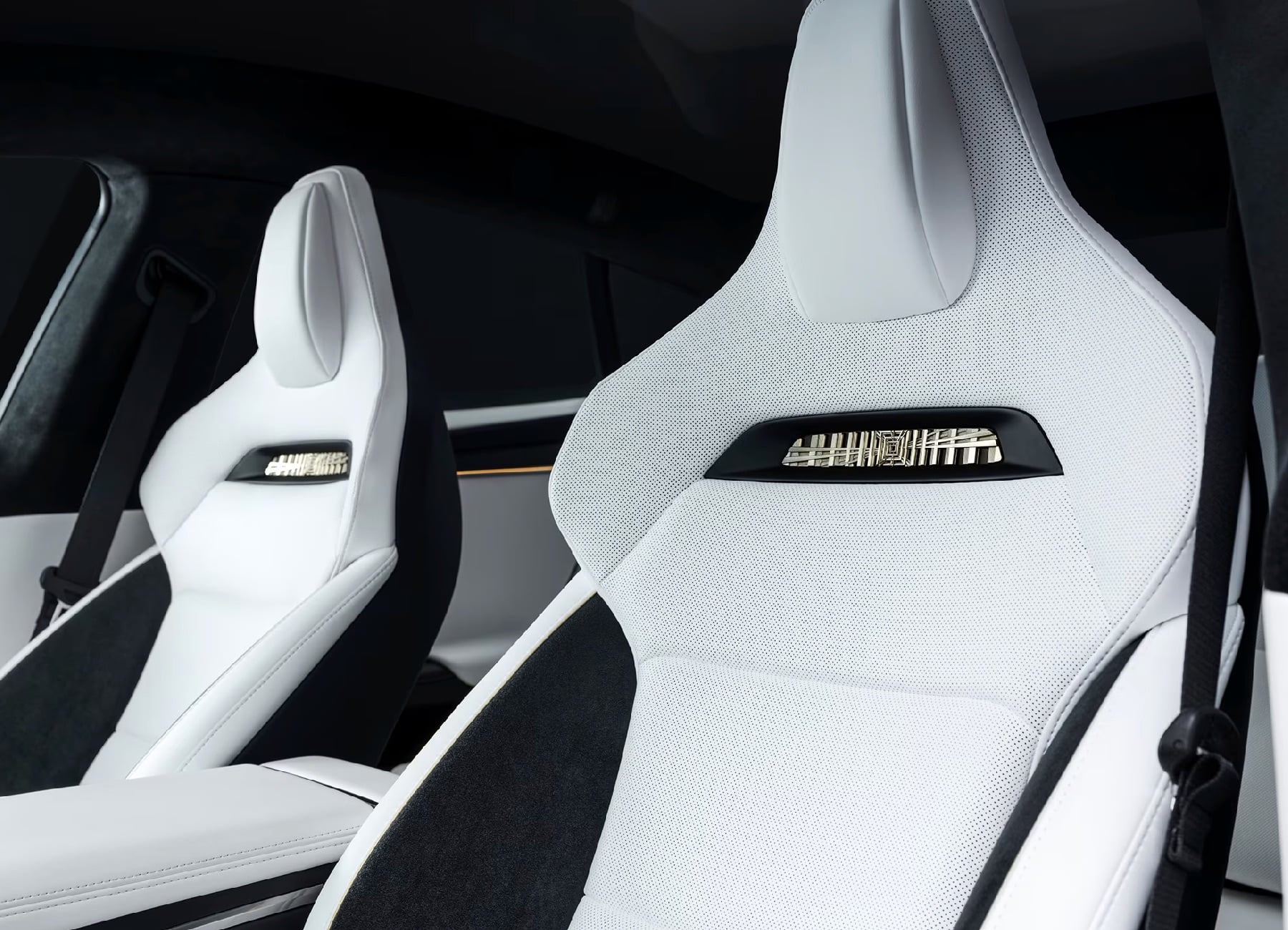
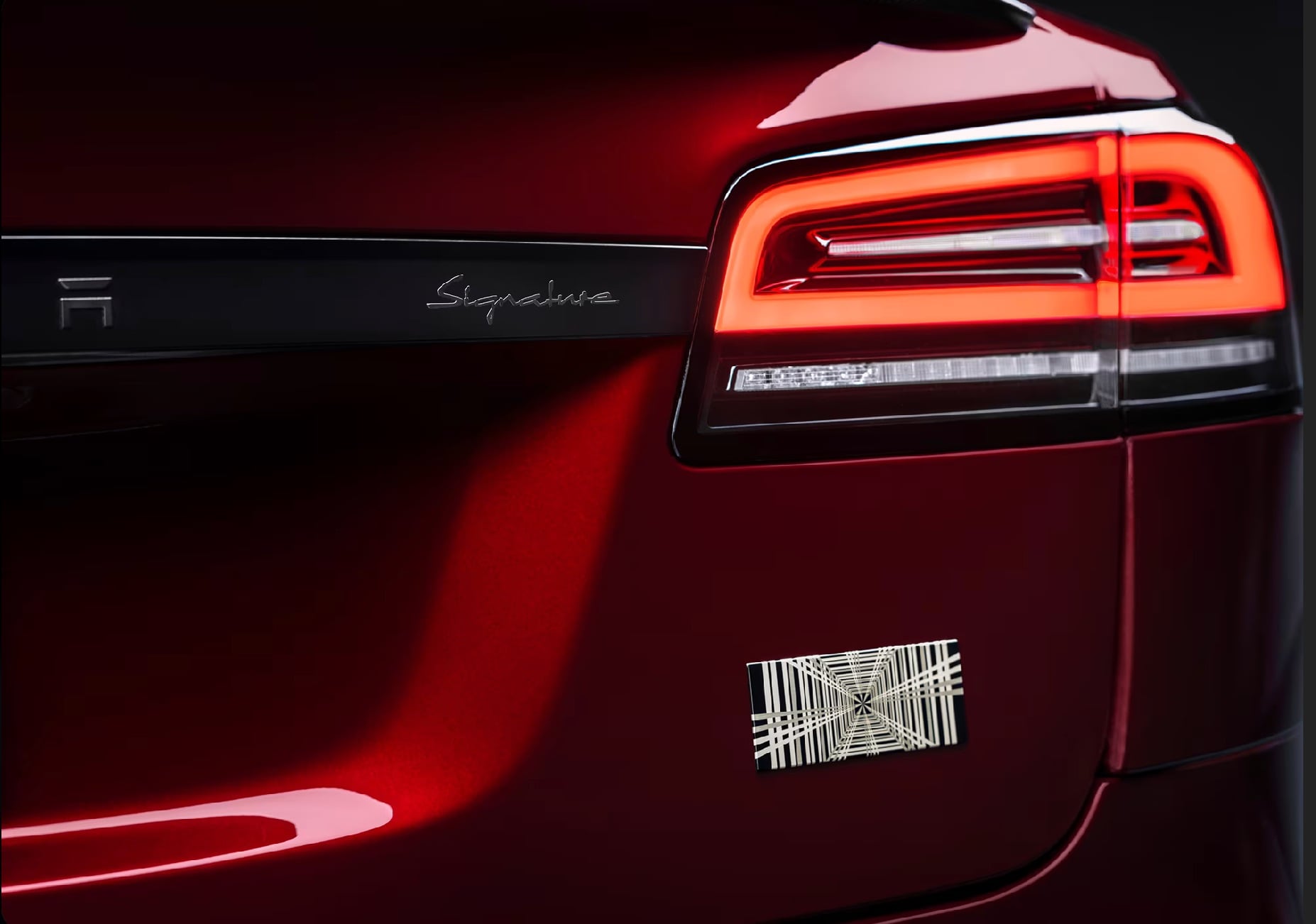
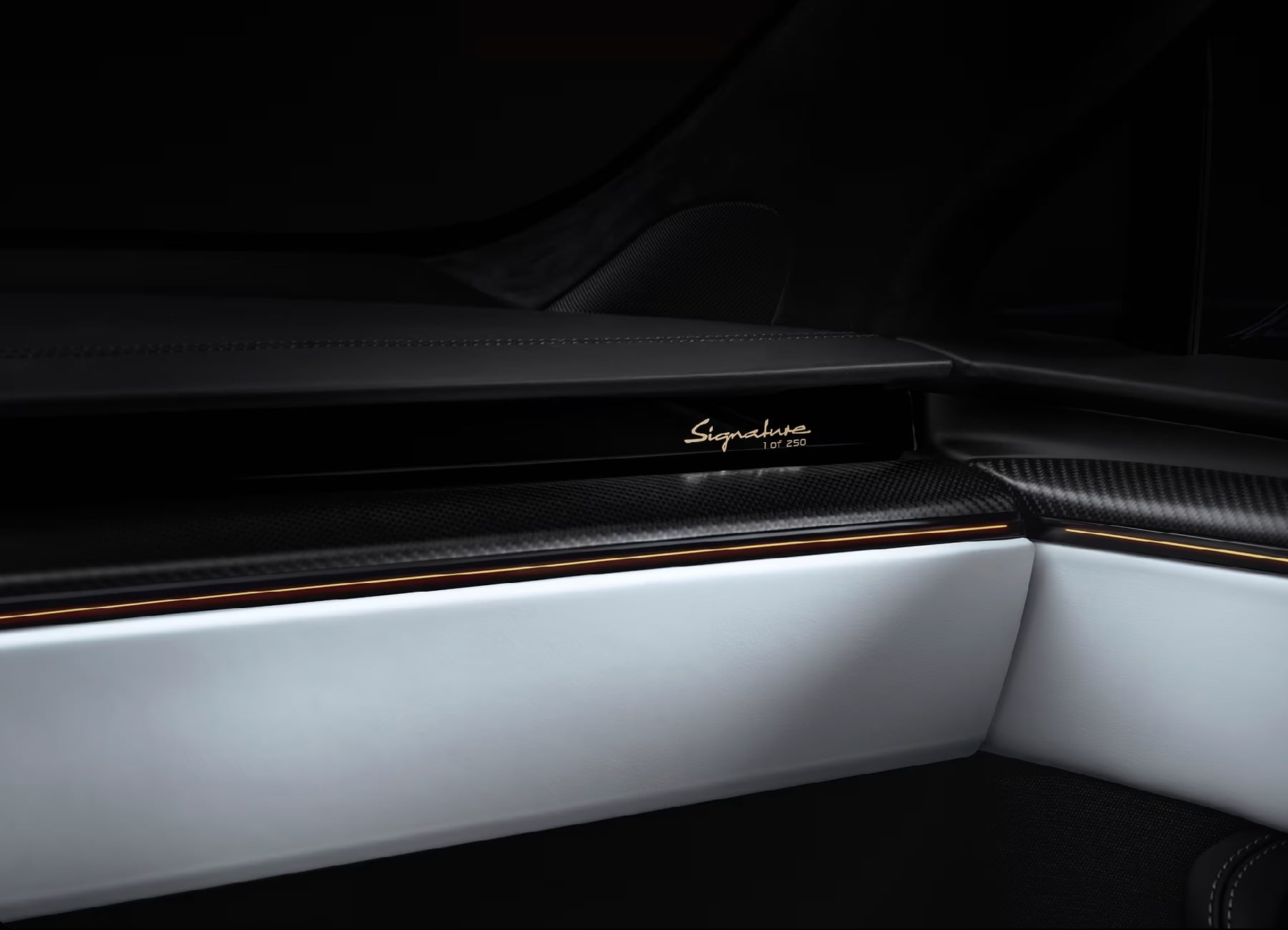
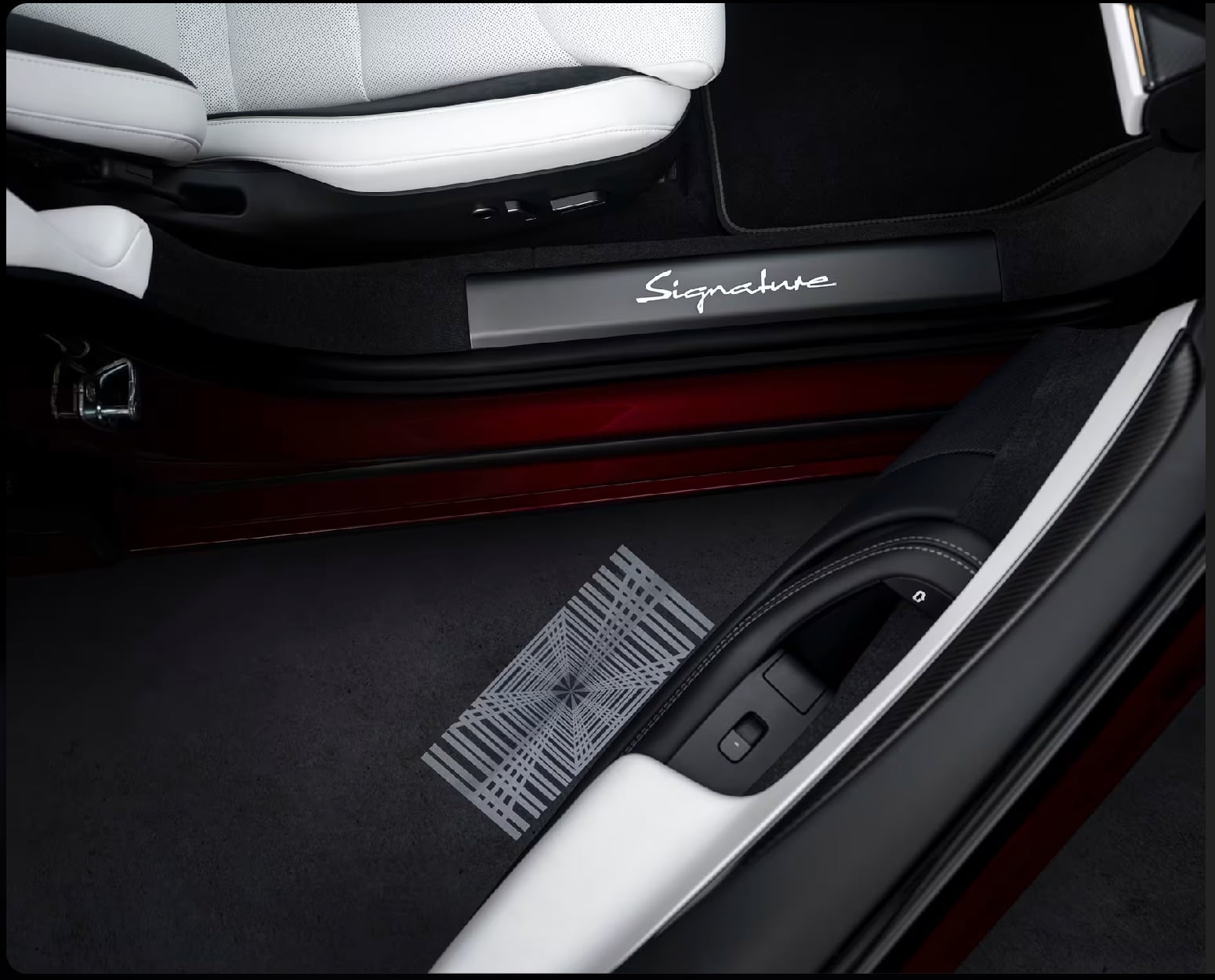
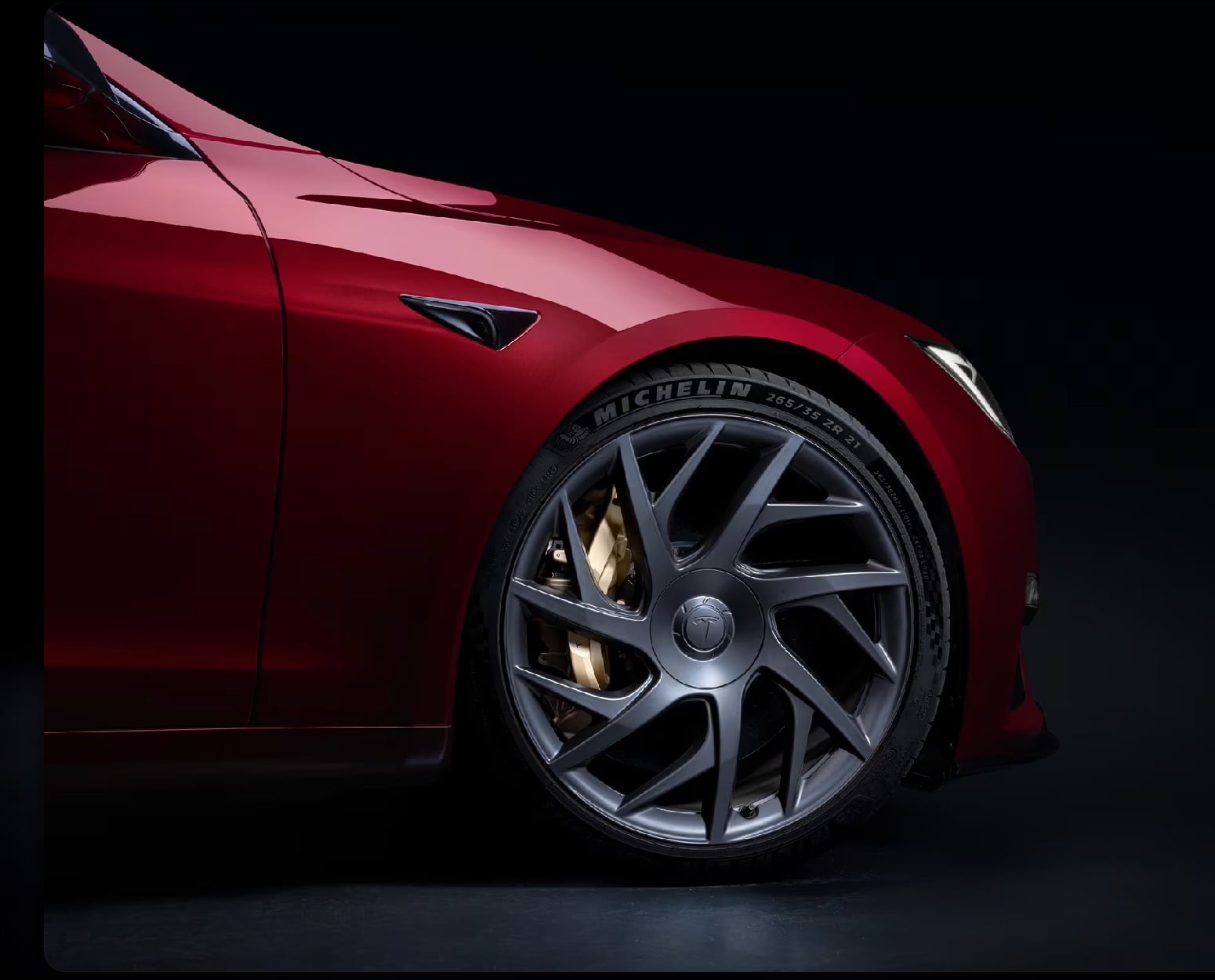
Every Signature Edition unit wears an exclusive Garnet Red exterior finish unavailable on any other current Tesla. Gold Tesla T badges sit on the front, with a gold Plaid badge and Signature badge at the rear. The interior is finished in white Alcantara with gold Plaid seat badges, gold piping, Signature-marked door sills, and a numbered dash plate unique to each vehicle. The Model S variant adds carbon-ceramic brakes with gold calipers, a meaningful hardware upgrade for anyone planning to put serious miles on the track.
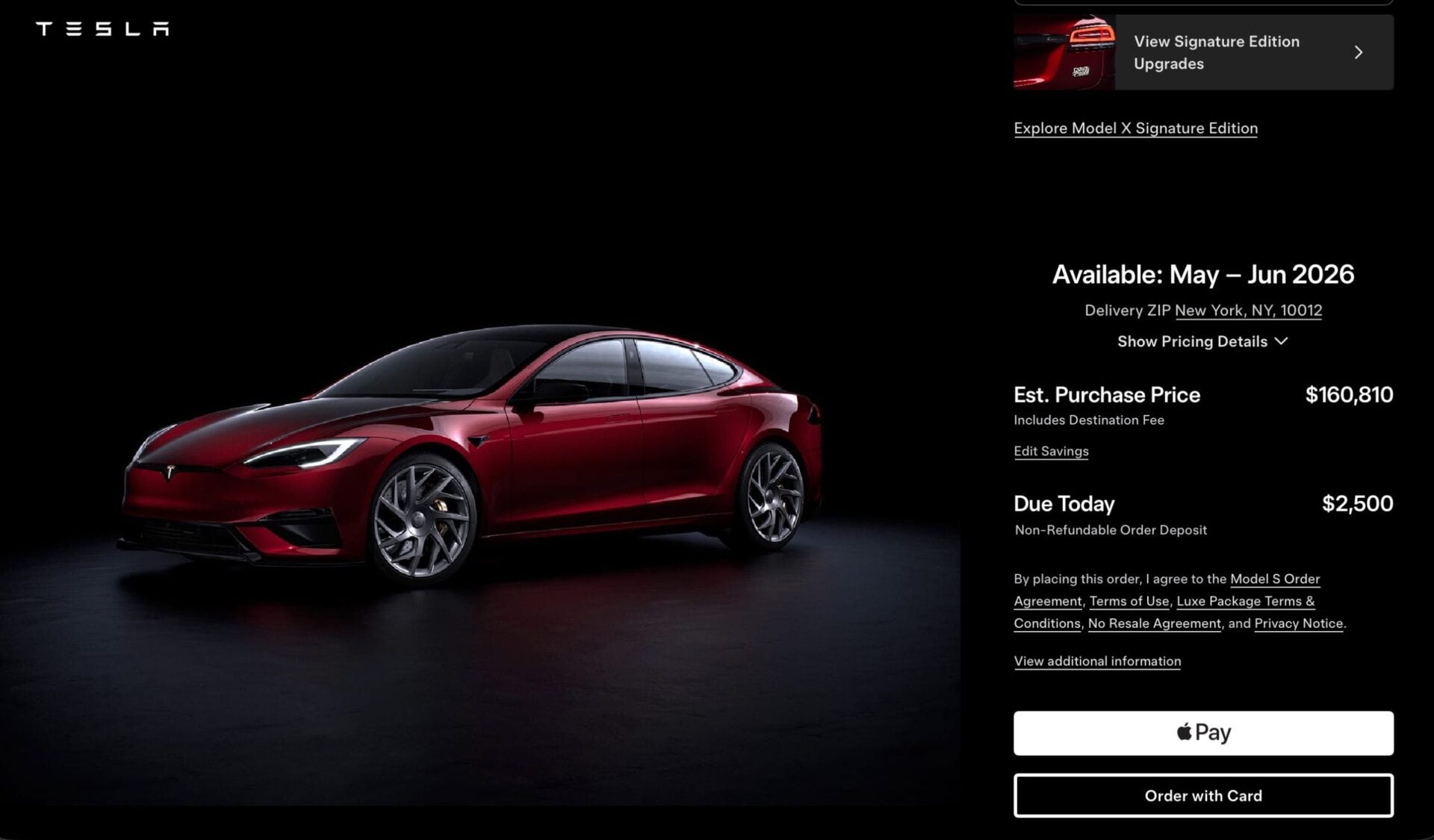
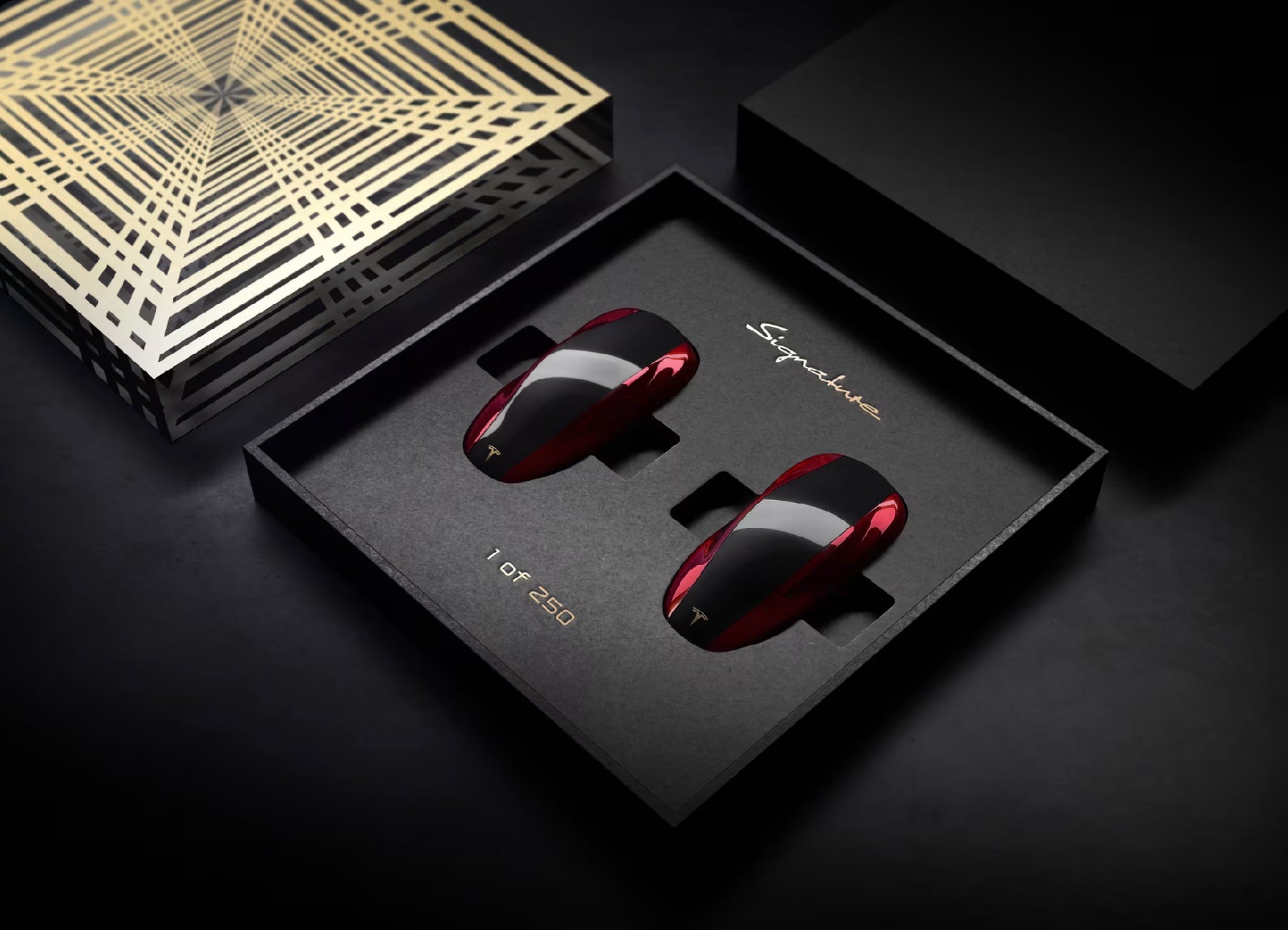
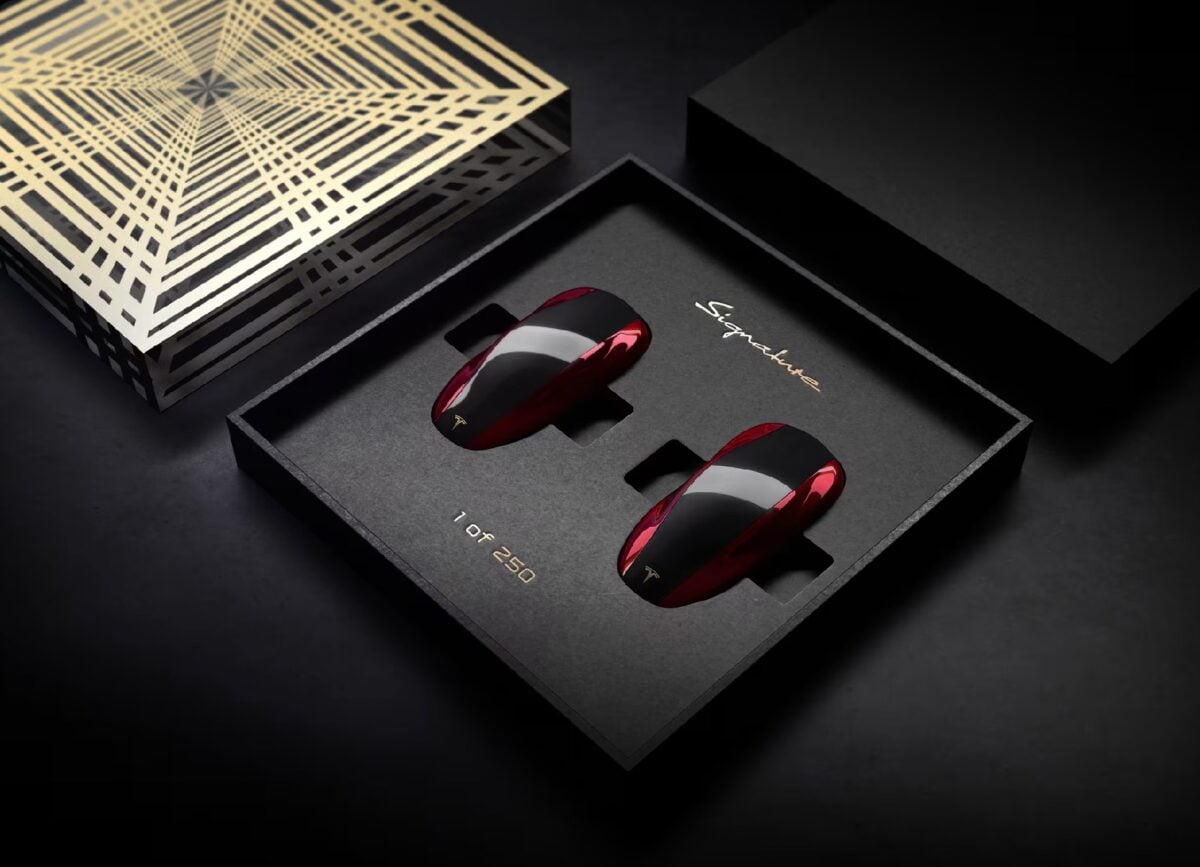
Tesla is bundling its Luxe Package as standard on every Signature Edition. That includes Full Self-Driving (Supervised), four years of Premium Service, free lifetime Supercharging, and a Signature Edition key fob. Both the Model S and Model X Signature Edition are priced at $159,420, representing roughly a $35,000 premium over standard Plaid configurations. These are invite-only purchases, so availability is controlled from the outset.
The End of an Era, by the Numbers
The original Model S launched in 2012, and the first 1,000 units sold were also branded as Signature editions. Those early buyers put down $40,000 deposits and paid nearly $100,000 each at a time when the idea of a viable luxury EV was still largely theoretical. The new Signature Edition is a deliberate callback to that moment, bookending a 14-year production run with numbered collector hardware.
The Model S Plaid remains a 200 mph (322 km/h) sedan with a tri-motor powertrain that produces over 1,000 horsepower. The Model X Plaid uses the same drivetrain as a full-size SUV with Falcon-wing doors. Both vehicles still hold performance benchmarks that very few production cars, electric or otherwise, can challenge. Discontinuing them is not a reflection of capability but of strategic direction.
Why Tesla Is Moving On
Tesla’s leadership has been transparent about the reasoning. At the Q4 2025 earnings call, Elon Musk described the decision as necessary, framing it as an evolution toward autonomy-focused platforms. The Fremont factory floor that currently produces the Model S and Model X is being converted to manufacture Optimus humanoid robots, with a stated annual production target of 1 million units.
For Tesla, this is a capital allocation decision. The Model S and Model X have always been lower-volume vehicles relative to the Model 3 and Model Y, and repurposing that manufacturing capacity toward robotics signals where the company sees its next major growth vector. The Signature Edition provides a graceful closure rather than a quiet phase-out.
What This Means for the Aftermarket and Performance Community
The discontinuation of the Model S and Model X carries significant implications for the aftermarket ecosystem that has built up around these platforms over the past decade. Companies like Unplugged Performance have developed extensive catalogs of suspension, braking, aerodynamic, and chassis components specifically engineered for these vehicles. The end of production does not mean the end of the platform; it means these cars transition from current-production models to established performance platforms with defined hardware specifications.
For owners and enthusiasts, a fixed production run actually simplifies aftermarket development. No more mid-cycle revisions or unexpected hardware changes. The Model S and Model X platforms are now well-known quantities, providing an ideal foundation for long-term performance development. Owners who already have these vehicles or who acquire Signature Edition units will benefit from a mature parts ecosystem and deep engineering knowledge accumulated over more than a decade of real-world fitment and track testing.
The Model S Plaid, in particular, has proven itself as one of the most capable track platforms ever produced in sedan form. Carbon ceramic brakes on the Signature Edition only reinforce that positioning. For anyone considering one of these final units as a foundation for a serious performance build, the hardware fundamentals are exceptionally strong.
The Bottom Line
Tesla’s Signature Edition is a collector-oriented send-off that acknowledges the importance of the Model S and Model X in the company’s history. At $159,420 with an invite-only purchase structure and a total production cap of 350 units, these vehicles will hold a specific place in Tesla’s lineage. The exclusive paint, interior appointments, and bundled services package make the pricing premium reasonable for buyers who value provenance alongside performance.
More broadly, the end of Model S and Model X production marks a pivot point for both Tesla and the performance community that has grown around these cars. The vehicles themselves remain extraordinary machines. The aftermarket infrastructure to support, maintain, and enhance them is well established and only becomes more valuable as the production window closes. For Unplugged Performance and the broader community of owners who have pushed these platforms to their limits on streets and tracks alike, the story is far from over. It is, in many ways, just getting more interesting for both us and the enthusiasts we will continue supporting regarding these two models for a long time to come.